Smart Kids Interview

Smart Kids Interview

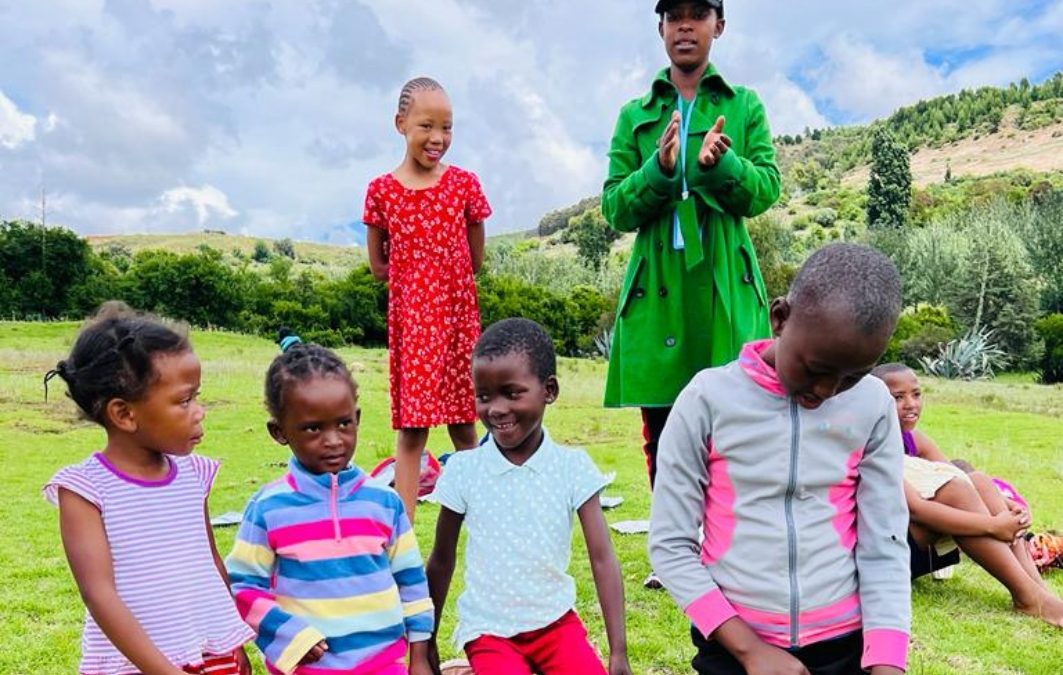
Motopi is a Professional Intern (PI) with Help Lesotho. As part of his role, Motopi oversees the Smart Kids Project, an initiative which equips volunteer youth alumni from Help Lesotho’s programs to provide education and psychosocial support to vulnerable children in their villages. To get a better sense of the impact of the project and the importance of our new 4300 Kids campaign, Motopi answered a few questions below.

What is the Smart Kids project all about? (Motopi) The project was started in 2021 during the covid-19 lock-down restrictions whereby children were going to school on weekly intervals or schedule. For instance, they would go to school only once a week and teachers would give them lots of homework for them to work on while they are at home. It came in place to assist these children with all their school because most of them are staying in child headed families or are living with their grandparents or guardians who are mostly not educated, thus making it tough for them to assist. In other words, this is a literacy project that aims at helping children in their school work and providing social-emotional support.

How important do you think this project is? (Motopi) This project has shown great importance to children both academically and psychologically as the Alumni volunteers do not only assist with home works but also provide basic psychosocial support by listening to children’s different problems and be their support system. It is important to mention that most parents or guardians are not always there to listen to their children’s problem such as peer bullying and thus making it difficult for children to seek comfort. The volunteers have become their support system in times where they give them comfort, space and time to vent about things that bother them, and also to celebrate their successes with them such as celebrating improved marks at school.

What kinds of positive changes have you seen in the kids? (Motopi) This project is not only seeing improved grades in those who are attending schools but it has ignited the spark for those who had dropped out to go back to school. It is attracting a lot of attention from children and parents to an extend in some communities, one volunteers is having over 50 children participating in their sessions because all nearby villages are encouraging their children to attend. For example, there are five volunteers of which each of them is seeing over fifty children in their sessions.

Help Lesotho alumni volunteer outreach volunteers

Can you speak about how imperative this initiative was while schools were closed because of COVID-19? (Motopi) During covid-19 lock-down restrictions, in the sessions, volunteers included covid-19 prevention measures such as social distancing, sanitizing or washing hands and putting on masks to keep them safe. They even created songs out of these measures just as to make sure that they never forget how to protect themselves, those around them and also where they can get assistance if they suspect that they are infected such as reporting to teachers, guardians and consulting with the doctors. This initiative did not only help to curb the covid-19 infections but also brought cohesion among children and parents in the communities. These children used the after school sessions as educational platforms where they would come together and help each other with school work and also shared their things with the vulnerable ones. For instance, some would identify that one of them does not have a uniform or school shoes and then they would give them their older ones.

How have things changed now that the schools are open? What is the reaction from parents and community members about this project? (Motopi) Support visits were started after the covid-19 restrictions were eased/removed which aimed at visiting volunteers in their sessions to assess the impact of the project on children. It is through these visits that we also conducted parents meetings to hear the take from the parents and guardians, and also assist them to further understand the project. Parents, guardians, community leaders, teachers and health workers showed that the project has being of create help for them because they do not have enough time to help children with school work as some are working nine(9) hours jobs such as factory workers who leave at 6:00am and comeback at 6:00pm already having to prepare for the following day. They also take the sessions as safe home for their children because even on weekends they know that their children are safe there with an adult. This also includes the fact that their children are able to share personal troubles with the volunteers and thus, making it easy for the parents to know them, work on improving their relationships and find mitigation strategies for the problems. For all these reasons, they hope the project will continue for many years to come.

What is the impact of this project on the alumni who volunteer their time? (Motopi) This work made the Alumni volunteers feel valued in their communities because parents recognized their assistance and deemed them as leaders. Most of these volunteers are unemployed, so they found these after school/weekend sessions giving them a purpose of waking up every day and get busy like other people. Some of them realized their potential in teaching career and they have gone to tertiary schools to pursue the teaching careers. Some have seen increased support from community members in their small scale businesses such as selling beauty products or vegetables. These volunteers are also getting psychological support through facilitation of PSS modules and One-on-One sessions from Help Lesotho staff as they are given opportunity to share their personal concerns and struggles through WhatsApp and phone calls.

What do you hope the future of the Smart Kids project looks like? (Motopi) I personally hope the project can be blessed with a good funding so that it can be big enough to cover all 10 districts because it has shown that most children are benefiting a lot from it. It has reduced the literacy gap between children attending private and public schools because it in at this platforms whereby they all learn the same thing and pull each other up. We are having children who are in grade 6 who cannot read or write but through this project we have managed to bridge that gap in the communities it is covering, therefore calling attention from those others that it does not cover and they are hoping that they can also get the similar assistance. As for the Alumni volunteers, there is a long list of them who also want to participate in this project as it does not only give them a purpose in life but also work experience in working with children.

2022 Letter #7: Letters from Lesotho (142)

2022 Letter #7: Letters from Lesotho (142)

Greetings,

I am so touched by the number and responses of readers to my first letter. Thank you for following along and for caring so much.

Back in Canada, I reflect on my intense but productive trip. I had over 40 meetings, visited programs, hugged each staff, admired our new library and our two centres and ‘felt the Mosotho’ in me again after such a long hiatus. Knowing I will return for February and March 2023 made it all that much easier to leave so soon.

‘M’e Mamoletsane, Kathleen and I met with the World Health Organization, UNICEF, UNAIDS and UNFPA to discuss our CHANGE4ce Program to help build capacity in other organizations to provide better psychosocial support in building resilience and mental health. We are hopeful to move this initiative forward. We know that our training and experience in mental health would help so many organizations deepen the impact of their work.

I previously mentioned the new group of correctional service and national security officers in our Computer and Life Skills Program. They had heard about our program and made a proposal to their management to be allowed the time to attend the course. The first week, they were mostly speechless about the opportunity before them. Week two, their questions were meaningful with minds and hearts open. Each one will impact hundreds of wounded lives in their careers. Realizing that prisoners are not evil people but broken and struggling was a profound revelation. One said this was “like the family he never had where people get real love and care”.

One of our COVID initiatives was to mobilize our alumni to both keep them occupied with purpose and to provide support to children during the school closures. We developed and they distributed over 5,000 age-appropriate workbooks filled with COVID information, coping strategies, math and literacy activities, motivational pages and games. The alumni volunteers were trained and each supported a troop of children in their village – to listen, learn and comfort. It has been a great success. The guardians of the children have approached the alumni to learn how to better support the children under their care. Although thankfully the schools remained open for the 2022 school year, we continued the project with the volunteers supporting children after school and on weekends. COVID set so many children so far back both educationally and emotionally. The impact over the last year blew our expectations away. As you can see from the table below, a total of 108 volunteers reached 4,635 vulnerable children. On average, each of these children participated in 7 life-changing sessions.

alumni volunteer with kids<br />
kids with school work
volunteer outreach stats

“I have really improve on my self confidence because I can stand in front of many people and speak which was something that I wasn’t able to do before I start my outreach.” – Mafusi, volunteer


“Children are now seeing the light even those who are struggling they are trying.” – Chaka, volunteer

We are so proud of these young people that we are asking you for help to support a whole new cohort of volunteers. We are excited to launch a new project in which we will, with your help, recruit 100 new volunteers who will reach at least 4,300 children with tutoring and mental health check-ins. These young ones are desperate to get some help and to learn. This is the focus of our fall fundraising and we hope you will join us to make it happen. Please click here to learn more and stay tuned for additional information in the coming weeks.

Another project we are conducting is in its third year in the south of Lesotho on early and unintended pregnancy. UNFPA begged us to help in an area in which over 50% of the high school girls had fallen pregnant. That is not a typo or over exaggeration – literally more than half of the girls in high school in this region became pregnant. My heart aches for these girls and their dear babies. We are working with the chiefs, local council and community members to hold them responsible for protecting these girls. We are working with potential enablers and perpetrators, including the landlords of the tiny rented rooms rural children must live in to attend high school, taxi drivers (part of the essential transportation sector), bar owners, herd boys and teachers. We are proud to say that there has been significant progress. The taxi drivers are determined to protect their student passengers, educate new drivers, and to work with the schools to ensure students can only access taxi rides if they have a pass to leave school. Similarly, the landlords have stepped up to monitor their premises against perpetrators and ensure only those who should be in the rooms are. The main high school has reported a remarkable decline in pregnancy and has made a commitment to work with other schools to reduce truancy so that the girls are not enticed away from their education by the promises of food, jobs and ‘treats’.

Kathleen visited a school and spent a day each with the young mothers and a couple of grannies.

Going to their village, Kathleen visited a granny who had prospered under our program and who was able to grow enough food to feed her family and understand positive parenting.

Kids in classroom
Granny in village
Kathleen with young mothers

The other was a different story. Our program officer had rescued two children whose mother had abandoned them. Their grandmother agreed to raise them. When Kathleen arrived, the grandmother was totally bedridden. At 84, she was giving the little food she had to the children and literally starving herself to death – so weak that she could not get out of bed. The children now care for her. This visit still haunts Kathleen. Our staff will follow up.

sick granny and child

I had charged our psychosocial professional interns with reading Viktor Frankl’s book “Man’s Search for Meaning” and had a great chat with them on it, followed by a serious and quite wonderful discussion with all the male staff on a module on ‘Supporting Boys and Men’.

Males discussing at Help Lesotho

On Friday, Lesotho’s new Prime Minister was inaugurated. He paid for his own inauguration and put himself out on a real limb by making 20 promises of accountability in the first 100 days. The population is hopeful.

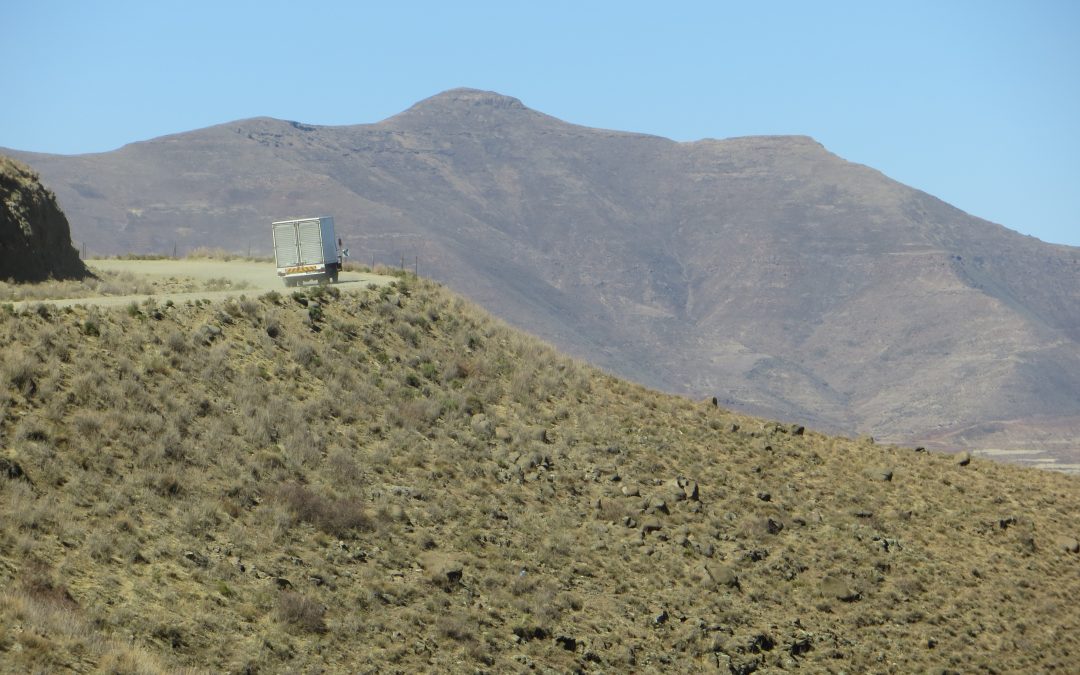
I write in hope that one or more readers would like to fund or to contribute to a new truck. The photo represents the one we need to purchase. As you know, we work up in the mountains on extremely rough roads (even using the term ‘road’ is a stretch!). The wear on a vehicle is enormous. We need to replace a 2012 Hilux Toyota double cab truck that has 309,000 KM. After three years of hunting and pecking, our very first truck was purchased by a corporate CEO who emphatically asked me “Well, what do you need?”. Within days the Toyota dealership in Maseru informed me that our new truck was ready to be picked up. I know this is a big ticket item, but I also have faith that someone out there can help this time around.

Rally for Resilience!

Rally for Resilience!

At Help Lesotho our vision is for the youth of Lesotho to have the resiliency and agency to create healthy and self-sustaining futures.

We firmly believe that real, positive change happens when a person is able to heal their heart and equip their mind.

Over the past 18 years our work has been strategically tailored to help vulnerable people build resilience so they can heal and move forward with their lives in healthy and productive ways. Each one of our programs includes unique approaches to resiliency-building by helping participants boost their confidence and self-esteem.

To read the Resilience Rally Report, you can scroll down through this post. Alternatively, click here to download the report as a PDF. Be sure to scroll to the bottom of this post to watch the video – it is so fun to see the kids in action! 

2022 #6: Letters from Lesotho (#141)

2022 #6: Letters from Lesotho (#141)

On October 12, 2022, waiting hours to board for our 15-hour flight from New York to Johannesburg, I had such vivid flashbacks to my reverse journey 31 months ago – leaving Hlotse in the dark hours before dawn to get through the border before it closed, to the circuitous days and countries to return home, wary of the hordes of international travelers who might be carrying this nameless plague that had so suddenly descended upon the world.

Now – returning to Lesotho, still masked and COVID wary, the world is both altered and oddly the same. The pandemic brought our staff new capacities with devices and platforms allowing more effective and meaningful distance communication – upon which we have relied all these months. Compounded by climate change effects and debilitating inflation, so much progress has been erased during these months. Gender-based violence, human trafficking, poverty, food insecurity have all risen alarmingly.

Our Board chair, Kathleen Lauder, a long-time supporter, friend and an international development specialist, is with me. Kathleen was in Lesotho twice in the very early days of the organization – no staff, no office, little structure. We reminisced about the sometimes harrowing adventures and struggles in those years building credibility, programs, partnerships and progress. It is exciting for her to see Help Lesotho now – robust, highly trained staff, incredibly well respected and impactful.

As you can imagine, I longed to see each one of our staff – to see for myself and hear know how they are. I love and admire them. After the beneficiaries, they are my daily concern. Zoom and Google Meet just aren’t the same. Our driver, dear Ntate Motsamai, greeted us warmly at the airport and, after a two-hour drive to our Hlotse Centre, the staff and children welcomed us with songs, signs and hugs. Home again!

Peg arrival at Hlotse Centre
girl holding sign at Peg's arrival to centre

I write after our first week – predictably crammed with 25 meetings as we try to make the most of this trip (my shortest visit in my 18 years). I will return for February and most of March for my usual time and donor trip, but these precious days are designated for our staff after such a long absence. There are still a couple spots open on the March 2023 trip. I would love to welcome you to the mountain kingdom.

Just since we arrived, there has been rain – finally – to drench the arid soil and prod the spring seeds and seedlings to grow after a drought of many months. As prices escalate, these homegrown vegetables are more essential than ever. At the centre, we only lost water for two days this week.

We had a great visit with our Pearl Girls and Guys4Good. These adorable grade seven children are learning how to navigate the perilous world of high school, peer pressure and adolescent confusion. They were bursting to tell us of their growth, new-found insights and how they are sharing what they learn in this program with their peers.

By-weekly, our staff congregate from various locations at the Hlotse Centre – to support each other, share their successes and challenges, and learn. This provided us with the chance to see everyone and celebrate our time together.

This year, all staff completed a challenging 12-Session Psychosocial Support Course on our online platform, followed by a Facilitator Course for those who facilitate our modules – a refresher course for some and new training for others. Our impact depends on the professionalism and insight of our facilitators. The certification requires successful completion a 7-session online course and practicum of facilitation evaluation on various topics. I was thrilled to present the program staff with their CHANGE4ce Facilitator Certification Certificates.

How they love to learn – always asking for more training. I recently finished mini-courses on suicide (Lesotho has the highest suicide rate in Africa – you can learn more here) and most recently on supporting boys and men – delving into the social-cultural issues more deeply than ever before. Following our group discussion with the male staff, they will then lead the discussion with the female staff to process the material. I love those discussions as do they, as we constantly work together to increase our effectiveness, in this case to reach one of our strategic goals to train more boys and men and hopefully, this will help.

Our staff are dedicated and care so deeply, yet each one is exposed to stories and pleas of unspeakable suffering all day long. They too face the same challenges at home. Providing useful training and support is paramount. Toward this end, I have engaged a dozen of our talented donors who have specialties to act as monthly phone/Zoom coaches for particular staff. The pairing of them has been a joy – knowing what a wonderful growth experience this will be for both. The mentees and I are thankful for donors who give so freely of their time and expertise to help our staff grow and get the attention they dearly deserve.

On this subject, one of our staff has an autistic son, another an autistic nephew. With no resources in Lesotho, I am reaching out to see if there is someone reading this letter who knows of a parent of an autistic child who might be willing to listen and support these two.  We have many deaf children at the centre and our staff have learned sign language. All of them would benefit from and appreciate learning about exceptionalities. If you can help – please reach out.

Lesotho held a national election last week and I was keen to hear the opinions on the results. We made enormous efforts to get the young people out to vote. We sent text messages to 141,000 people across Lesotho – in both English and Sesotho, distributed 3,000 handouts on why voting is so important, and reached thousands with multiple posts on social media. Of the 163K people we potentially reached, we hoped that at least 30% actually read the material – perhaps 50K. Shortly before election day, there was no electricity. Our staff were so committed to get voters out that they went out one-by-one on foot all over town encouraging people to vote. Yet, after all this work, disappointingly, Lesotho had the lowest voter turnout in the country’s recorded history at 38% – a clear indicator of how discouraged the population is with poor governance. We can only hope that those who voted did so wisely. Election monitors from many countries pronounced the election peaceful and fair. The populous has accepted the results without backlash – unlike most previous elections. The new Prime Minister, Sam Matekane, will hopefully bring the positive change this country so badly needs. He brings extensive business experience as the wealthiest person in Lesotho and seems determined to cut corruption, entitlement and restructure. We live in hope.

I met with a new class of Computer and Life Skills (CLS) participants, this time all correctional officers. Another strategic goal over the next five years is to train as many police and correctional officers as possible. We have trained many police officers and correctional guards in the past. They love it. Along with nurses and teachers, these are the frontline workers who can either help or retraumatize vulnerable girls, women and boys. Building their self-esteem and psychosocial awareness has proven to help them address their clientele with greater compassion and less judgement. I will re-visit them this week. Ironically, when I finished chatting with a youth group yesterday, there was a female police officer and former CLS graduate waiting for me. Hearing I was in town, she patiently waited for a couple of hours to tell me what a huge difference the program had made in her life. She looked to be in mid-forties and was completing her Master’s degree in social work on secondment from the police force. We had an interesting chat, while she pleaded for Help Lesotho to give this training to all the police officers and management so that they too could change.

Kathleen spent this weekend at our precious Pitseng Centre, participating in the programs, exploring the village and the stunningly beautiful valley. I was thrilled to see the new library – nearly finished, the space is well made, bright and spacious. We regaled ourselves with imaginings of the depressed youth, struggling students, correspondence students and aspiring literacy learners having this wonderful place to concentrate and hold discussion groups. Our most sincere appreciation to those who donated to this library. Please know that the impact of your generosity will last for decades and help hundreds of villagers.

Pitseng Centre Library
Pitseng Library

Whether meeting with staff, professional interns, or program participants, the message is the same. Their compounded trauma peppers every conversation and meeting. The staggering need, intense fear and anxiety, and overwhelming gratitude are ever present. Our time together is filled with various combinations of tears, hugs, confessions, pleas for more training, stories of personal bravery and change, prayers of gratitude, and hope. I am constantly and deeply touched by the expressions of how important and meaningful our programs are and how loving and talented our staff.

The needs are tremendous but we are not helpless. We are focused and reaching people every minute. Last year, we helped 22,000 people. No dollar, day, conversation or effort is wasted.

I will write only one more letter this trip. So much to pack in! Kathleen and ‘M’e Mamoletsane and I are meeting in the coming week with three of the UN agencies who currently fund us to see if they will support some new work. Wish us luck!

I look out on the mountains as I write, feeling hopeful and appreciative. We have serious work to do and you are the ones that make this possible. I wish you could know what a difference it is making!

Until the next letter,

Best wishes

Peg

Smart Giving

Smart Giving

On September 29, 2022, Help Lesotho offered a Smart Giving webinar on some of the newest and most advantageous ways to give to maximize the tax benefits of your charitable giving to Canadian organizations. Hear from four experts who provided their advice on frequently overlooked and misunderstood topics, including: charitable tax incentives, advantages of donating stocks and cryptocurrency, and why leaving a charitable gift in your will helps your loved ones. Dr. Peg Herbert, Help Lesotho’s Founder and Executive Director, started the session with some inspiring words about the personal benefits of giving, including a boost to your mental health.


Watch the webinar recording (1 hour):

Meet our experts:

Download the presentation summary:

Smart Giving PDF
Is climate change a threat to development in Lesotho?

Is climate change a threat to development in Lesotho?

Despite Lesotho being a very low contributor to the causes of climate change, it stands to be among the worst hit countries to suffer the effects.

Climate change acts as a risk multiplier for development, magnifying the root causes of existing challenges. It is well documented that countries currently struggling with gender inequity, poverty, health crises, and limited infrastructure will feel the effects of climate change earlier and harder than countries that can more easily adapt and absorb at least some degree of additional challenges.

“Climate change has also emerged as undoubtedly one of the major developmental challenges of our time. There is increased scientific knowledge and evidence to illustrate the current potential future social, economic and environmental impacts of climate change. Although the SADC (Southern African Development Community) regions contribution to increasing concentrations of greenhouse gases is small, in proportion compared to other regions, the region is highly vulnerable to several impacts arising from climate change. These challenges are further exacerbated by the pressure and the pressing socio-economic challenges and the low adaptive capacity of the region. The impacts of climate change are and will continue to impede on regional economic growth and development prospects, including its effort to reduce poverty, achieve food security and attain Sustainable Development Goals.” – Dr. Stergomena Tax, Executive Secretary, SADC

In the coming years, Lesotho is likely to become hotter and drier and will continue to experience extreme events like droughts and floods. This will have adverse effects for soil erosion, deforestation, recurrent droughts, desertification, land degradation and the loss of biodiversity. Lesotho already has a fragile ecosystem because of its topography, type and pattern of rainfall, progressive erosion of soils and land use patterns. The spring and summer seasons are characterized by heavy, short-duration downpours and intense storms which can cause soil movement. Lesotho’s winters are cold and dry with no active vegetation growth, further increasing the precious soil’s vulnerability.

Image of rural Lesotho during a drought.
snow-covered lesotho in the winter

These side-by-side images compare a drought-ridden Lesotho with a snow-covered Lesotho. 

Climate change is pushing Lesotho’s already precarious food security to the extreme

All pillars of food security including availability, access, utilization, and stability are already compromised. Despite 80% of the population living in rural areas, their capacity to grow food beyond simple homestead gardens is severely limited by the topography and soil structure. Only 10% of the country’s land is considered arable. Agriculture is predominantly rain-fed, making it vulnerable to droughts and extreme climate variability. Farming has been declining for years due to soil erosion, poor land-use practices and decreasing soil fertility. Lesotho only produces 30% of the maize it requires as the main staple food, with the remaining imported from South Africa. Given the proximity between the two countries, a drought affecting Lesotho is likely to also impact South Africa, as transpired in the 2007 food crisis.

In early 2022, the Disaster Management Authority (DMA) in Lesotho estimated that 338,000 Basotho (approximately 15% of the population) would face severe hunger this year because food production and access has been severely impacted by both COVID-19 and heavy rains that clogged the soil and washed away the seeds. This number will continue to rise as food production efforts are thwarted by hotter temperatures and unreliable rainfall.

climate change icon : climate change affects women and girls in many ways

Girls and women are the most affected during climatic shocks

The impact of climate change on females is intrinsically linked to gender inequity and violations of their human rights and dignity.

  • Droughts can mean that girls and women must travel further each day searching for water and firewood, increasing their workload, limiting their ability to attend school, earn income and invest in their careers, and exposes them to risks of violence.
  • Girls and women are more likely to be living in poverty and have less control over resources, making them more vulnerable to food insecurity. During food and water shortages, girls and women are more likely to sacrifice their own health (by choice and by force) in favour of providing for their spouses, children, or other family members.
  • The stress of natural disasters and food insecurity destabilizes patriarchal relationships, often leading to increased gender-based violence at the hands of stressed men.
  • Desperate families unable to feed their daughters often resort to early/forced marriages as a means of ridding themselves of another mouth to feed.
  • Environmental stressors lead to the rise of organizations that engage in human trafficking and extreme labour exploitation, most often targeted at girls and women who are vulnerable and desperate.

Lesotho’s efforts to meet the Sustainable Development Goals pertaining to climate change include adaption mechanisms to improve and diversify livelihoods. The strategy is integrated in the country’s overall development strategies to eliminate poverty and eradicate inequality. Progress on this strategy is limited at best.

Help Lesotho’s Response

Help Lesotho’s efforts towards limiting the devastating effects of climate change focus on building the resilience of vulnerable people so they can better adapt to challenges and make the best possible choices for themselves and their families’ health and safety. Vulnerable people become less vulnerable when they are equipped with confidence, decision making strategies, and belief in themselves as leaders who never give up. Help Lesotho’s mental health approach is a direct strategy to combat the depression and hopelessness often associated with climate change impacts. Additionally, all our programs address gender inequity and develop strategies to target gender-based violence by challenging the socioeconomic norms around the treatment of girls and women. Boys and men are taught to uphold women’s rights and act as role-models and leaders to other men in their schools and communities.

cows graze on dry grass during lesotho drought

Cows graze on dry grass in a Lesotho field during a period of extreme drought.

Country Director Visits Ottawa

Country Director Visits Ottawa

In June 2022, Help Lesotho’s Country Director, ‘M’e Mamoletsane Khati, spent two weeks at the Canadian office in Ottawa, ON. Despite holding the role of Country Director for well over a year, the COVID-19 pandemic prevented any in-person contact between ‘M’e Mamoletsane and the Canadian staff until now.

‘M’e Mamoletsane and Dr. Peg Herbert

‘M’e Mamoletsane and board members (Bill Austin, Margie Hooper, Mary Dawson, Kim Rogers, Kathleen Lauder)

‘M’e Mamoletsane’s time in Ottawa was a wonderful mix of connecting with 85+ donors, meaningful conversations with the Ottawa staff and board members, intensive strategic planning sessions, and plenty of time to enjoy all that summertime in Ottawa has to offer!

When asked what she enjoyed most about her visit, ‘M’e said:

  • The abundance of nature everywhere she looks! So many trees and flowers, so many different landscapes, so many beautiful places to walk.
  • How friendly everyone is!
  • Finally getting to meet people she works with everyday in person.

During three cocktail parties, ‘M’e Mamoletsane chatted with supporters who traveled from near and far to meet her. After two years of such limited social time, it was wonderful to have some in-person fun!

‘M’e Mamoletsane shared inspirational words about what it means to her to lead the Help Lesotho team in Lesotho. In the video below, hear one of her speeches.

2022 Leaders-in-Training Impact Report

2022 Leaders-in-Training Impact Report

For six weeks in February – March 2022, 57 young adults participated in the annual Leaders-in-Training Impact (LIT) Program at the Hlotse Centre. As Help Lesotho’s most intensive program (24 training days), LIT provides an exciting opportunity to foster and then witness significant personal growth. Participants engaged in meaningful modules about self-awareness, communication skills, gender roles, power relations, and psychosocial support.

Without support, disenfranchised young people plagued by poverty, disease and isolation are likely to engage in unhealthy behaviour and may become a burden on society. LIT develops the capacity and skills of young people to identify and deal with the profound impact of AIDS and poverty in their lives, and then to become leaders, benefitting themselves, their communities and all of Lesotho. LIT graduates are more likely to get jobs due to their improved emotional intelligence and professionalism.

The LIT program targets participants who already have a strong foundation for leadership. In the 2022 cohort, 100% of participants had graduated high school and 71% had completed some form of post-secondary education. The average participant age was 24 years old.

LIT Program Outcome #1: Youth increase their resilience

Help Lesotho measures changes in resilience levels according to confidence-indicators. Participants report their level of confidence (Very confident, Quite confident, A little confident or Not confident) at the beginning and the end of the program.

  • Participants with increased confidence asking for help 60% 60%
  • Participants with increased confidence making good decisions 64% 64%
  • Participants with increased confidence standing up for their rights 67% 67%
  • Participants with increased confidence to set goals and work towards them 71% 71%
  • Participants reporting significantly improved resilience 96% 96%

“I came here having the lowest self esteem and not thinking that I am good enough, but now I know I have what it takes to hold my head up and I believe in my capabilities.”

Likopo

“The knowledge I gained turned me into a better vision of myself. I am now able to express my thoughts and feelings.”

Mahleloa

“I am a changed person, I have better personal relationships because now I can communicate better, I am assertive and I take other people feelings in to consideration.”

Mathapelo

LIT Program Outcome #2: Youth improve their knowledge and attitude toward HIV/AIDS and power sharing

All 2022 LIT participants felt that they improved their knowledge and attitude towards HIV/AIDS and gender equity (100% of participants ‘agreed’ or ‘strongly agreed’ with the four measurement indicators). The majority of participants had a good understanding of HIV/AIDS prior to attending the program, and 88% already knew their status. The program content focused on clarifying harmful myths surrounding HIV/AIDS and equipping participants with strategies to address stigma so they can better support people living with HIV in their communities. Help Lesotho has shifted our programming emphasis from gender equity to power sharing in an effort to emphasize the role and responsibility of all community members in sharing power – in the home, in relationships, communities, and throughout child-rearing. LIT participants engaged in meaningful discussions (pictured below) about what it really means to share power while examining their personal role and responsibility to contribute to the redistribution of power between men and women.

LIT Program Outcome #3: Youth learn skills and strategies to help their community and apply the strategies

Consistent with previous years, 100% of participants report that they learned strategies to help make positive change in their communities, and 98% of participants were already applying these strategies by the end of the program.


Participants Who Identify as Leaders:

%

Pre-Program

%

Post-Program

Program Adaptations for 2022

  • COVID-19 continued to impact the LIT Program, but participants reported feeling safe and informed. Participants and facilitators wore masks to minimize the risk of transmission, but there was no way to prevent the masks from hindering people’s ability to form strong connections to one another, particularly during emotionally-intense sessions. Participants proved a high degree of adaptability as they found ways to work together and support one another while following COVID guidelines.
  • The 2022 cohort was the first to participate in a training module titled “Gender Identity and Sexuality”. In a highly religious country where this topic is taboo, this marked a big step towards inclusiveness. Participants were able to remain open and engaged in the discussion despite many of them feeling uncomfortable with the topic at first. In the end, participants were grateful for the opportunity to ask questions, learn important terminology, and better understand gender, sex, and sexuality.

Participant Profiles

Thandiwe is a 23 years old participant from the 2022 LIT program. In 2017 at the age of 17 while in grade10 she gave birth to a son, whom her boyfriend denied responsibility for. As a single mother and student, life became very difficult as she had to focus on her studies and take care of her child. Fortunately, with the support of her family, she was able to complete her secondary education.

“One day as I was surfing Facebook I came across the LIT advert on Help Lesotho page and immediately my interest to apply triggered. I have always been keen to acquire leadership skills and know much of the program itself because I have heard from my friends praising and talking good about it.

It is much interesting and fun to be part of the program as I am learning a lot from the facilitators and my peers. For instance, I did not know much about sexual violence issues however, with the skills I acquired I know my rights. Being single and young mother is way too much and I felt betrayed and heart-broken by my boyfriend whom I expected to have a family with but ever since joining the LIT program I allowed myself to open up and heal. I was not willing to further my studies but with the sessions, my interaction with the facilitators and peers I am hopeful about my future so much that I am willing to press on and go for remedial classes so that I could get admitted at the institution of higher learning. Right now I feel much alive, hopeful about my future and my self-esteem is boosted.”

Mamokete, a young woman from Butha Bothe, is like many other participants who applied for Leaders in Training because their friends who had been part of the program before advised them to, despite not knowing anything about Help Lesotho. What she received from the training was far from what she expected. She says the trainings were fun and therapeutic, and the interactions with participants and facilitators helped her face her fears of public speaking. Before the training, Mamokete said she had low self-esteem and confidence to share her thoughts within a larger group. She used to be hard on herself and always expected things to unfold quickly, failing which she would get depressed and withdraw. The training at large and one-on-one PSS sessions helped her gain confidence, be more resilient and have hope for her future. She is now able to set clear goals which will help her take her small business to the next level and she is willing to challenge herself to try new things she had always been scared to do.

Relebohile is a young man form Pitseng living in a family of 4 members. He just completed high school in 2021 and wishes to further his studies at a technical school. The training has been fun and very educational for him. Before coming to LIT, Relebohile said he used to get angry, shut everyone out and sometimes lose his temper by being aggressive. The training helped him to deal with issues that trigger his anger and he is able to communicate effectively with others and build healthy relationships with those around him. Lastly, he said having learned life skills will help him to become a better person to his family because he is going to put into practice what he had learned from the training. Relebohile now knows leaders never give up and that moto will motivate him to push through all sorts of challenges he come across.


Click here to see the 2021 Leaders-in-Training Impact Report.

A Visit to the Pitseng Centre!

A Visit to the Pitseng Centre!

A visit to the Pitseng Centre: Picture this, you’re walking through an open grass field. Cattle and sheep surround you as you follow a well-worn dirt path to a cluster of buildings. Set against the beautiful Maluti Mountain Range, in the remote region of Pitseng, you happen upon an cluster of colourful little buildings – Help Lesotho’s Pitseng Centre.


Grandmothers sit together, talking, knitting and sharing advice by the pergola. For these women, the support they get not only from the Centre, but from each other, is life-changing. They can often be found singing and dancing to the tune of traditional Basotho music, while bouncing a baby on their lap.


child walking through field in Lesotho on their way to the Pitseng Centre from a nearby school.

As you get closer to the Centre, you can hear the laughter of children as they gather and play on a beautiful new play structure –the only of its kind in the area. Off to one side of the yard a group of youth have started a soccer match. In another corner a competitive chess competition is underway. There are always so many activities happening at the Centre!

grandmothers sit together under a pergola as they talk, knit and share life advice in Pitseng, Lesotho, southern Africa.
A visit to the pitseng centr is sure to introduce you to the centr's supervisor M'e' Thoala.e

Walking through the building, you stumble upon a cramped but lively little library with students of all ages eagerly grasping at the array of books and other reading materials available. The well-lit room means eager students have more of an opportunity to learn and practice their reading.

young mothers in Lesotho

As you enter the largest building on the property, you are immediately greeted by the friendly face of M’e’ Thoala – who with the help of staff and volunteers – supervises all who gather at this special place. Never without a brood of children following her, M’e’ Thoala keeps the centre in check. Despite how busy it always is she makes sure there’s room for everyone who needs it!


As you make your way to the back of the building, you see young mothers with their infants, who have gathered for a support group and training session on how best to care for themselves and their little ones.

As you leave, boisterous children gather around the radio to dance to the latest pop hits. This is just an average day at Help Lesotho’s Pitseng Centre!

2022 #5: Letters from Lesotho (#140)

2022 #5: Letters from Lesotho (#140)

Greetings,

This is my last ‘Letter from Lesotho’ this season – imagine writing 140 letters! It would be fun to make a list of people who have read each of them! (Let me know if you have and I will make that list). I hope to return to Lesotho in the near future. I have some news to share with you at the end of the letter.

We near the particular parallelism when the weather in Lesotho and Canada is the same – as the former transitions to fall and us to spring. Basotho turn their thoughts to harvest; Canadians to planting. Climate change has altered the predictable, bringing hunger and erosion to the Lesotho mountains and flooding and fires to ours.

In my last letter, I mentioned our concern about the educational deficits exasperated by two years of COVID.

Help Lesotho is an educational organization. Everything we do is either psychosocial support or education.

It seems fitting that the funds raised to build one of our two centres, our precious Pitseng Centre, came from the 1400 teachers in the Ottawa Branch of the Ontario English Catholic Teachers Association. The buildings were constructed by local people, with a grand opening in June 2008, to wide acclaim and jubilation.

It was and remains the only community resource in the whole area, surrounded by two primary and one high school, a 45-minute walk from the nearest village. We have a wonderful Centre Supervisor in ‘M’e Thoala – sometimes I think of her as the mother of the whole area! ‘M’e has been with us for ten years and is a blessing to everyone who comes.

In its 14 years, the Pitseng Centre has hosted well over 100,000 visits – people who long to learn or be listened to, little ones who crave joy and protection, primary school children learning to read and comprehend the challenges they need to face, youth who devour discussion about their thoughts and feelings, community leaders who proudly master basic computer skills, and grannies who cherish the companionship of those who understand.

As well as the main building, our small centre has a wonderful new playground we installed last year, an open-air classroom (lappa), outdoor toilets (latrines) and a computer lab. I think of our grannies there – asking me, or should I say imploring me, to let them come every day so they can be in a happy place and learn something new.

I have taken some of you into the computer classes where the young people proudly show us how to create a formula in excel. You may have seen the photos of the children playing cognitive games to best other children in our centre competitions in Scrabble, Monopoly, Chess or Cribbage.

Tucked inside the centre is a small library, chock-full of African-centred books for all. When a dozen small children huddle around the two wooden tables, it is nigh impossible to pass on either side to access books or leave the room. For many little ones, this is their first exposure to books. Most of our visitors live in huts without electricity and little-to-no space to read or study.

The library plays a significant role in the community in shaping attitudes and opportunities about literacy, learning and creativity. More than 50 students flock there from school every week to grab one of those precious seats. The overflow must go to the outdoor lappa or to read under a tree despite the distraction of dozens of boisterous children on the playground equipment, playing cognitive games or other activities.

We are launching more initiatives to draw the hard-to-reach, oh-so-vulnerable out-of-school youth into the womb of the centre. Many have quit school after the discouragement of losing almost two years of their education due to COVID lockdowns or whose families can no longer afford the fees. Last year, we invested in new books for this age group in efforts to entice them away from depression, isolation and relentless household chores. Whether to play chess, join the computer classes, or participate in the many programs, these connections and constructive activities are instrumental in preventing teen pregnancies, crime, human trafficking, early and forced child marriages and substance abuse.

A wonderful organization called Bountiful Hope donated our computer lab in 2016, which has brought so much to the whole community. The first Computer and Life Skills class of 2022 just graduated, including 7/20 girls, and another one begins soon. One of the women is a nun from the nearby convent. Sister Itumeleng was passionate about the program and participated fully, not at all intimidated by her age difference with her youthful classmates.

This group particularly enjoyed the session on decision making, as they grasped the influence their thoughts and decisions have on their choices and consequences. When asked to anonymously write a current situation they face and feel inadequate to handle, the submissions revealed troubled youth desperate to find help in the program. They shared about conflicts and harsh treatment with parents, fear of men and the pressure to have sex, fear of teachers and life, worry about failing at school, feeling desperately lonely. This is often the first time they share such deep concerns. One wrote, “I just tested HIV positive and this has troubled me such that I think of taking my life or spreading it to more people because I feel betrayed by my partner”. The group unpacks the issues together, sharing thoughts, learning that HIV can be treated, peer pressure can be resisted, loneliness can be overcome. The girl who just tested positive felt that although no one in the room knew it was her, she had been supported and she could now take a bold decision to seek help.

Our Pitseng Centre professional intern, Moliehi, recently shared:

“Many of the children, even in grade 5/6, cannot read or write when they should be able to. Because COVID closed the schools for such a long time, they were just promoted to the next class without the learning. I help them choose books they will be successful at reading and we work on speed, fluency and comprehension. We play games with vocabulary and grammar knowledge. ‘M’e Peg, you know children really want to learn.”

Moliehi

For many of these children, the centre is home – a place to be listened to, to be welcomed, to belong. Young Mothetho, comes daily and loves to share what she learns:

“I am Mothetho, a girl aged 12 years in grade 7. I am the only child of my parents, who are in South Africa searching for a job. I want to be a nurse when I grow up and so I must study hard and learn because my cousin, who is a nurse, told me that this is a good career but I have to put my full potential in reading and attending school very well. I visit almost every day so I can read because my grandmother has no books. I always ask myself questions I have no answer to, but at the Centre I learn that I am responsible for working hard to achieve what I want. Reading at the library takes my mind away from my stress so I keep going back. I am really trying! Someday, I can have a job to look after my grandmother, instead of her looking after me.”

Mothetho

We have made a thoughtful decision to build a new library – a larger, quieter space to think – especially for the high school students. If they don’t have a place to study and books from which to learn, they cannot have a future.

The location will use the only remaining space we have left on the property – filling between the lappa on the left and the computer lab on the right as indicated by the white arrow (below).

I am focusing on the Pitseng Centre in this last letter because we have never had a designated funder for it. We have to raise the $130,000 required every year for its operations and programming. After ten generous years, a family foundation that gave us $10K a year has stopped. We occasionally have a gift specifically for this centre but the rest must come from our general pot. It is my hope that we can find a family, individual, corporation or foundation that would faithfully take this on annually, wholly or in part, to ensure its future. We can even name the centre in honour of them or a loved one. It is a large ask but I am putting it out there – in great faith that someone or a group will come forward. I love this centre and am determined to make sure it is a blessing to the community and its 3,000 annual visitors for years to come.

Next week we will officially launch our spring fundraising campaign to raise the funds to build the library. I know this is a project many will want to support. If you want to kickstart the project, you can make your donation here.

I realize many people wonder when I am going to retire.

As most of you know, I am an obsessive planner. To this end, I set my retirement date four years ago with a step-wise plan to build staff capacity, donor stewardship and organizational excellence. I am proud and grateful to say that, even with COVID, we are on track – with a wonderful leader, ‘M’e Mamoletsane, in Lesotho, a terrific board and outstanding staff. I will retire in the spring of 2023, a few months shy of my 74th birthday.

  • The board and I have developed an emeritus role for me to define how I will remain involved. I am not going anywhere – just stepping back from active leadership.
  • This month, we formally begin the search for our next executive director (ED), who will hopefully start an overlap with me in the late fall.
    I plan to spend a good part of next winter in Lesotho with ‘M’e Mamoletsane and the new ED toward a smooth transition.
  • By our fiscal year-end in June 2022, we will have a new five-year strategic plan in place to leverage our experience and expertise to reach significantly more people in new, deeper and exciting ways.
  • We have a full year ahead to celebrate our first 19 years, to prepare for the transition and lay the foundation for the wonderful new initiatives we have planned.
  • I feel we are just getting started. My retirement is no surprise and a terrific opportunity to bring a different skill set for a different phase of the organization. We no longer need a founder. Our next ED does not have to do what I did. The foundation, trust, structures, governance, content and capacity are all in great shape and well-developed. The new ED will bring other skills, networks and capacities that I do not have and which will be needed in a new time and context.

I mention it now as we will post the position soon and I want to tell you myself. We will of course keep you informed as our plans evolve but for now, please pray with me that the new ED is longingly waiting for exactly this opportunity to serve in this very special way with and for the most amazing people one could imagine.

As a final note, many have asked me about the next donor trip to Lesotho. We are planning this for February 2023 so if you are interested let us know. Three guests from the 2019 and 2020 trips share some of their fondest memories here.

I look forward to the future. When I am relieved of my formal duties, I will have more time to chat with you, spread the word, be with my grandchildren, and make different kinds of contributions. As I write this, my mind is full – I tell everyone who will listen to me that I love our donors, that each one is a privilege to know.

Together, we will launch the second innovative phase of Help Lesotho and continue its achievements in reaching 265,000 more people. We are a team and you are key members.

I send you energy as you rebuild your resilience after such an arduous couple of years – thank you for walking this journey with me.

Love,

Peg