Nkhonos of Qoqolosing

Nkhonos of Qoqolosing

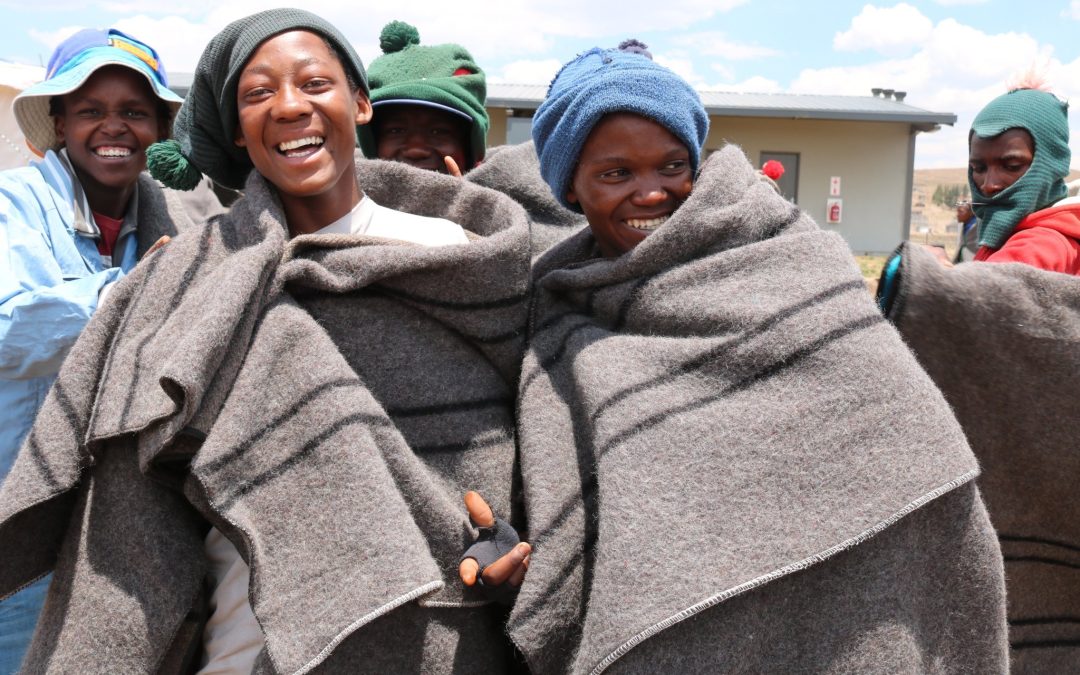
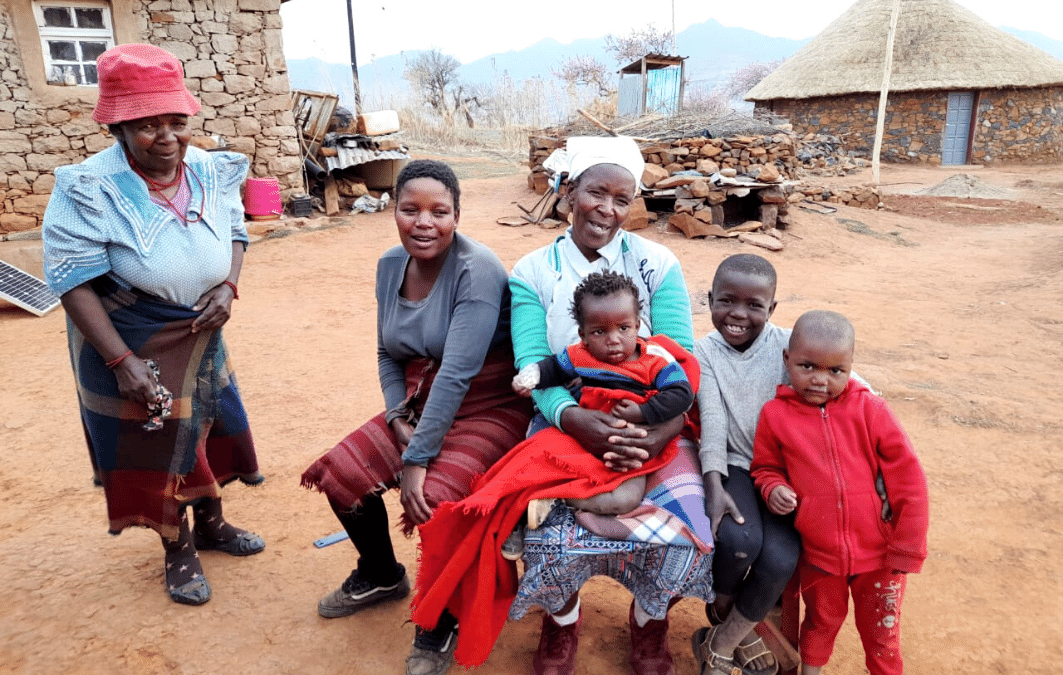
Grandmothers (‘nkhonos’ in Sesotho) hold a special place in Lesotho families. Our Grandmother Support Program empowers 200 rural grandmothers each year with education, access to local resources, and psychosocial support to help them overcome grief and care for their orphaned grandchildren. Read on to meet three nkhonos from Qoqolosing.

Nkhono Maneo

Nkhono Maneo has the energy of a 20-year-old woman. She said she will die with a spade in her hands to provide for her grandchildren. She built her two houses with her bare hands although her knees are quick to remind her that she is old. Nkhono said, “I am grateful to Help Lesotho for putting food on my table when I could not provide for my grandchildren because of an illness that had put me on bed rest. I put the lantern light on in the evening for my grandchildren to play outside while I finish cooking. I then take it back into our house to share a meal with my family and talk about the day’s events. I have no words to express when it comes to the life skills sessions I attended. I learnt to forgive and make amends with people whom I had conflicts with although, for some, it is a work in progress. I have been able to manage my anger at the state of my life and build a stronger relationship with my grandchildren.”

Nkhono Mants’ihlele

Like a thief in the night, death left her shattered from burying eight of her children and husband one by one. She is left with one daughter whom she prays for every day. With tears cascading, Nkhono Mants’ihlele said, “The life skills sessions have given me new hope and helped me to grieve although it will take me time. I had never seen how important I am until the self-esteem session made me appreciate life and my family. My family of 7 members entirely depends on my small pension but because of learning about good relationships, my neighbours and I always share the little we have with one another to get to the next day. I loved the Grandmother Program. I have a blanket to keep warm and a lantern light to brighten my night without the fear of running out of paraffin or not having money to buy a candle. I don’t remember the last time we had a decent meal but Help Lesotho really answered my silent prayer. I feel rich at heart and have found healing.”

Nkhono Malerato

“I recently lost my husband and could not bear the thought of being called a widow. I have to wear mourning clothing every day for a few months. I miss him every day especially when I come back from the trainings because I used to share with him everything I learnt and he really appreciated Help Lesotho. When I came home with the food relief and the lanterns I remember him jokingly saying that he can see that I have not been leaving his sight for nothing.”

Nkhono Malerato lives in a household of eight who all depend on her pension money. She has learnt to appreciate new ways to communicate with her grandchildren instead of shouting at them. She now approaches them differently and has seen remarkable improvement in their relationship as a family. “Thank you Help Lesotho for helping me heal.”

Reflections from Guests to Lesotho

Reflections from Guests to Lesotho

Annually, Help Lesotho welcomes a group of international guests to visit our work in Lesotho. These 12-day trips are an incredible opportunity to participate in an authentic and deeply meaningful experience in rural Lesotho. Three guests who visited Lesotho in 2019/2020 share their favourite memories below.

Information about future trips to Lesotho can be found in the Information Package. The 2021 and 2022 trips were cancelled due to COVID-19, but we hope to welcome guests once again in February 2023.

Deb Ruse, 2019

My trip with Help Lesotho was a wonderful experience and I would love to return. As a member of Kingston Grandmother Connection, I was familiar with Help Lesotho but until I saw their programs in action I didn’t understand how they all worked together to empower their participants. Now I understand the way the participants are expected not just to learn for themselves, but to share their learning with their families and villages, becoming true agents for change.

Everyone we encountered was friendly and appreciative. Seeing the way Peg and Help Lesotho are so respected in the country was revealing. One day we were visiting the Pitseng Centre and as the schools were closed, several young people were using the library to study. When Peg introduced herself, their faces lit up with wide smiles! Everyone seemed to know her name, wherever we went.

Of course the focus of my group in Kingston is the grandmothers, and I loved meeting them, serving them lunch in Pitseng, listening to their songs and stories. But one of the most moving experiences occurred when our group sat in on the last day of a Herd Boys’ gathering in Mohlanapeng. After congratulating them on their efforts, Peg asked the young men if there was anything else she could do for them before they broke up. One brave young man stood and asked “Can you give us soap?”. When Peg asked “why now? I offered this before and you said no”, he responded, “now that we are going back to our villages, ready to be heard, we want to be seen as respectable and we want to be clean.” Oh my! With a donation from one of my fellow travelers, Peg was able to commit to their request, and went on to purchase laundry soap, soap, toothpaste and toothbrushes. And, a couple of soccer balls (their last request). Afterwards we gathered outside and the young men sang and celebrated with us. Many photos were taken!

If you ever wonder “should I go?” GO! You will not be disappointed.

Nona Mariotti, 2020

When my “kids” said in August 2019, “You have to get away for a holiday this year,” I knew exactly where I was going to go! LESOTHO and South Africa! I had been a member of the Kingston Grandmother Connection for almost fifteen years; consistently devoured Peg’s descriptive letters from Lesotho, and dearly envied other members of our group recounting their special visits to “Help Lesotho.”

The email informing people of the opportunity to visit Lesotho and integrate a Help Lesotho donation magically came at the right time. I immediately forwarded the email to my sister Dianne in Halliburton with a query, “interested in going with me?” She immediately responded “sure!” I knew it had to be another great sign for me. Little did I know at the time this was to be truly an emotional experience for us both.

Dianne did not know much about Help Lesotho but had complete faith in my choice of experience. She suggested that since we were going that far, let’s do some sightseeing as well. Precisely what I needed! As I was to later discover this was to be the prescription I needed as I continue along the road of life now chosen for me.

Our arrival to the Hlotse Centre was such a sincere welcoming. Each of our private bedrooms had a personal note or hand drawn picture. Any concerns re where we would be housed immediately disappeared as our shared adjoining apartments had all the perks of home! No one could ask for a more dedicated hostess than Peg and her “crew”. Even though Peg and staff prepared us for the days ahead no one could prepare you for the different emotional reactions we were all going to experience.

It was such that by mid-day of our first day at the Pitseng Centre we could look into each other’s eyes knowing we were both feeling the same emotion. It was Saturday and the Centre was alive with dozens of children and youths, ages two to twenty-two. There were mini soccer games, board games, coloring and painting with the older students brushing up on their computer skills and applying for college/university. None of us will ever forget the circle dancing and singing we did with all the children as they expressed their joy of life.

Our drive to Berea to visit grandmothers was so memorable as they sang and danced to welcome us to their domain. Each grandmother face etched a different story yet radiated with hope and thanks as they greeted us and their ‘M’e Peg. It was such a privilege to serve them lunch and know they in turn were appreciative of the opportunity to participate in the grandmother programme offered by Help Lesotho.

The Young Mothers Support Programme introduced us to young moms and their tots. They were so willing to inform us about what they had learned and provided us with the opportunity to visit their homes. A true lesson for all that home is where the heart is as these wonderful ladies shyly showed us their simple living with such pride. Again, it was so evident that they had gained such respect not only for themselves and their child but for the opportunity to be part of this support programme. One sensed these moms and their babies’ experiences, through HL, would truly generate a healthier lifestyle for the family.

The scenario of riding a horse in the mountains in my 70s was never on my wish list! Being led on horseback by a herd man, into the setting of Majara Primary School was so exciting. The children were outside along the roadway to greet us singing! We all felt like royalty! The opportunity for me to see the school setting, classroom environment and speak with the students demonstrated their awareness that education was a privilege, something to be truly valued. They certainly expressed ambition for their future when asked.

To truly understand how HL achieves success one has only to be given the privilege to sit in class with the youth participating in Leaders in Training. These young adults welcomed us into their group, even shared their private lives and concerns. The staff were so professionally supportive and challenging to these young adults that the students themselves were comfortable communicating their struggles. This comprehensive programme will develop leaders in the communities if not in the country.

The closing memories I hold dearly is the short time I got to spend with our sponsored student Makoenane Mokhethi. She had taken three buses to come to the Holste Centre to meet me as she had been to Maseru to try out for the Provincial Volleyball team. I do not know if she made it onto the team as with COVID it probably was cancelled. She was only 16 yr old and most girls there were 18yr+. She was again having to take 4 buses home into the mountains of Thaba Tseka.This was an experience worth repeating for sure! An experience I only wished I could have shared with my husband, grown children and grandchildren.

Thank you Peg and staff of Help Lesotho in Canada and in Lesotho! Khotso

Hilary Barrett, 2019

I and seven others visited The Mountain Kingdom in March 2019 as guests of Help Lesotho. We met the people, and learned about Help Lesotho’s programs through visits around the country. What was memorable? Just about everything!

Sitting outside the Hlotse Centre and watching the young women and men, members of the GIRL4ce Movement, perform a play – with a social message. In Lesotho, violence against women and girls is endemic and this particular drama showed how young girls can be sexually abused, and later forced to marry a man they do not know. GIRL4ce stages this and other dramas in rural areas to start conversations within the community, which can be therapeutic for those who have suffered, and those who did not realize it could be changed. The enthusiasm and commitment of the actors for their cause was wonderful to see.

Going up into the mountains to Thaba Tseka. At first the road was good, but as we got higher and higher there were switchbacks and precipitous drops. The view was spectacular – green mountain ranges behind which more mountains faded into purple hues. The pavement ended and became quite bumpy. Ntate Motsamai asked, “Are there any dirt roads in Canada?” Indeed, there are!

Riding up a very steep mountain on horseback to visit Majara Primary School. The village struggles to feed its people as there is not much land for farming. As usual we were welcomed with singing and dancing. A local councilor rode up with us, very concerned about the state of the school and seeking support from Help Lesotho. The tin roof had blown off and, although the villagers had done their best to patch it up, part of the school was unusable.

Visiting the Khanyane Pre-school, near Hlotse, where even the youngest children could sing the Lesotho National Anthem. When I got home, I quizzed both my English and Quebec school-age grandchildren, and none of them could sing their own national anthems!

As I went through the airport on my way home, I was asked by the checkout lady what I liked most about Lesotho. I said “the singing”. She replied “We do not sing because we are happy, but because it helps us to deal with all our problems.” As a singer myself, I understand this.

Many thanks to M’Peg and all the staff who make this well-run organization such an inspiration, and to the people of Lesotho for their gracious welcome!

2022 #4: Letters ‘from’ Lesotho (#139)

2022 #4: Letters ‘from’ Lesotho (#139)

Lumelang,

To my chagrin, I was absent for the graduation ceremony of the Leaders-in-Training (LIT) Program – again. I have written about it many times – the ‘best-clothes-possible’ attire (even the occasional evening gown; often traditional dress), the rehearsed performances of song, poetry and dance from the young people, the almost blinding glow of pride in their faces.

This is not an easy program – these wonderful young people have opened up infected wounds of abuse, neglect, fear, isolation. They have learned words to describe the intensity, anger, desperation and longing. We have 22 programs and all of our intensive programs have these graduations. For the young mothers, grannies, computer students, and herd boys, this might be the only graduation they have ever had. Chiefs and community leaders come. Each arrives with mixed feelings. They are so proud and look forward to receiving their special certificate, yet reluctant. They definitely do not want to leave their program. It has been a womb – safe, loving, healing and growing. (One of them stood up at the graduation and said: “I felt loved”). They will remember this time for the rest of their lives, knowing they were brave enough to face their demons and embrace behaviour change and healthy decision making.

I have a shameless pride and admiration for them. I know in the depths of my heart the risk they have taken to be known, and they never flinch. I have tears in my eyes as I write this. I missed the chance to tell them that and to tell them we expect them to go forward to share what they have learned with others and to make a real difference in their families and communities – not just now, but for the rest of their lives.

(Top Left) Herd Boy Graduation, (top right) Grandmother Graduation, (bottom left) Young Mother Graduation, (bottom right) LIT graduation.

As I was writing this, I saw an unsolicited post on LinkedIn from one of our interns, Katiso Motopi:

“One year ago today I graduated from the Leaders in Training (LIT) program at Help Lesotho. I wish everyone could go through this. It changes the whole way of seeing life. It was very entertaining and educational. I got a chance to reflect on my fears and challenges, shared my experiences and knowledge. I cried for the first time in 14 years, laughed and felt the healing through the powerful sessions. Since that day, I still strive to be a better person both professionally and personally, a better father, a better colleague, a better listener, a better psychosocial support provider and most importantly an agent of change. After my graduation, I was blessed to join the Professional Intern Program here as a Professional Psychosocial Support (PSS) Intern. This is the platform that I am still part of which is helping me to improve in my PSS provision and facilitation skills (to be continued).

The isolation of COVID has brought a whole new awareness of mental health and the need for psychosocial support to all of us. The lid is off the can. We need each other and now we know how much. From Day 1, 18 years ago, Help Lesotho has focused on this, developed its approaches and programs, trained our staff around improving mental health. I see the international development world finally realizing how central this is to social change. Unless people’s woundedness is acknowledged and healed, no amount of money or ‘stuff’ will make the long-term difference. Wounded people do not make good leaders. Emotionally damaged adults do not make good parents or teachers. Deeply insecure men do not stop bullying and domineering.

I have used a fair bit of my COVID-non-travelling time to improve our staff training in these areas. We need outstanding materials and training to maintain our expertise in this area. Other organizations come to us for this specialization because it is so hard to develop this kind of capacity. We developed the CHANGE4ce Program to leverage our experience, proven materials and staff talents to operationalize our strategic goal to train more organizations to deliver deeper, more meaningful psychosocial support (PSS). The need only increases. Our online learning platform now offers a fulsome 12-session Psychosocial Support Training Course (required for all our staff) and a 7-session Facilitator Certification Course with an extensive practicum (required for all our program staff). Each is multi-media with videos, readings, assessments, exercises, discussion groups and practical tools and assignments. Going down into the heart of human misery is difficult and requires knowledge, perspective, self-care and tender talent.

I share this as it is the thread that weaves itself throughout all of our work, approaches and relationships – whether staff, partner or beneficiary. This is the foundation on which we stand and from there people can learn, develop critical thinking and move on with their lives with confidence, autonomy and social responsibility. That is what brings about real social change – when enough people have the confidence and personal capacity to demand equality, justice and democracy.

To give you an idea of the impact, I include some quick quotes from the course graduates:

  • “I struggled when interacting with beneficiaries but now I am more confident in handling their painful experiences and circumstances.”
  • “It really helped me to grow personally as a father, husband and professional to be a better PSS provider.”
  • “It helped me to heal emotionally. Now I feel I have a big room full of emotional support tools for myself and others as I apply what I have learnt. It helped me improve my relationships with other staff and to feel confident that I have necessary skills to support others.”
  • “PSS is so complex. We need to master the skill of listening carefully, have a kind heart, empathy and respect for others. Beneficiaries receiving the right kind of PSS at the right time helps them to be resilient towards challenges they are faced with – to be assertive and become survivors.”

If we could train existing organizations, front-line service providers, such as police, development and health workers, and teachers to deliver their programs with greater compassion and comprehension of the underlying issues, maybe the pregnant girls would go to the health clinics, the community members would report sexual and domestic abuse, the children and women would feel safer, and youth would get more support. Hopefully, we will find funding to be able to provide this training for free to organizations that cannot afford it or have not yet valued such in-depth training for their staff. Wish us luck.

Those of you who follow our individual programs will know that this approach is central and has affected the lives of everyone who has come in contact with our Help Lesotho programs, staff and donors, such as these two young girls:

When one of our staff arrived at Mpati’s home, she fought back the tears. A young girl was fixing the pillow under her granny’s head. She is tasked with nursing her grandmother at an age when she should be playing with friends. Mpati is part of our grade seven Pearl Program, paid in part by the revenue from our pearl sales. The program care, skills, knowledge and self-awareness has given this child the commitment and capacity to do well at her school work, handle the housework and look after her grandmother.

15-year-old Pontso, a Pearl Program graduate, is an exemplar of the continued high rates of child-headed families. Many drop out of school to collect tins and metal to provide for their siblings who are also in school. Child-headed households perpetuate teenage pregnancy and face much discrimination. She has looked after her four siblings (the youngest is 18 months) since both her parents left to work in South Africa. Pontso starts at dawn to cook, do the laundry, and get herself and the other children ready for school. She was often late for the training sessions, yet her presence lit up the room as she actively engaged in discussions and activities. She used the little transportation money we gave her to buy essentials for her and her siblings and walked the distance home. Despite all this, she graduated from primary school in December 2021 with flying colours and is now in high school, through our child sponsorship program.

As I close, I want to respond to a few questions from readers about COVID-19 in Lesotho. I reached out to Tebello Sarele (read more about her here), one of our alumni who is a practicing pharmacist, to share some of the issues from her perspective. Tebello describes the misuse of drugs and traditional medicines to prevent or fight the infection, such as antibiotics, which absorb people’s precious funds and can cause liver and kidney damage. People have defaulted on getting their AIDS medication or drugs for chronic diseases (heart disease, diabetes, high blood pressure, etc) for fear of getting infected at the clinics. These conditions are now out of control. She highlights the myths and inadequate supervision for adverse reactions to COVID vaccines as a significant driver to vaccine hesitancy. She writes:

If I were to be given a chance anywhere, I would stand on the mountain and shout “The population of Basotho have a right to access quality pharmaceutical care”. This is what I would advocate for even in my sleep. As a Help Lesotho Alumni, I believe that I need to do what I can to make my country different, that I should be honest, transparent, and SERVE AS I LEAD. LEADERS NEVER GIVE UP!

Tebello

Each one of us – on staff, in the programs, on the board and in the families of those around us, thank you that you never give up either. The situation globally is truly depressing, but we are not helpless. We can be the steady help that changes lives and improves social justice. You are the ones who help us do it. Thank you!

Peg

P.S. Another good use of my time is catching up with you. If you would like to chat on the phone or go for a walk in Ottawa, send me an email. I would love that!

Click to read Letter #5 from 2022

Click to read Letter #1 from 2022
Click to read Letter #2 from 2022
Click to read Letter #3 from 2022

Click to read past Letters from Lesotho

2022 #3: Letters ‘from’ Lesotho (#138)

2022 #3: Letters ‘from’ Lesotho (#138)

Greetings,

I know you are as excited as I am at the advent of spring – it has not come too soon! I imagine you are planning gatherings and trips, hopeful to satisfy some of those longings. I am booked and looking forward to a hiking trip for a week in the Rockies in the first week of April – it has been so long …. I can’t wait!

I have so much to share in this letter that I will get right to it. Note that I am including two videos of our beneficiaries that are well-worth a few minutes of your time (about 11 minutes total running time).

Firstly, our staff have done a terrific Annual Report for 2021 (fiscal year ends June 30). It is quick, visual impact reporting on our work during a very challenging year. The financial charts on this page tell you exactly where your money has gone – http://helplesotho.org/financials/.

Young mothers in Lesotho in their training program

As you know, we have a vibrant program for pregnant girls and young mothers. One incredibly generous woman in Canada sponsors a major portion of the program and UNICEF another section so we can reach more girls. The program is holistic, dealing with pre- and post-natal issues, breastfeeding and nutrition, sexual and reproductive health, emotional challenges, conflict resolution, and managing the stigma of having babies so young. The girls also learn to start a small business in their villages. Over the years, the program’s reputation has grown so that UNICEF regularly uses it as an example in other countries and sponsored the production of this video which introduces you to these dear young woman as they speak for themselves.

The world just celebrated International Women’s Day. It is exciting to see the changes and concurrently disappointing to see the lack of progress. Our staff and beneficiaries honoured the day by striking the ‘Break the Bias’ pose!

As Help Lesotho evolves, we move fervently to scale up our program strategies to educate community leaders and members on their explicit responsibility to create the social change required for girls and women to be safe and part of decision making in all facets of life. Since 2016, our GIRL4ce Program has delivered the message through drama, song and poetry. Our community dialogues train herd boys to educate and communicate with their local councilors on their rights and the rights of girls and women. All beneficiaries are trained to speak up to the elders, mothers-in-law, teachers, parents, guardians and local leaders on their rights. The impact is significant and in the end, the community leaders are appreciative:

“We are so empowered as leaders, from now onwards we understand that we have power to influence for social change and can keep the momentum going within our societies to support people vulnerable to Gender Based Violence because indeed it happens in our villages.”

‘M’e Mafonea

“I was not aware of such a very important role of protecting the rights of women and girls as a politician. I have always been interested in political powers without realizing the responsibilities it comes with. Now I’m ready to make a difference in every corner of my community and those next to me.”

Ntate Keele

This scale-up includes increasing our programing for boys and men, for their own benefit, and as they are the usual perpetrators and conveyers of inequity. We have augmented the number of male participants from 20% to 35% over the past few years, despite our experience that donors are often reluctant to fund male programs. We have boys and men in various programs (Guys4Good for grade seven boys, the leadership programs and camps, sponsored children, Computer and Life Skills, GIRL4ce, for example). Funded almost entirely by another generous woman, the impact and reputation of our Herd Boy Program is significant. Some of these boys are as young as six when they start herding. One of the Chiefs in Berea, Ntate Mangana, said:

“Since the herd boys attended the program, there is a very huge positive change in their lives. Before Help Lesotho’s intervention, I attended to many criminal cases of herd boys who violated people especially, girls and women. Although I repeatedly tried involving the police to intervene, the situation remained the same. The herd boys were very cheeky and could not abide by any rules related to range management. This led to disputes between families and in some cases other people even lost their lives in such family fights that emanated from inability to solve conflicts harmoniously. In this community, most young men abuse drugs, especially marijuana which is easily accessible. The past two months, I noticed a change to most of the boys here. I’m glad to say that they have been so engaged in the community policing committee, they organised and participated in a soccer tournament focused on messages to do away with drugs. They aim to rebuild their lives and act as positive role models to their peers.”      

You definitely will want to watch this short video of these boys so far away and trying so hard to be good men. 

We piloted a program to combine the herd boys with the out-of-school boys in the same village. In many ways, both groups are idle, prone to depression and substance abuse with limited prospects for their futures, and are often the abusers of the girls around them. Alas, bringing the two groups together did not work. Each group has unique challenges, different education levels, and deeply ingrained biases towards the other. The groupings had such different attitudes and contexts that they could not communicate or support each other. We now run programs for each group so they get the support they need to safely explore their challenges, emotions, and hopes for the future.

As the mother of three sons and grandmother of four young lads, these fragile boys break my heart. They are so wounded, but they actually thrive when given the support, attention, empathy and time to heal from their insecurities and lack of knowledge. When they explore how these negative, abusive sub-cultures sabotage their relationships with their families and girls they long to partner with, they start opening up to growth and eagerly grasp at new ideas to become young men they can respect. One staff wrote: “The boys say they are no longer forcing their girls into sexual activities but are choosing to communicate and discuss consent because they want better relationships”. From our multitude of reports here is a sample from our staff, as the boys can now:

  • recognize peer pressure situations and have the skills necessary to resist it;
  • identify people they want to become friends with by sharing their values;
  • think for themselves rather than allowing others to make decisions for them;
  • identify their own self-esteem levels and strategies to boost their confidence and self-esteem;
  • understand the importance of self-talk, and that saying good words to themselves when they do not feel strong will help them to accept who they are and value themselves when others do not;
  • accept that dropping out of school was not a healthy decision and if given a chance to go back to school they would go;
  • understand the laws and acts protecting human rights in Lesotho, including that children actually have rights and should be protected against gender-based violence, being exploited, forced into marriage and denied an opportunity to go to school; and
  • realize that abduction and human trafficking are serious offenses, even abducting girls to be married, and that if they witness these things, they could also be found guilty.

Many of these boys do not know their HIV status as they are afraid to go to the clinics. We bring the health care providers to them, for testing and education about transmittable diseases, condoms, female reproduction etc.

Doing this math, if we helped close to 22,000 people last year, we reached over 7,700 boys and men. Multiply that by the number of years and we are reaching an enormous number of males with deep enough programing to create substantial social change.

And finally, I want to share this happy story. When COVID forced lockdowns, we were deeply concerned about the education and mental health of the children. Most have no real support, no books at home, often no table to study, light to read or educated parent to help. We were also concerned about our program alumni becoming depressed with all they have to cope with. We married the two concerns and called it ‘Limitless Horizons Volunteer Village Outreach’. Next week marks exactly one year since the project began.

In 2021 we had 96 alumni who volunteered 5,379 hours (av. 56 hours per volunteer) and reached 4,736 children (av. 49 children per volunteer). In 2022, just over half of the original volunteers continue their outreach activities and we are welcoming 30 new volunteers to the project this month. The alumni receive training in tutoring and basic listening skills to then work with children in their village to keep them motivated to learn and to provide basic psychosocial support. We have developed and distributed over 5,000 activity books, filled with COVID-19 education, math, literacy and science games and activities, motivational messages and coping strategies.

The project has been so successful that the guardians and parents have asked us to teach them how to better support the children in their education! Perhaps most rewarding is witnessing the pride the youth volunteers have in seeing their commitment to role modeling and helping others yield substantial impact. They are earning the respect of others in the community. They finally believe that they have what it takes to make a difference.

To learn more about the educational context in Lesotho right now you can check this out: https://reliefweb.int/report/lesotho/striving-build-better-future-children-through-education-lesotho

I sometimes struggle with what to include in these letters as there is so much to share, context to provide, people to thank and others to celebrate. In the course of a given series, I try to cover key areas but do let me know if you want special topics in either of the last two letters this season.

Be well my friends, embrace the day, know that you are appreciated.

If you will accept it, I send you a hug.

Peg

P.S. For those who are interested, this digital government of Lesotho flip brochure has lots of photos and information on various sectors. The font is small but you can enlarge any given page: https://heyzine.com/flip-book/a6669c2361.html

Click to read Letter #1 from 2022
Click to read Letter #2 from 2022
Click to read past Letters from Lesotho

2022 #2: Letters ‘from’ Lesotho (#137)

2022 #2: Letters ‘from’ Lesotho (#137)

Lumelang,

When I take my first sip of coffee and start my day, it is already early afternoon in Lesotho. I open my emails with a moment of trepidation, knowing there will be many and that each one needs my careful attention

Mamoletsane Khati, Country Direcor

Even though ‘M’e Mamoletsane and I meet for a couple of hours weekly to share updates on the many issues we are facing and the opportunities we are chasing, there are always things that need immediate response. Some emails tell me of sad news of our beneficiaries. Others reveal the latest on the social-political issues in Lesotho from my newsfeed. There might be an issue with maintenance in our centres, a new report or story on the impact we are making – on an individual or on a group, a new request for proposals from UNICEF or UNFPA. My inbox is also the conveyer of the dearest messages from donors in support and encouragement. Every day has its surprises.

A recent email reported the reach of a special post on our Facebook page. It was one of the most popular posts we have ever had (over 7,000 views!) – about a man who has no Facebook account. Ntate Motsamai, our incredible driver, was awarded his Ten-Year Loyalty Plaque at a recent staff meeting. I so vividly remember hiring him. We had decided we needed a professional driver to transport staff to our outpost locations. I had done a lot of the driving myself over the years but no other program staff had a license, nor were confident to get one.

I hired Ntate Motsamai because he had been a long-haul truck driver and knew how to manage vehicle breakdowns in the mountains. He volunteered helping the vulnerable at his church, had a gaggle of children and wanted to work closer to them. He spoke little English then and was quite shy with me.

Over these many years, Ntate has transported thousands of pounds of goods to our beneficiaries and staff to the most rural sites you can imagine. When we have international guests, he and I drive in convoy. He treats our guests as royalty and they all end up loving him (many commented on the Facebook post). He helps the grannies, translates for me, makes our stressed-out young mothers laugh, and kicks a ball around with the herd boys. He and I have had so many adventures – and misadventures – together. Had I been in Lesotho, I would love to have given him this honour myself – with a huge hug. He is a very dear man – who is now famous!

As well as a gift, ‘M’e Mamoletsane took he and his wife to the (one and only) hotel for a nice lunch to celebrate.

Our fabulous head of finance, Lesley Griffiths, also celebrates her 5-year anniversary at Help Lesotho this week. Lesley was our auditor for 8 years prior to joining us, so she has been with us and our growth for much of our journey. She stewards the financial team and its accountability with expertise, the diligence of a pit-bull, and the passion of a forensic auditor. Our last five audits have been ‘clean’ with no suggestions for improvement.

One cannot overstate the value of loyal employees who care deeply for our beneficiaries and always put them first.

Since 2006, we have held our annual Leaders-in-Training (LIT) Program at this time of year. As usual, 65 carefully chosen young men and women between ages 19-27 are launched on an exploration of themselves and their ideas that will transform them forever.

I always look forward to the first morning – watching them come into the centre with a mixture of anticipation and apprehension, not knowing what to expect, hopeful something good will happen. I too am filled with hope that something beyond wonderful will happen for them – this is why we exist.

At the staff’s request, I conduct the first session of the program every year on self-awareness – the last two years by Zoom. Even with the awkwardness of a screen, masks and distance, their questions to me are filled with longing for guidance and care:

  • “’M’e, how can I learn to be confident, I am always afraid?”;
  • “’M’e, I want to make better decisions. Please tell me how”;
  • “’M’e, I am crying all the time, how can I learn to stop”.

One wants to just hold each one for a while and listen. They are desperate to know better; to do better. Our staff do an amazing job with all the love and care possible. Everyone grows, everyone loves the program. The participants develop amazing friendships, many of which last a lifetime.

As I write, our staff are playing a friendly soccer game vs. the LIT participants. Everyone is out cheering each other on! The match is ongoing, so no final score to report yet. Amid the heaviness of the world this week, I find comfort in seeing these young people having fun. 

I write about this program every year because it is central to our mission to: 1) help young people heal and grow to take personal and social responsibility and leadership; and 2) identify promising young leaders as candidates for Help Lesotho’s Professional Internship Program. I write about this every year because the need is extraordinary and pressing. Lesotho requires ethical, wise leaders more than anything. With the exception of two, all our program officers are graduates of this program as it forms the foundation of values, ethics, commitment to excellence, and compassion that is the life breath of Help Lesotho.

When ‘M’e ‘Mamoletsane sat in on the Grief and Loss session last week, it shook her to the core. The depth of their pain is unbelievable and it pours forth as an emotional avalanche the minute the dam is breached.

Our recent three-year evaluation of the program allows me to share a sample of the data collected through our participant feedback surveys. Their choice of most meaningful topics is consistently self-awareness, self-esteem, grief and loss, and communication. Perhaps the most stable and valuable measure of longitudinal impact is the unsolicited positive feedback and appreciation we receive from LIT alumni – even after 5, 10 years! The most common suggestion is that the program be longer and available to all youth in Lesotho! The full 2021 LIT evaluation, including impact stories, is available here.

You might also enjoy watching this video (about 12 minutes long) of two of our current Professional Interns, Lineo and Motopi, who participated in LIT in 2021. 

We have an abbreviated version of the LIT content in our Computer and Life Skills Program offered at both centres throughout the year. As well as life skills sessions, the participants learn the basics of word processing, spreadsheets and professional presentation. One of those morning emails shared this update:

Three of the young women in our current course, Pulane, Rorisang and Motena, are between 18-20 years of age and were friends before joining the program. When discussing the importance of building healthy friendships, they shared the challenges of being good friends to each other. Pulane teared as she described her feeling of being trapped between her two friends who fight almost every day.

They said they realized in the session on friendship that they never feel they belong and so they are too intense with each other – wanting someone to love them. They compete for approval and superiority at who is the smartest or the best looking. The girls said they understood their emotional needs better now and that their need for approval was bringing behaviour they were ashamed of now. They became aware that children in Lesotho rarely feel they belong or are accepted, especially when they are orphans or if they live by themselves at a young age, and that this is a reason why children don’t get along or do well at school. Often their friends are all they have and they now realize that if they fail to build healthy friendships, they find themselves in risky behaviours such as early pregnancy, early marriage and dropping out of school. They said that equipping the young people with knowledge and skills and these valuable lessons is the most important thing Help Lesotho has offered to them.

To conclude on some levity, you might enjoy this video – the two ladies are absolutely crazy and the footage of the beyond-rough roads and typical Basotho culture is wonderful. I have driven a huge white double cab Toyota Hilux pickup on exactly these roads for close to twenty years. Believe me, they were even worse back then!  If you watch to the end you will get a sense of some of the people I meet and the places I go! Enjoy.

Thank you to those who responded to the survey in the last letter. We all enjoyed reading your comments – and appreciate them.

Every day, we try anew. Everyone is important.

And, so are you! I hope you are able to get the hugs and laughs you need to manage this week.

Peg
Computer and Life Skills Impact Stories

Computer and Life Skills Impact Stories


MOLEMO

“I found out Help Lesotho offers Computer and Life Skills from a family member who graduated from it in 2016. He told me I would enjoy it very much just as he did but I think I even enjoyed it more.”

Molemo started working as a radio presenter soon after graduating from high school. He knew he needed to learn how to use a computer if he was going to be successful in his role.

Molemo enrolled in the program for the computer skills, but by the end of the session he realized that the life skills sessions had a huge impact on him, particularly the sessions on Effective Communication, Personality Inventory and Self-Esteem. He feels that he learned a lot from hearing his fellow participants share about their personal experiences.

“As a radio presenter I am going to do my job so well with the skills I acquired from the program as I interact with listeners and use a computer at the same time. I have been well equipped with skills of effective communication and factual knowledge about cancer and gender-related issues, which inspired me to select them as topics to explore in my shows and raise more awareness about them to people.

I want to applaud the warm welcome I got every day from Help Lesotho personnel from the security guards at the entrance all the way to the people facilitating. Even on the days I was in a bad mood, coming to Help Lesotho helped me cheer up.”


THAPELO

Thapelo knows that he has not always made the best decisions in his life. Until recently, he used to deal with the stress of conflicts in his family by using drugs and alcohol and engaging in risky behaviour. He joined the Computer and Life Skills Program and has completely turned his life around!

“Since I have joined this program, I have been able to make better informed decisions and my self confidence has improved. I can firmly stand for my actions and think sensibly about my decisions. Learning about goal setting opened my mindset to be a visionary, to set good goals and to put the work into achieving them. I have grown up, and I am grateful for this opportunity.”


RELEBOHILE

Relebohile had a good childhood until grade 11 when her father lost his job in the mines. From that point, her family struggled. She was so distracted she perform poorly on her final grade 12 exams. Her family could not afford for her to repeat the grade, so instead she left for South Africa in search of work.

In January 2020 she returned to Lesotho to celebrate Christmas with her family. She started seeing a local boy and found herself pregnant. They returned to South Africa together, but after the birth of her son the relationship deteriorated. Relebohile was depressed and overwhelmed about how her life became so difficult in only two years.

In early 2021, Relebohile bravely left her boyfriend behind in South Africa and returned to Lesotho with her son. A friend told her about Help Lesotho’s Computer and Life Skills Program and for the first time in a long time Relebohile felt a glimmer of hope for her future.

Relebohile’s favourite sessions were about communication, goal setting and role modeling.

“I learnt that having a child at a young age was not the end of my life. I can see that my life has changed, I learned to forgive, even my child’s father. I am on a healing journey now. I am ready to build a life that will be beneficial for me and my son by making better informed decisions.”


PAPALI

Papali first heard about Help Lesotho from her employer who is a former Help Lesotho employee.

“She encouraged me to come and register for computer and life skills and I have never been so grateful to her because I not only gained knowledge on computer skills but I also got my healing in the life skills sessions.”

She shared that the life skills sessions renewed her as she learned how and why it is important to express her feelings in a healthy way. The goal setting session reminded her of the goals she used to have, including studying nursing. Papali is now taking small steps towards applying for nursing school!

“The sessions made me to be a better person, but I am still yet to work on myself.”

2022 #1: Letters ‘from’ Lesotho (#136)

2022 #1: Letters ‘from’ Lesotho (#136)

My personal greetings to each one,

As this letter falls into your inbox, I wonder how you are. You would be surprised at how often I think of you – wondering how our donors are doing – seeing your names, wondering if you need help or a listening ear. We are all struggling to manage during this seemingly endless pandemic and we all need support. Thank you for your messages of encouragement and for remembering us and our beneficiaries when you have so much else on your mind.

I am grateful daily that my children and six grandchildren have remained healthy the past two years, as I have. We have all had a very long reminder about gratitude!

My plan to return to Lesotho in March or April is on hold until it is safe and reasonable to satisfy four different countries’ regulations to get there and back! I will go as soon as I feel it is a good idea. We have a lot of interest in the next donor trip so we will plan that when safety allows. In the meantime, I will once again publish my ‘Letters ‘from’ Lesotho’ on our usual schedule over the next couple months. 

As we move into our third year of COVID, I am often asked how it is to lead an international team at this distance. Firstly, I want to highlight that we are now an all-female-led organization as a result of some leadership changes last year. Besides myself and our finance managers in both Canada and Lesotho, we now have a new female Country Director in Lesotho and a female Chair of the Board. This is an amazingly committed and talented team, with whom I work closely and am deeply grateful for their leadership. I have asked our two new leaders to share some thoughts with you.

Last May, ‘M’e Mamoletsane Khati took over from our wonderful Country Director, Shadrack Mutembei, who helped build our organization in Lesotho for ten years. I love working with ‘M’e ‘Mamoletsane and know that she will continue to guide and grow the organization for years to come.  Many of you have met her already and I know those who haven’t yet, will want to. She writes:

“Since I joined Help Lesotho in August 2020, even throughout COVID, I have witnessed so much social change brought from our programs. Our dedicated, talented staff have persevered and still managed to be positive and effective. Working with such a selfless, committed team has developed in me so much humility and compassion for others. Our interventions continue to bring so much hopefulness and optimism to us all – staff and beneficiaries alike.

Mamoletsane Khati, Country Direcor

I hear often from community leadership, chiefs and councillors, and partners how our programs have improved their communities and their relationships with each other – even economic improvements!  Our grannies were truly dismayed during the shutdowns to miss their usual trainings, support and care. When they could meet again, they sang and ululated with sheer delight to be together and receive some relief packages. One teary, yet appreciative grandmother said; “Oa tseba ke tlohile hae ke sa tsebe na ke tlo khutla ke soka eng! Ke ne ke sena le ha e se e le phoofo feela. Empa hona joale kena le papa, le lijelello. Kea leboha Help Lesotho” loosely translated as “The children and I have been without food and now I will have good things to feed us. With my whole heart, I thank you, Help Lesotho.”


To our chagrin, our talented and beloved long-time board chair, John Graham, completed the maximum term of nine years on the board and retired in November 2021. I truly enjoyed working with John – he always had my back and remains a sage, faithful friend and supporter. Thankfully, Kathleen Lauder has taken up the mantle to guide us as our new chair. Kathleen was one of the very first people, with Sheryl Selwyn, who believed in this crazy vision I felt so compelled to do – even before my first trip to Lesotho. She has remained committed to our work and brings her own decades of experience in international development to our board. These photos were taken in Kathleen’s first of two trips to Lesotho (2006/2007) when we had no office, no staff, and almost no money! She lived in a hut in an extremely remote school.

Kathleen Lauder compilation in Lesotho

Kathleen writes: “It is an honour and a privilege to be the chair of the Help Lesotho Board. I met Peg in 2004, before her first trip to Lesotho to “see how she could help”. Since then, I have watched in awe as Help Lesotho was structured, life-changing programs developed and implemented, staff hired and trained, and individual and institutional donors come forward to support its enormous impact. It was a joy to pray those first steps of its development with Peg on ‘our’ bench on the Rideau River. Despite hosts of enormous obstacles, she and her team have stayed firmly focused on serving the Basotho.  In my trips to Lesotho in the early days, I saw firsthand how Basotho lives were transformed through Help Lesotho’s work. It is a marvel to me how Peg’s desire to “see how she could help” has resulted an organization identified by Imagine Canada as among the best governed NGOs in Canada, one which brings life-changing support to over 15,000 Basotho each year, and which is now training other organizations to improve their impact.  I look forward to a challenging, intensely rewarding journey as the new board chair and would love to hear from you, anytime.” 


Last month, we also welcomed a new board member from Toronto – our first remote member, Susan Richardson. Susan has been a longtime supporter who has twice experienced our work directly in Lesotho. She is a sought-after executive coach and a strong advocate for our work.

Susan Richardson compilation in Lesotho

Susan writes: “Although I have been a long-time supporter, yet as I reflect on my inspiring trips to Lesotho in 2017 and 2019, it is only during those trips, when I saw for myself the children, herd boys, grandmothers and the new mothers smile and dance as we arrived in the Help Lesotho truck, that I truly understood the incredible impact Help Lesotho has in the remote communities. That is why I decided to join the Board. I am honored to be joining the Board and look forward to meeting many of you, contributing as an advocate and support the organization today and as it continues to evolve”.


Leading this team remotely for two years has not diminished either my ability to remain informed or the organizational impact during the endless pivots and COVID constraints. My perennial goal is to build the kind of capacity in Lesotho that leads to progressive autonomy. As it has here, COVID has pushed our technical capacity to work together remotely. Luckily, we made a significant investment the previous year to improve our internet in Lesotho – it is still not great but it is better. Our staff in Lesotho are now more adept at and comfortable with various digital modes and apps for communication and efficiency. I am in touch with them daily through Zoom, Google Meet, WhatsApp and email. We completed a migration to Google Drive – which is free and productive. Some now have smart phones to capture better quality photos. I feel it has brought us closer. There are always opportunities in every challenge.

This increased broadband and capacity has allowed many more of our donors to ‘meet’ and talk with our staff in Lesotho through our Zoom events. It has been reciprocal and a blessing to them both. Our staff are deeply touched that our donors are so interested; our donors are deeply moved by the dedication, positive attitude and grace of our staff.

The proof in the pudding, so to speak, is that we were able to reach over 21,000 people last year – with your support. If you haven’t already looked through our Year in Review, I hope you will do so and feel encouraged that you are supporting an organization that is frugal, nimble and making an enormous difference to suffering people in a time of crisis. 94% of our revenue went to programs!

As I commence this series of five letters ‘from’ Lesotho, we wonder what you would like to hear about. I will be sharing the challenges and successes of our staff and beneficiaries but I would like you to tell me what you are most interested in by a quick click. Please take this 2-minute survey. I will ask the staff anything you like. If your question is not suitable for mass response – I will email you personally.

I do know that you wonder how COVID is affecting Lesotho. At this point, 43% have had one shot. Our staff were deemed an essential service and could thus get vaccinated early. Only one staff had COVID and he is fine. Unlike this time last year when so many were dying, the cases seem to be lighter, as they are here. We help arrange for beneficiaries to get their shots when possible. The photo of this young man on the left was taken last week in our out-of-school-boys program.

As well as rampant inflation, unemployment, depression and fear, Lesotho is again gripped by disastrous climate change conditions. This spring (September/October) started out so well – with enough rain to bring hope of a plentiful harvest. In the past few years, delayed precipitation prevented seeds from germinating. This year however, it is the opposite.

Starting in November, Lesotho experienced so much rain that roads have been washed out, gardens decimated, the Katse Dam overflowed, and food security increased dramatically – either drought or torrential rains!! In an agrarian society, this means crushed livelihoods and starvation.

Our beneficiaries need us and you are there.

Your support, encouragement, interest and care are the lifeblood of this organization and our gratitude is endless.

Be well my friends – grab onto what you can to bring joy to yourselves and others. Hopefully, we are near the end of this isolation and restriction.
I send you all a hug. I will write again soon.

Peg
Meet our 2021-2022 Grandmothers

Meet our 2021-2022 Grandmothers

200 grandmothers are enrolled in Help Lesotho’s Grandmother Support Program in 2021-2022. The grandmothers attend monthly life skills training days where they receive psychosocial support. In addition to the training, the grandmothers receive support items such as blankets, food parcels and solar lanterns. Below, meet five of the nkhonos (grandmothers) currently in the program. The interviews were conducted by Help Lesotho’s local staff shortly after the grandmothers received their solar lanterns.

Grandmother Support Program participant poses outside her home for a photo.

Seventy-two-year-old Nkhono Mapaki lives with her 2 grandchildren after their mother’s passing. She enjoys attending Help Lesotho’s monthly trainings because at the end of the day she sits with her grandchildren under the lantern light to share all that she has learnt. “The healthy versus unhealthy relationships session helped me to build a stronger relationship with my grandchildren and become a better communicator. I don’t have any access to electricity and we don’t see it happening anytime soon. The lantern has been greatly helpful because I don’t have to worry about buying the expensive paraffin anymore.”

Nkhono Malehlubi is raising two grandchildren. She said that she used to raise her voice at them but has since learned that using respectful words and being careful of the tone of her voice is more effective at getting her point across. She said there is now harmony in her home. “The lantern is a precious gift because I do not have electricity therefore has also saved me a lot of money from not having to purchase paraffin and candles but use the money for other basic needs.”

Grandmother Support Program participant poses in rural Lesotho for a photo.
Grandmother support program participant poses for a photo outside her home.

“Thank you Help Lesotho for fulfilling your promise and proving us with psychosocial support and bringing back our self-confidence. I was hesitant to participate in the grandmothers’ training because we had been given false hope in the longest time from other programs. Parenting has never felt so easy, raising my two grandchildren to my utmost best. I communicate better with them and see a massive improvement in their behaviour because of the skills I acquired from the trainings. I’m happy for the solar lanterns because my grandchildren will be able to do their school work with sufficient light.” – Nkhono Malineo, 82 years’

“The program was therapeutical because I had just lost my son to an accident. I had anger issues and could lash at anyone who came my way, but I was guided into understanding the consequences of my behaviour. My stress level is lowered and I find joy in sharing heartfelt conversations with the other grandmothers. Additionally, the solar lanterns is going bring greater joy in my family because we do not have electricity. – Nkhono Maleemisa, 61 years’

Grandmother Support Program participant poses for a photo outside of her home.
A participant of Help Lesotho's grandmother support program poses for a photo.

Nkhono Mamotebang lives in a household of 10 people, raising 8 of her grandchildren and her youngest daughter who is 18 years old. With the high rate of teenage pregnancy and early child marriage in Lesotho, she is worried for her daughter. The trainings thus far have helped guide her through many of her problems. She is using her self-esteem to stand up for her rights and uphold community leaders to their promises. “I have become more independent because I do not only rely on providing for my family through brewing traditional beer but also selling brooms and planting garden crops. The solar lanterns have come in handy because it is cost-effective and safe for the children to use when I am away from home. Thank you Help Lesotho.”

Tsita’s Story

Tsita’s Story

When Tsita finished primary school, his family could not afford the high school fees, so he became a herd boy, looking after cattle and sheep up in the high mountains.

From the age of 12 and for 14 years, he lived an isolated life, wandering the mountain sides, without education, support or socialization. When his village chief invited him to Help Lesotho’s Herd Boy Program, he jumped at the chance. This was the first opportunity he had ever had to better himself. During the six-month program, he never missed a Saturday class, soaking up every word and idea, despite being by far the oldest in the group.

When he completed the program, Tsita gave a speech to his community:

My name is Tsita. I live in a little village in rural Lesotho. I was in Help Lesotho’s herd boy training. As herd boys we spend almost our entire lives looking after animals with no information about issues concerning us. The training has changed our lives—most especially mine.

Most of us were never told about issues surrounding HIV/AIDS, but the program helped us dispel all false information about it. We tested for HIV and screened for STIs for the first time ever. We learned about the importance of good health and hygiene. We believe that this is going to strengthen our relationship with other people out there who have been considering us as animals.

I used to be a perpetuator of violence against women. It seemed normal to us boys to beat and violate women’s rights because no one took any action against it. The issue of gender equity to me and my fellow colleagues was understood as a way of depriving us of our privileges and punishing us.

The training changed my whole thinking. Now we understand that women are human beings like us with the same rights and worth—just like us. Therefore, we as men should stop abusing women and girls. Ladies and gentlemen, gender equity doesn’t imply that men should be inferior but that both men and women should have equal opportunities and power in making decisions about their lives because they both have the same capability.

To all young men in Lesotho, please let’s join hands and empower our beloved women and girls. How are we expecting them to live when we mistreat them? They are our mothers, sisters and wives. Let us respect and honour them for the greatness they bring to our lives.

Now in my village, we have a committee of herd boys who are fighting hard to report cases of abuse. I am making a plea to every man in Lesotho to make it their assignment in their communities. We young men should work together to end violence against girls and women in any form.”

Three years after completing the program, Tsita continues to share what he learned and advocate against gender-based violence. During a conversation with Help Lesotho, he said the program changed him forever. He had been a harsh man, thoughtlessly abusing women sexually. He said that once he started the program he stopped completely and never did it again. To this day, whenever he sees a woman or girl being abused he either tries to stop it or he reports it.

He said that he learned how important it was to know his HIV status, to get tested regularly and to get treatment if required.

Tsita said that he tells people around his village that women must be respected and should never be abused because they have rights. He reported that because of the program, he became confident and can now express himself. Before that he had been so shy that he never spoke to others and could not express what was inside.

He said if it had not been for this program, he probably would have been in prison but now he will never go there because he knows how to do better.

He said that the donors who gave him this program must be very happy because his life will be better. He is a different man and he will make them proud.

COVID-19 in Lesotho

COVID-19 in Lesotho

With the onslaught of the global COVID-19 pandemic, Lesotho declared a lockdown on March 29, 2020, despite not having any confirmed cases at the time. The six-week lockdown compromised Lesotho’s already fragile social and economic support systems and caused major disruption to school, jobs, and Lesotho’s vital supply chain. The Basotho people were terrified of another viral pandemic when they are still in the midst of fighting HIV/AIDS.

By July 2020, Lesotho was among the last countries in the world to confirm a positive case. The number of cases quickly grew and the country imposed another lengthy lockdown and full border closure with South Africa. Testing numbers remained low and it became abundantly clear that the official data reported did not align with the on-the-ground reality of people falling ill.

For the next year, Lesotho would transition in and out of lockdown periods. Many students were out of school for more than a year. The uncertainty caused many businesses to fail. The official COVID-19 case count remained low. As of June 2022, there have been 34,000 infections and 699 deaths due to COVID-19 (according to the WHO).

Vaccines finally became available in August 2021 (countries like Canada were vaccinating in March 2021). The roll-out has been slow. As of June 2022, approximately 45% of the population has received one dose. Myths and misconceptions about the vaccine and its safety are rampant in Lesotho, further complicating the vaccination effort. All Help Lesotho staff were vaccinated in August 2021 thanks to their status as essential service providers.

Today, Lesotho is still struggling to overcome the consequences of the lockdowns. The pandemic exacerbated many prevalent issues such as gender-based violence (GBV), access to services for rural populations, and treatment of the HIV/AIDS epidemic.

Help Lesotho’s Response

As soon as Lesotho’s first lockdown began, Help Lesotho pivoted to continue providing support to our beneficiaries. Our community leadership centres closed down and all staff transitioned to working from home.

Staff spent weeks calling program participants to check in on them, provide factual COVID-19 information, and provide emotional support to people struggling with the stress and uncertainty.

“I would like to thank Help Lesotho because of its caring nature because nobody volunteers to check on us in the rural communities during this pandemic but only Help Lesotho do that.” – Mathab

These phone calls revealed that most people were deeply concerned about starvation as a result of the loss of income nearly all vulnerable families experienced during the lockdown. In response, our Caring4Caregivers’ initiative raised enough funds to provide more than 1,230 families (more than 5,000 people!) with a substantial food package including maize meal, cooking oil, sugar, salt, beans, lentils, fresh fruits and paraffin fuel. One village chief noted, “You reached the people who need this support more than anyone else. The package contained the items that were truly needed.” 

The COVID-19 pandemic exasperated Lesotho’s already high rate of gender-based violence (GBV). With people forced to stay home in cramped spaces and mounting tensions from job loss and decreased income, many women experienced abuse. In response, Help Lesotho launched the ‘GBV Blitz’ to inundate people with the key message:

Using billboards, radio spots, newspaper ads, social media posts, paper handouts, in-person community engagements and compelling performances by GIRL4ce (Help Lesotho’s youth-led edu-tainment group), the GBV Blitz reached more than 70,000 people.

One of the biggest consequences of COVID-19 has been the missed school time for students. The vast majority of students do not have the technology – let alone the electricity – to do online supplemental learning. Help Lesotho initiated two new projects to help vulnerable students:

Imagine Graduation Campaign:

Donors stepped up in a big way to help 132 bright students who would be unable to graduate at the end of 2021 without paying the $190 CAD national exam fee. Their families are eternally grateful for the help after COVID-19 reduced their capacity to cover basic needs. The campaign ensured that all 132 students received self-directed workbooks to help them catch up on schooling missed during the lockdowns. The students also received psychosocial support and study resources. The students are graduating at the end of 2021 – just image what their futures hold!

Primary Workbooks:

After being out of school for so long, many primary students were struggling to remember even the simplest concepts such as their ABCs. Help Lesotho designed three levels of workbooks with fun and educational activities for primary students. The workbooks only require pencils and pencil crayons – both of which are provided by Help Lesotho. Thanks to funding from various partners and donors, Help Lesotho distributed more than 3,000 educational workbooks in 2021! In many rural villages, we also have alumni from Help Lesotho leadership programs volunteering as tutors. The alumni volunteers work with primary students on their workbooks and homework in addition to providing simple psychosocial support. We’ve seen tremendous results on all sides – alumni volunteers feel empowered as they see their value in helping others, students are feeling more confident about their school work, and parents and teachers are relieved that their students are finding learning fun once again!

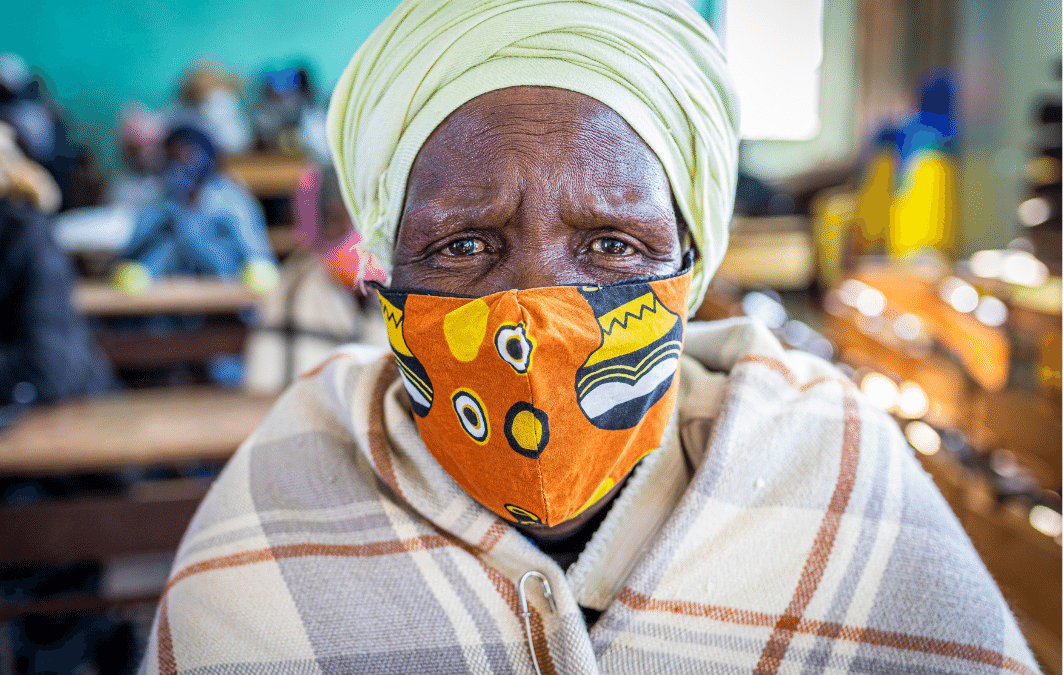
As of August 2021, nearly all programs have resumed normal operations. Participants wear masks, wash their hands, and stay outdoors as much as possible. Help Lesotho continues to share information about COVID-19 and the vaccine at every opportunity. Program participants are given ample time to ask questions, clarify myths and develop strategies for managing their stress.

To see our latest webinar including COVID-19 updates from Lesotho (Oct 14 2021), please click here: https://www.youtube.com/watch?v=dLuql4tl2W8&t=1s