When Nkhono (Grandmother) Mathibo’s husband passed away she was forced off her land by her step-son who was born of a her husband’s first wife.
The elderly woman left her home for fear of her life; her step-son had threatened to kill her. Lesotho’s inheritance laws give the first born male child all the inheritance rights. In a polygamous marriage, the heir is the firstborn male child of the first married wife.
Nkhono tried to press charges and fight for her land, but her struggle was in vain.
Customary Law
In Lesotho, customary Law is guided by the Laws of Lerotholi, which took effect in 1903. During this time, Lesotho was a highly patriarchal society and the status of women in society was not recognized.
The customary laws of Lesotho state that an heir of immovable property will be the first born male child. It goes further to indicate that in the case where there is no male child in the family, the inheritance will go to the male next closest male relative in the family. Therefore, according to the customary laws, a female is not entitled to any land inheritance.
Inheritance Issues
When the head of the family dies, the heir inherits all the immovable property in that household, including fields and buildings. The heir is expected to use the property to take care of all the minors and needy members of the extended family and to arrange family obligations.
If a widow continues to live in her deceased husband’s village and remarries, she retains life rights to the husband’s fields. As a result, the male heir is supposed to share the land with the widow for as long as she lives, but this isn’t always enforced as was the case in Nkhono’s story.
Women’s Rights to Land
In Lesotho, girls and women are treated as minors and as such they are not considered competent to hold or inherit land or to make any major decisions regarding land under their control.
When the eldest sons exercise their right of inheritance, the women occupying or using the inherited land are left in a vulnerable position. If they are allowed to use the land, they have to use it on conditions set by the heir.
There is also the possibility of them being denied access to the land. This leaves women without a home with no means of income.
Civil Law
In 1995, the Government of Lesotho ratified the Convention on the Elimination of All forms of Discrimination Against Women (CEDAW), yet this was not applied to all laws.
In 2011, the CEDAW Committee urged Lesotho to include in its Constitution and other appropriate legislation prohibition of discrimination against women, which encompasses both direct and indirect discrimination in both public and private life.
Unfortunately, today there is still an urgent need to repeal or amend the Laws of Lerotholi in order to change the customary inheritance laws in adherence with civil law, and ultimately removing discrimination and gender inequalities.
Mamosala, a double-orphan lived with her grandparents until her grandmother passed. The girl had no yet come of age when her grandfather kicked her out of his home. She had no protections from this eviction because she did not inherit her parents’ land and her grandmother could not legally leave any property to her after her death.
The girl was left to fend for herself, eventually finding herself in indentured servitude in exchange for lodging.
Girls cannot inherit land under customary law. Under civil law, such inheritance can only occur where the owner has left a will and has abandoned the ‘customary mode of life and adopted a European mode of life.’
The contradictory nature of the two legal systems undermines women’s equal inheritance rights. This causes women and girls to become vulnerable to HIV/AIDS, early or forced marriage, dropping out of school and being excluded from economic opportunities due to lack of education.
Help Lesotho educates girls and women, as well as and boys and men on the harmful effects of gender inequity in order to create a brighter future for all Basotho. Our programs are so important now more than ever; to learn more visit our website.
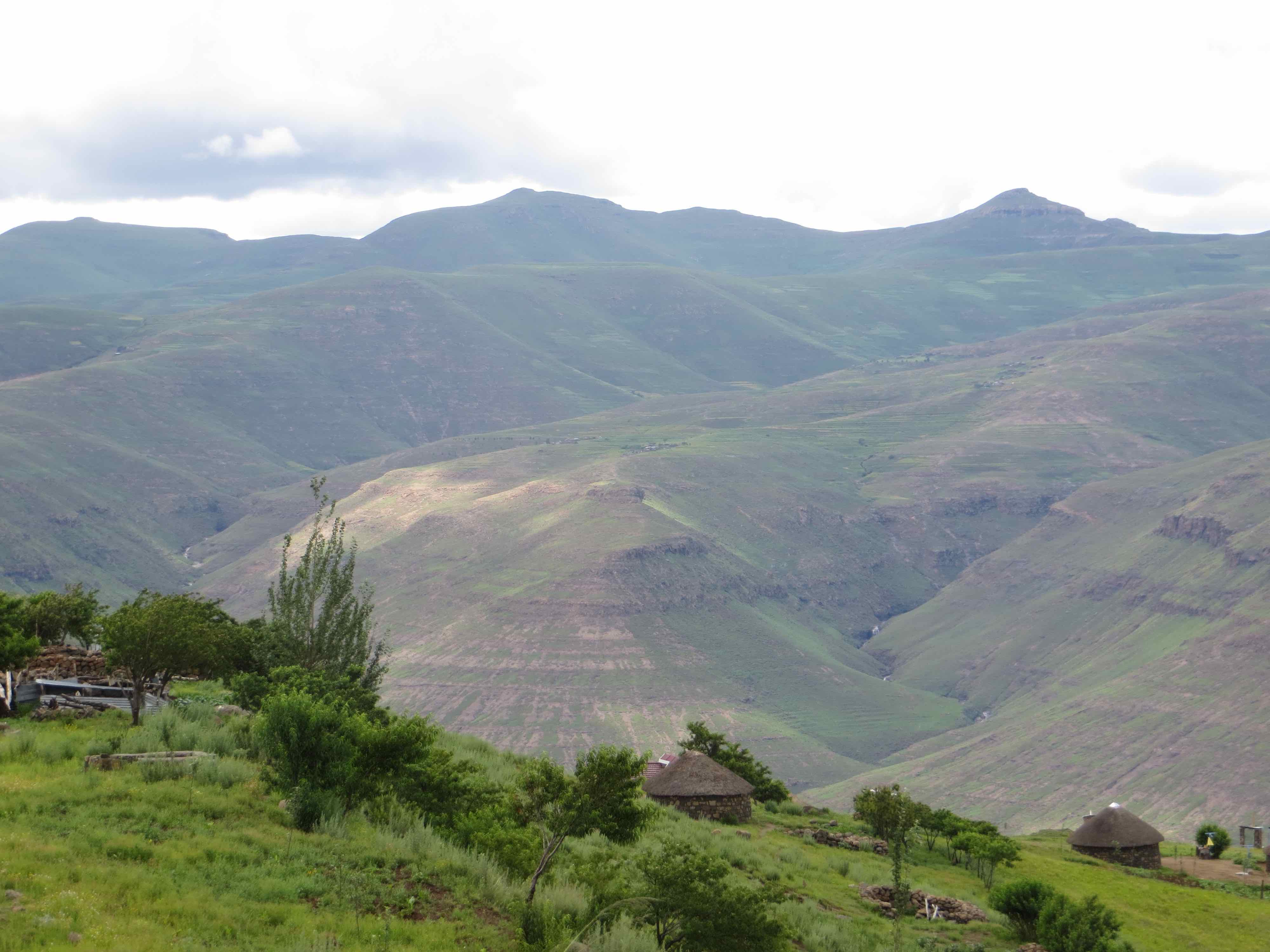
Lesotho’s jaw dropping mountain vistas, unique culture and welcoming people make it a beautiful place to visit.
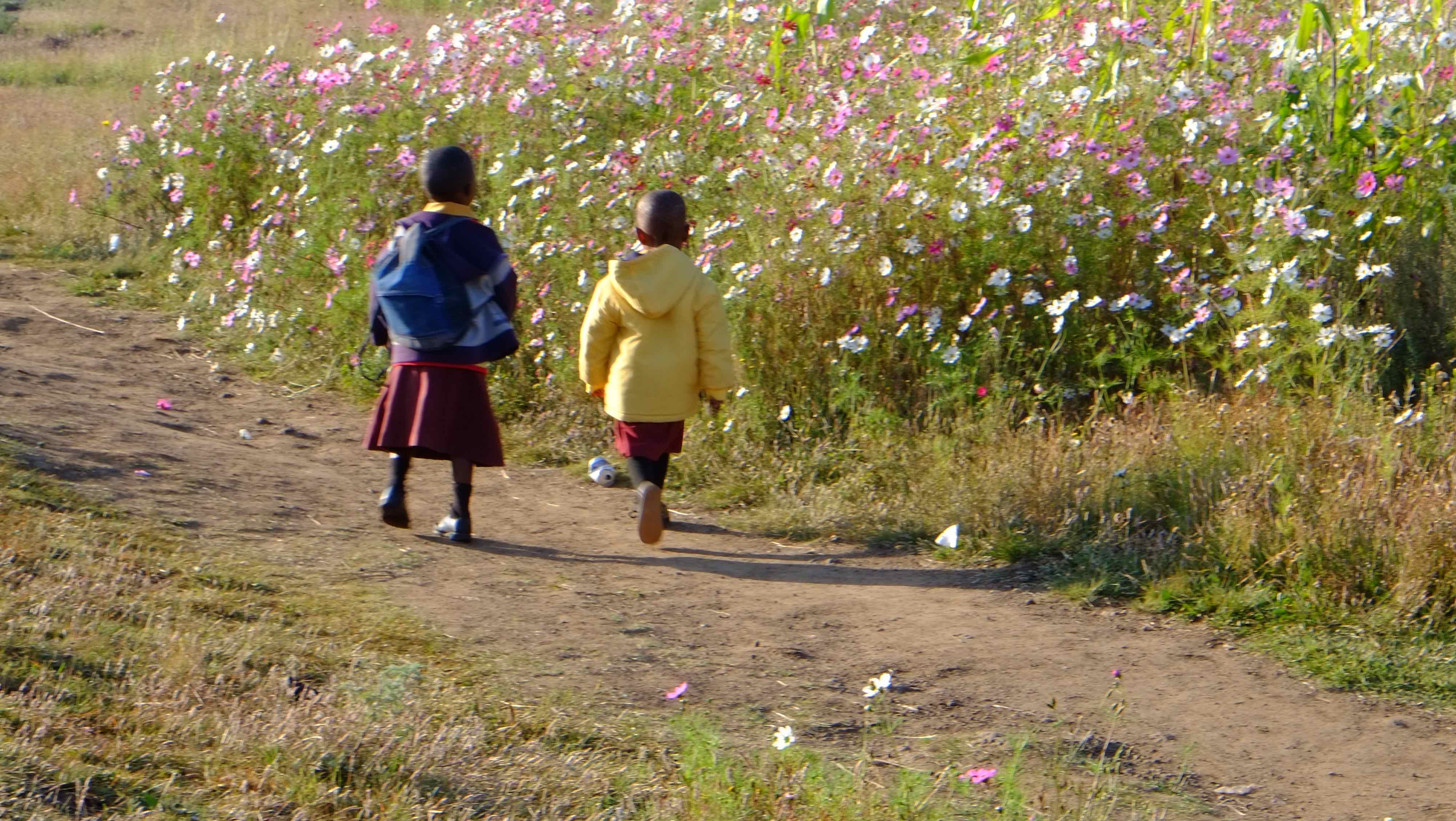
Cosmos:
These resilient, beautiful wildflowers flourish in tough, hot or dry conditions with little water. They seem to flower best in poor soils with less organic matter, and they are often seen growing along the road side in Lesotho in full sun, with no fertilizer in the soil and surviving on rain and dew. They can even survive in drought. Appropriately, the word Cosmos comes from the Greek word ‘kosmos’ which means ‘beautiful’.
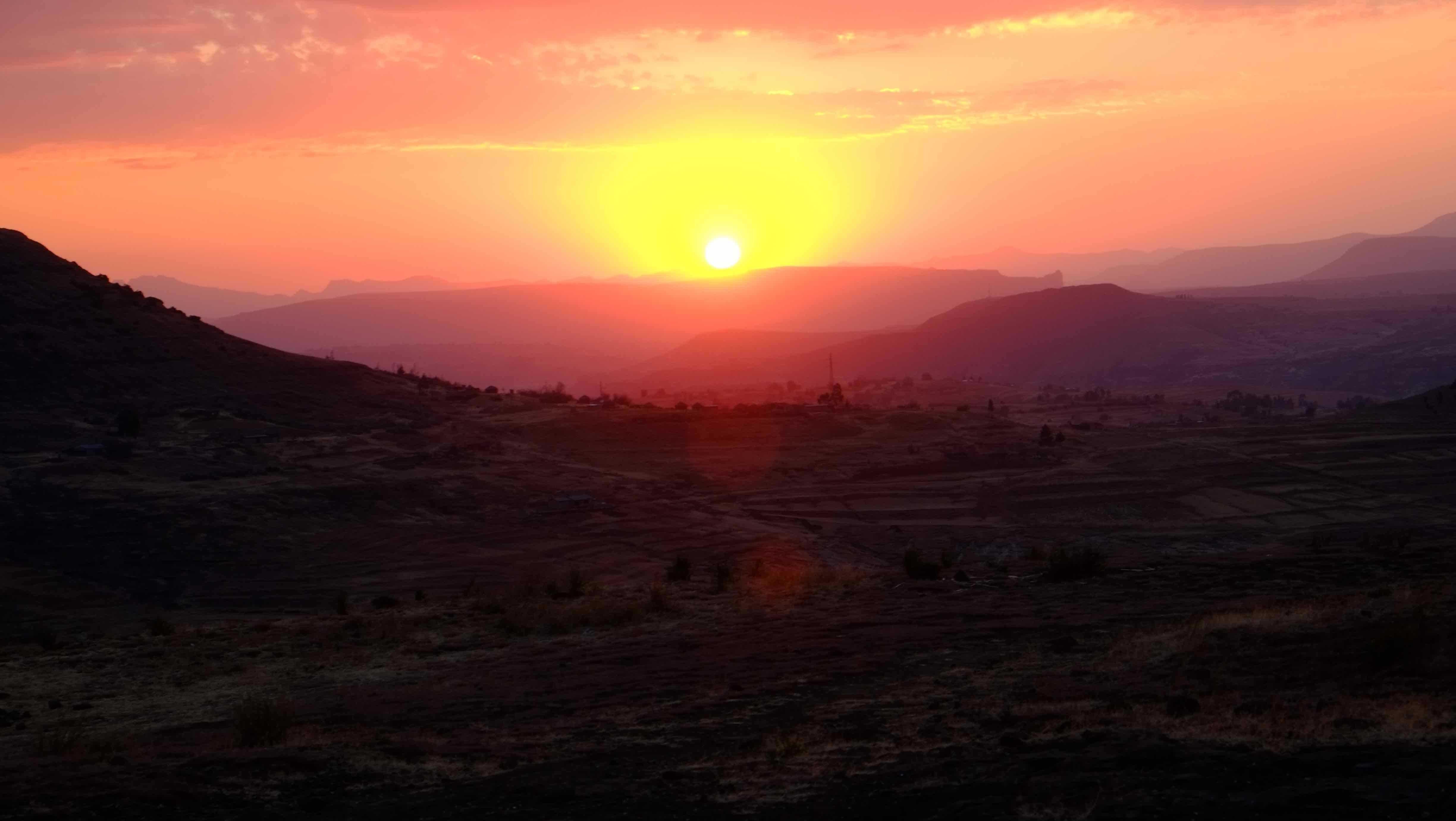
Sunsets:
There are few things more beautiful than the sun setting over Lesotho’s mountains.
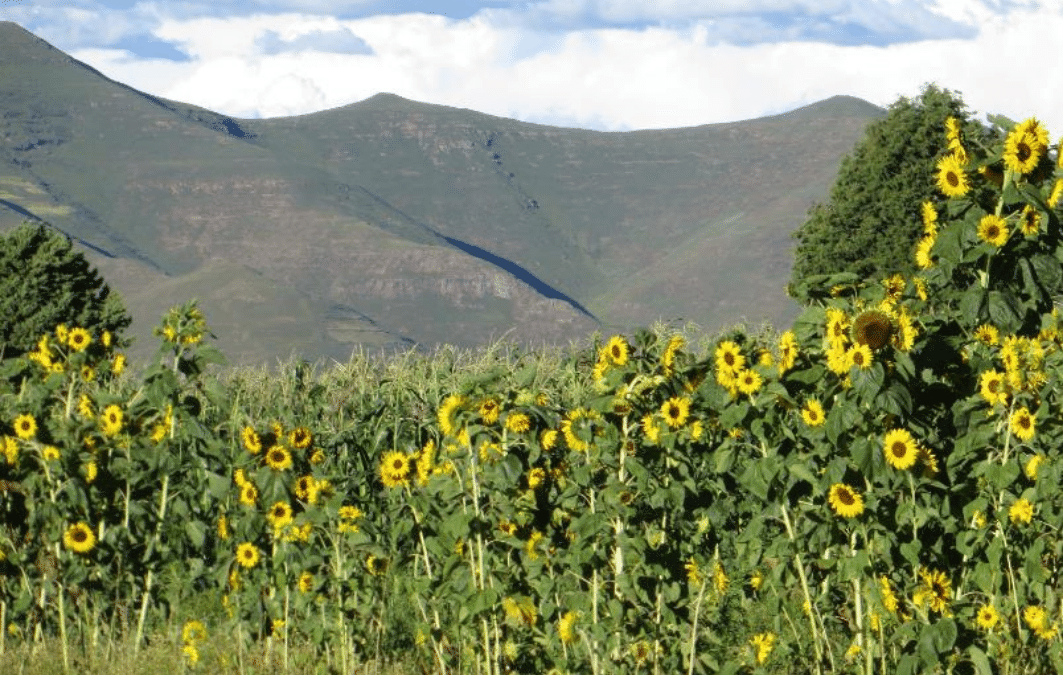
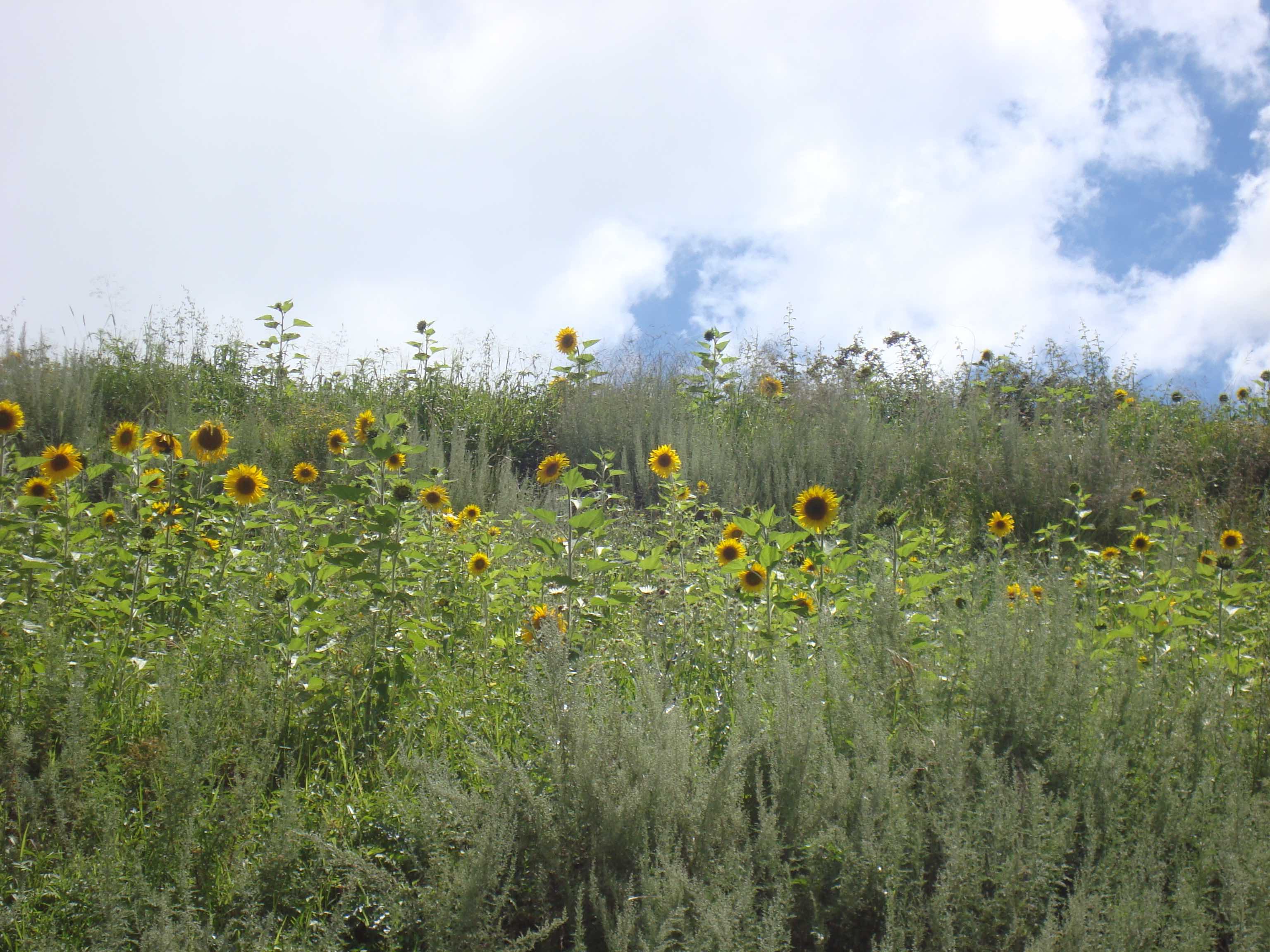
Sunflowers:
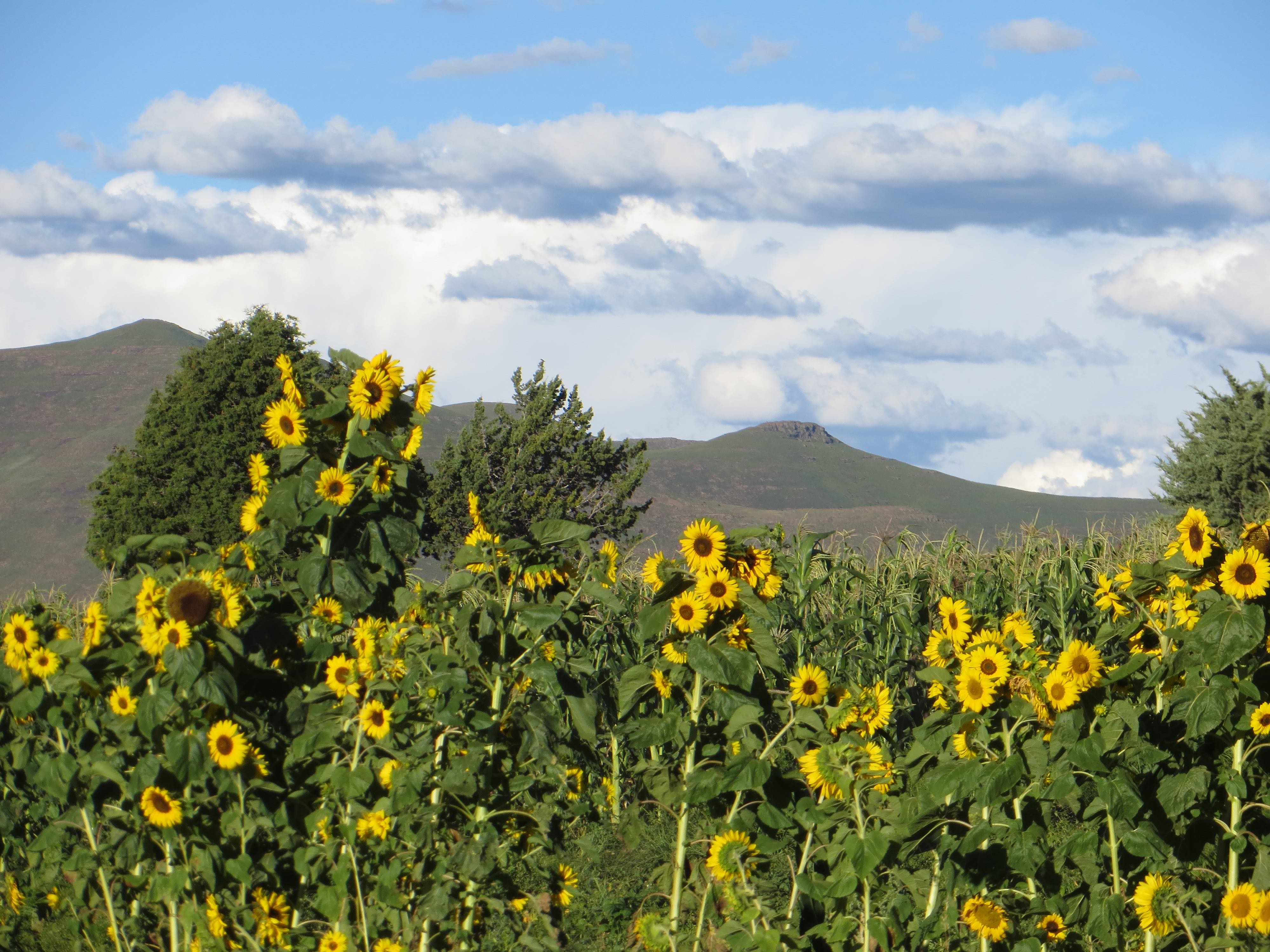
Sunflowers are cousins of the Cosmos flower. The French word for sunflower is “tournesol,” which means “turns with the sun.” In their bud phase, sunflowers will literally seek out and face the sun.
Did you know, sunflowers are not just pretty faces; sunflowers are actually good at absorbing toxins, too? Millions were planted after the devastating tsunami destroyed reactors in the Fukushima nuclear power plant in Japan.
Mountains
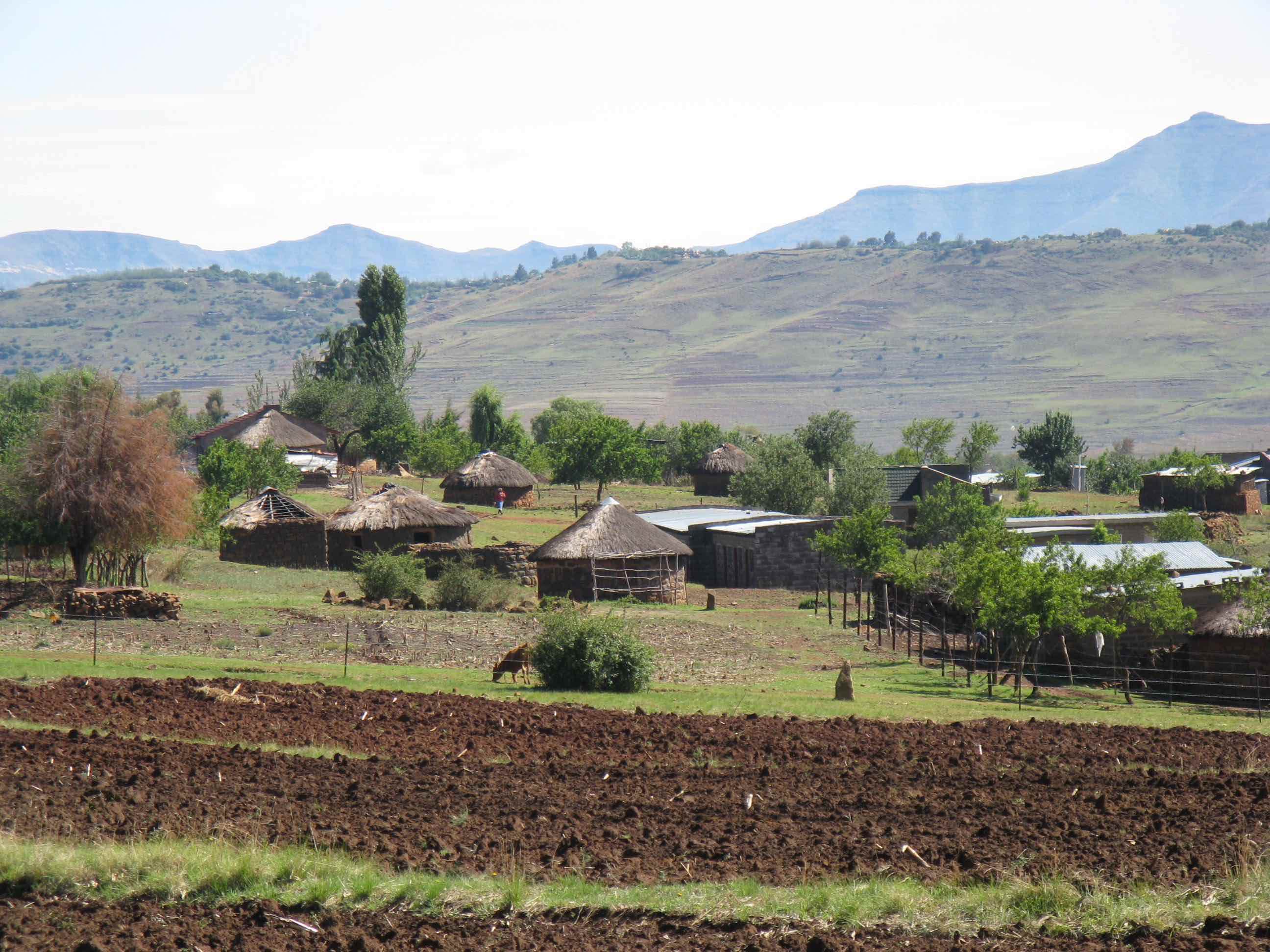
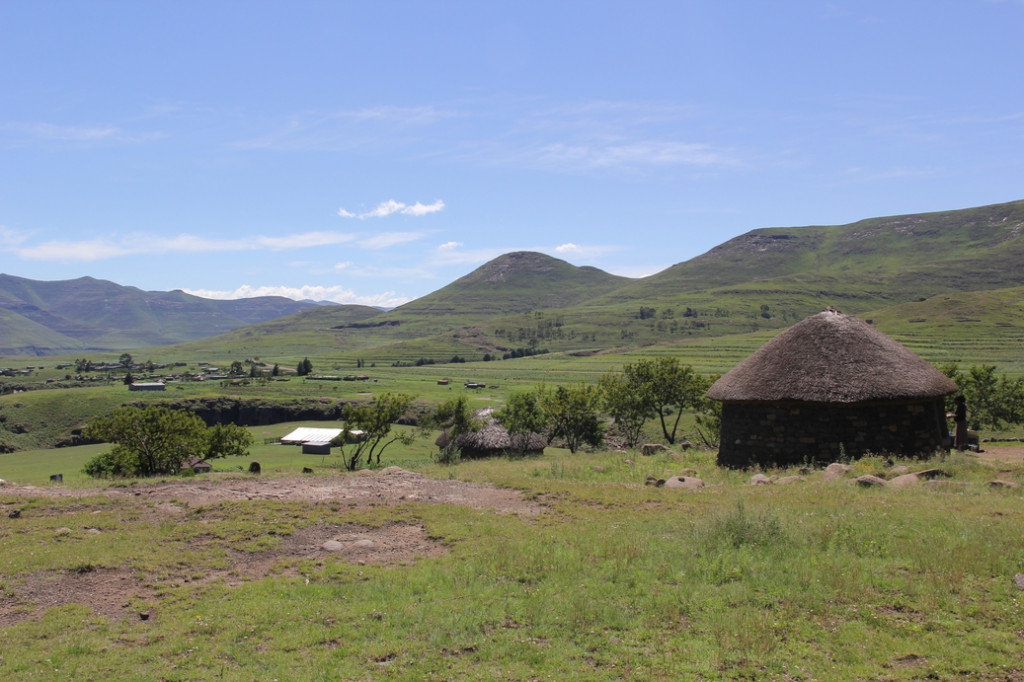
Lesotho, also known as the Mountain Kingdom or Kingdom in the Sky, is situated on a highland plateau entirely within South Africa. The lowest point in the mountainous country is 1,400 meters (4,593 ft) above sea level.
We have yet to find a vantage point in Lesotho where mountains are not in sight. This landscape makes every view breathtaking as you drive through the winding mountain roads (another engineering miracle).
The mountains are the source of Lesotho’s crystal-clear water, which also waters the greenpastures for livestock. When the thunderstorms rage over the Maloti Mountains, even the smallest stream can rapidly become a vigorous torrent. In winter, the melting ice and snow trickle into freezing streams.
The Basotho People
The beautiful people of Lesotho are warm, friendly and hardworking. They love their families and want the best for their children and grandchildren. They are strong and resilient, despite the hardships they face, just like the cosmos flower.
At Help Lesotho, we work together with the local community, leaders and government to teach youth, adults and grandparents how to protect themselves from HIV/AIDS, learn about gender equity and develop leadership skills.
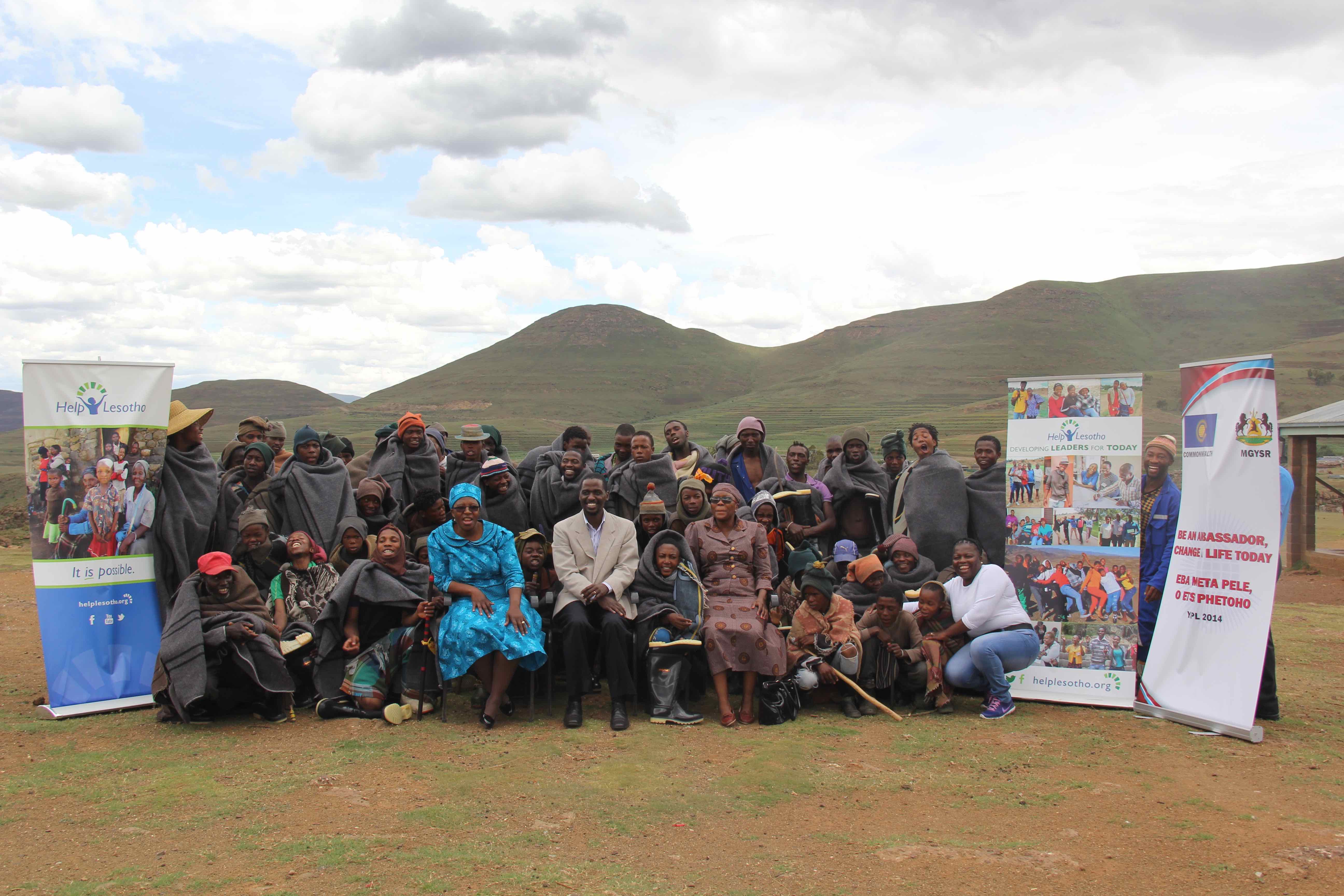
August marks the start of a brand new cohort of Herd Boys receiving life saving information through HIV/AIDS education, gender equity training and life skills.
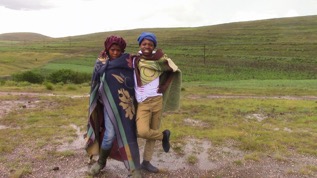
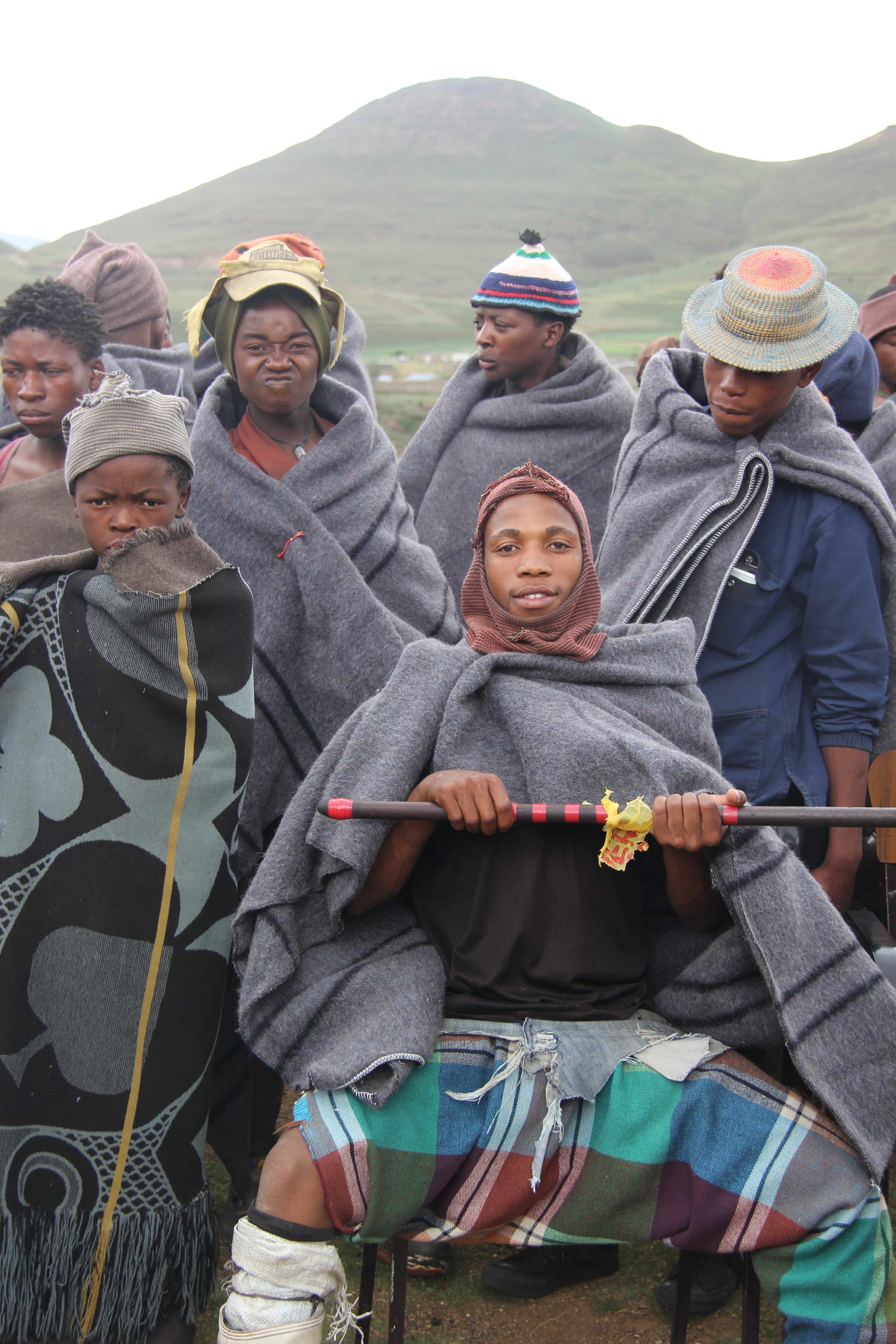
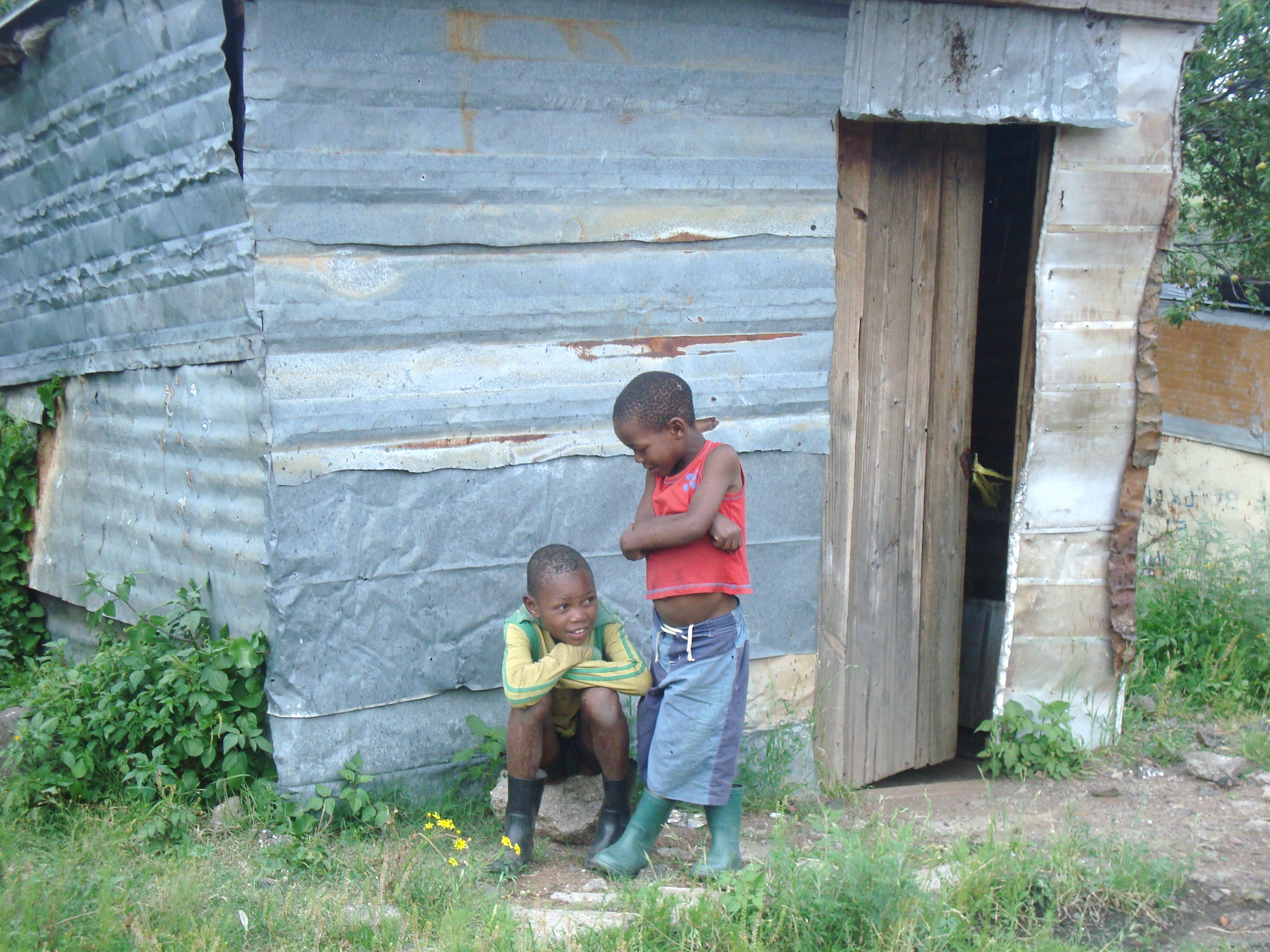
Herd boys like Mphepe (left) and his friend Mohato often have to leave school to earn an income for their families by herding sheep or cattle.
“I started herding animals in 2014; my family didn’t see the purpose for me to acquire an education. My father was burdened by a lot of work so I had to help him with field work and herding animals. I dropped out of school when I was in Grade 4.”
Herd Boy Training
Mphephe, 15, and his friend, Mohato, who is deaf, joined the Herd Boy training program in 2017. The boys live in the rural, mountainous district of Thaba Tseka.
“One of my greatest memories is when I roasted maize (corn) in the mountains with my beloved friend – Mohato.”
Stigma in the Mountains
But not all days are good on the grasslands. Mphephe and his friend narrated the unfortunate ordeal of a day when they neglected the animals while roasting their favourite maize cobs. The animals went astray and destroyed someone’s crops.
“We actually got carried away with the roasting without keeping an eye on the animals; they disappeared and fed on one man’s crops. He was furious and we were beaten thoroughly.”
Herd boys are often stigmatized by their communities and accused of sexual violence, theft, and destruction.
Life Saving Information
Help Lesotho’s Herd Boy program provides the young men with life skills needed to navigate their lives successfully while showing them compassion and acceptance.
The training includes sessions on anger management, drugs and alcohol abuse, gender based violence, as well as an opportunity to test for HIV.
Mphepe says he stopped smoking as a result of the training. After the alcohol and drug abuse sessions he decided to break the smoking habit.
“One of the most important things that I have done as a result of the knowledge I gained during the training is to quit smoking. We were taught about the dangers of using tobacco and other drugs and I stopped smoking, although it was not easy!’’
When herd boys are educated on the consequences of their actions through compassion and support: change occurs, violence ends and hope is born.
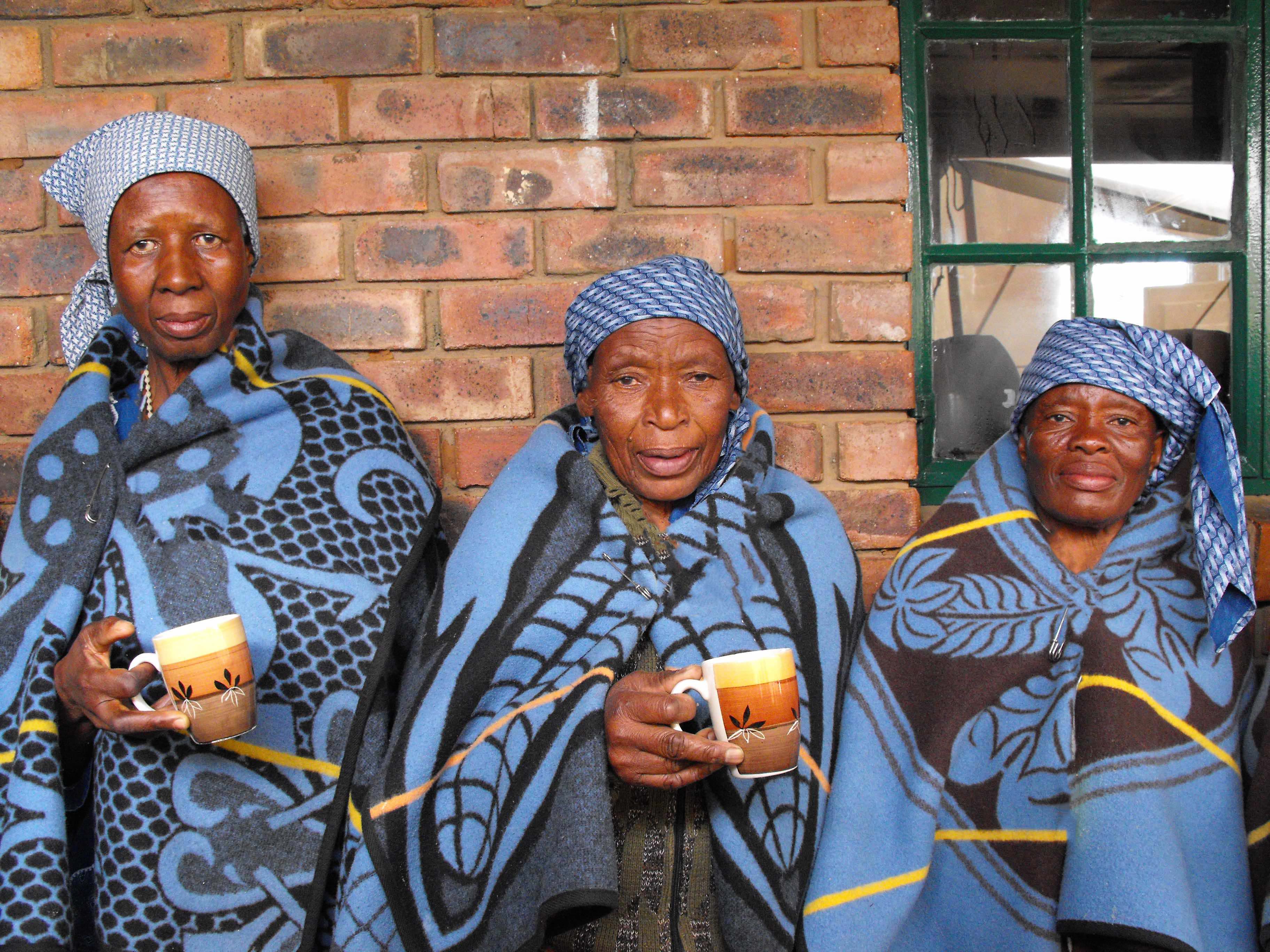
The origin of the Basotho blanket goes back over a century. In 1860, King Moshoeshoe I, the founder of of Lesotho, was given a wool blanket as a gift. The King loved the blanket so much, he abandoned his traditional leopard-skin kaross in favour of the blanket.
The Basotho people soon followed suit and to this day the blanket is an inherent part of their lives and culture. You will see blankets of varying colours and patterns at all important life events, from marriage to childbirth to the coronation of kings.
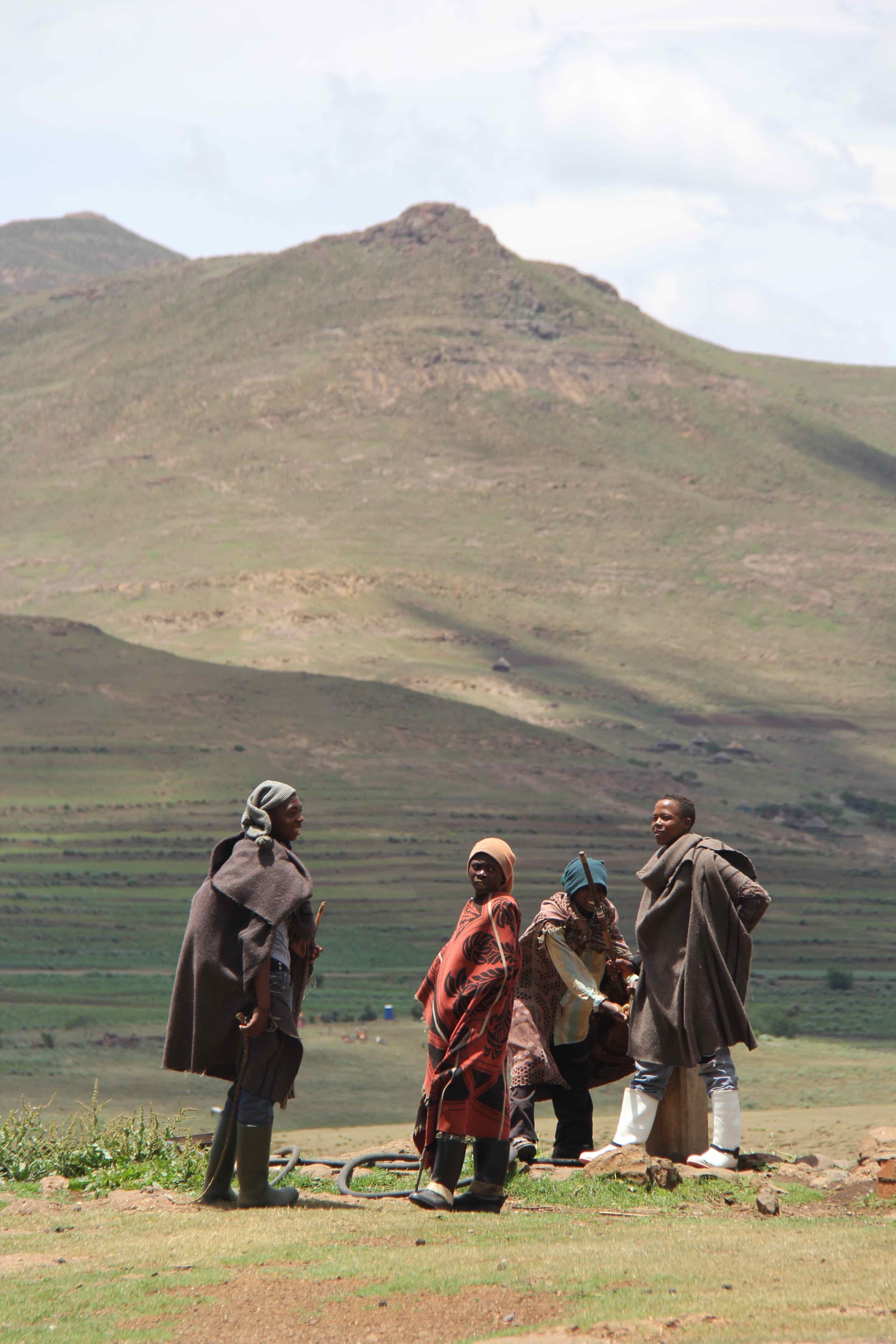
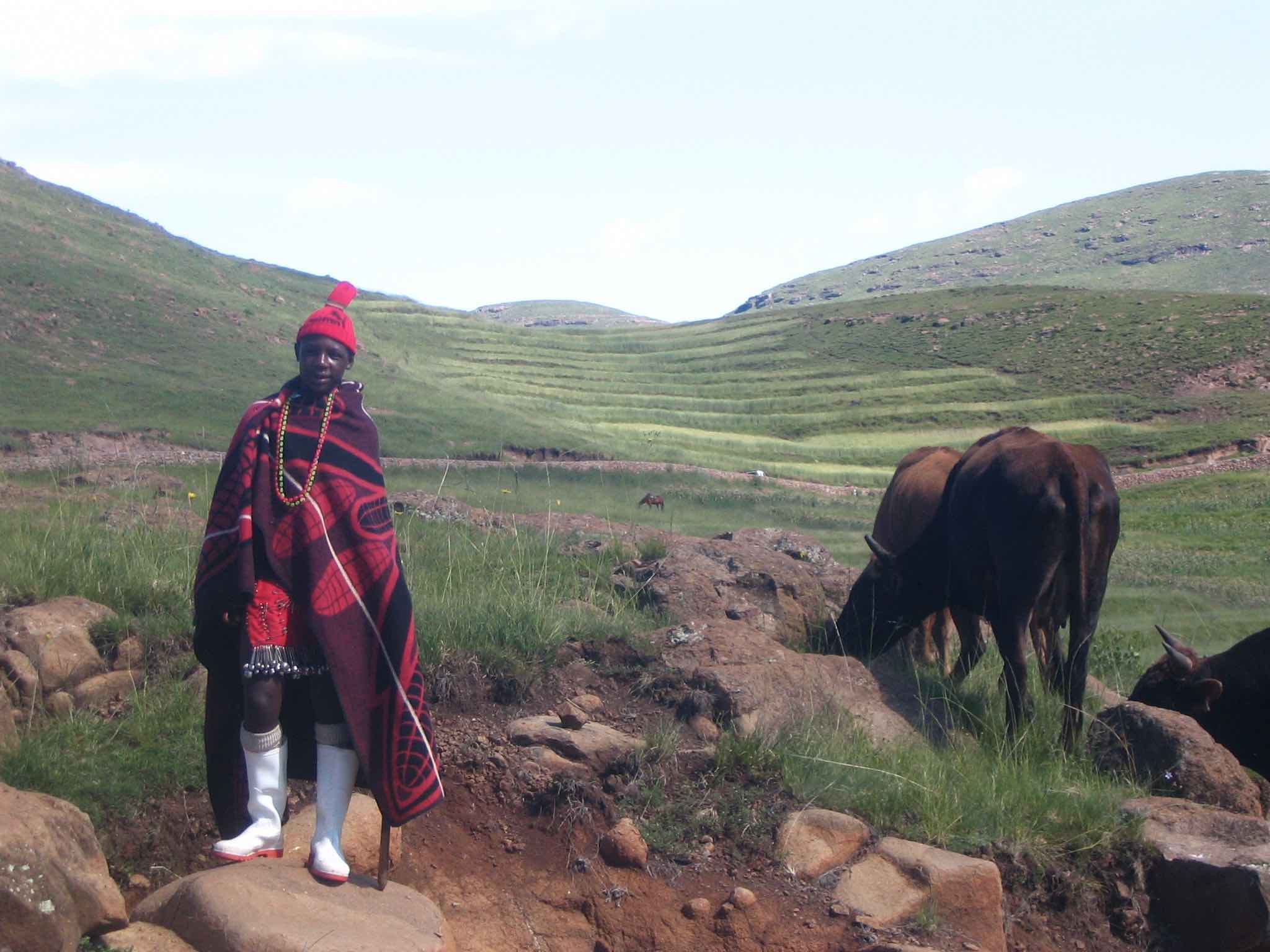
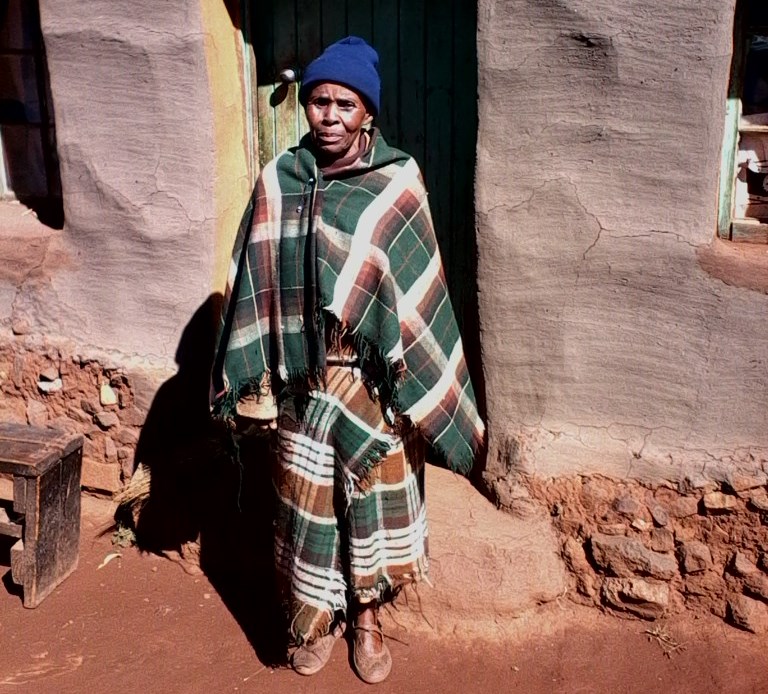
Versions of the Basotho tribal blanket, or ‘Seanamarena’ in Sesotho, are also worn in every day life by herd boys, grannies and even children to keep warm. Lesotho is the only nation south of the Sahara that identifies the culture of an entire country through a nationalistic article of clothing like the Basotho blanket.
Many people in Lesotho live in farming and animal husbandry based communities and therefore wear clothing that is suitable for this lifestyle. For example, herd boys wear large rain boots, referred to as gumboots, to wade through the muddy mountain terrain with their animals.
Most herd boys also wear woolen caps or balaclavas year-round to protect their faces from cold temperatures and dust blown around by the strong mountain winds.
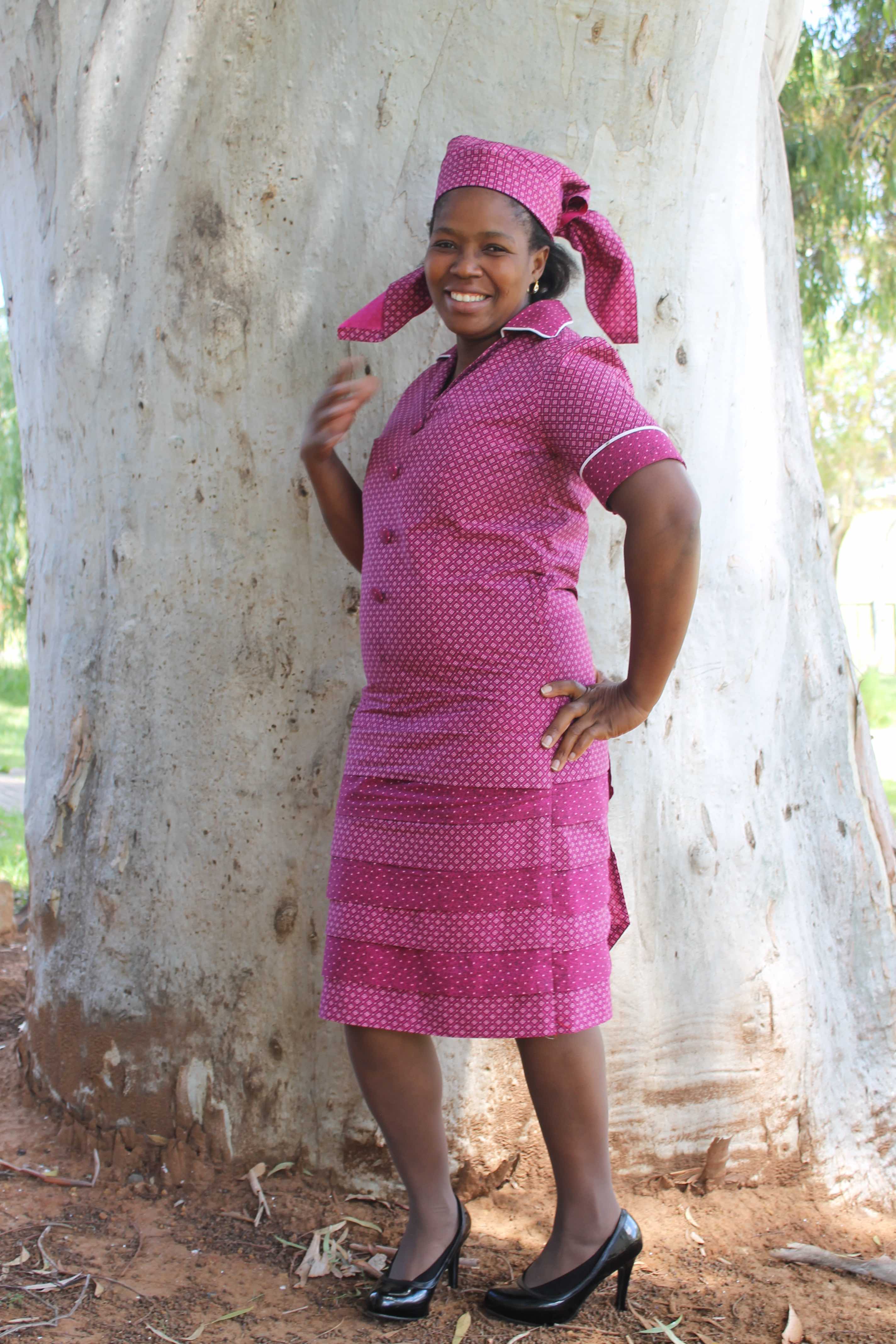
Women usually wear long dresses and skirts in vibrant colors and patterns with blankets around their waists, and for special occasions (like church or weddings) they wear a traditional Basotho dress called the seshoeshoe. Seshoeshoe are worn in endless varieties of designs, patterns and colours. Wearers purchase seshoeshoe fabric and then work with a seamstress to create their preferred design.
Young men and women usually wear more casual clothes like jeans and t-shirts.
Basotho Hat (or Mokorotlo)
The Basotho hat is another traditional item of clothing worn to this day. The conical woven hat with a top knot is made of local mosa grass and can be seen and purchased all across the nation. The mokorotlo is also the national symbol and can be found on the Mountain Kingdom’s flag.
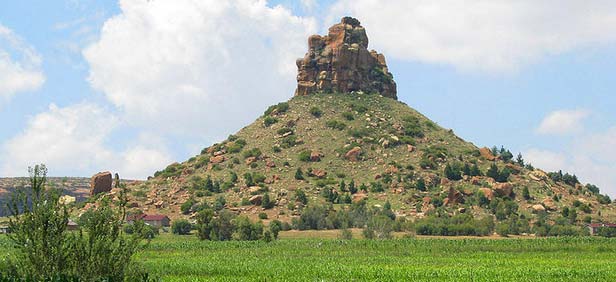
Mount Qiloane (below) is said to be the inspiration for the mokorotlo.
School Uniforms
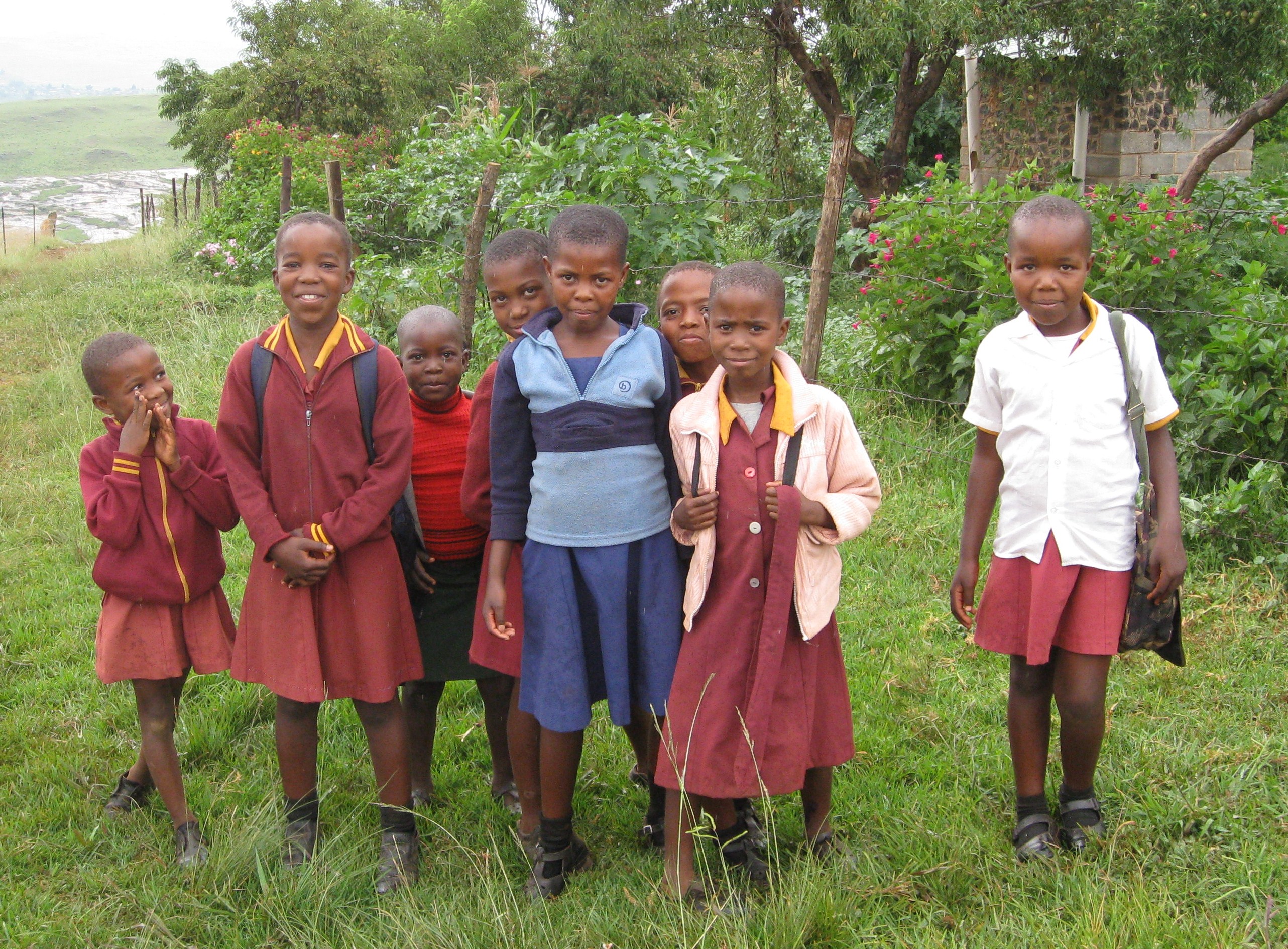
In Lesotho, school uniforms are mandatory. You’ll see school-age children running around in uniforms (colours and styles vary by school), until they change into their street clothes after school.
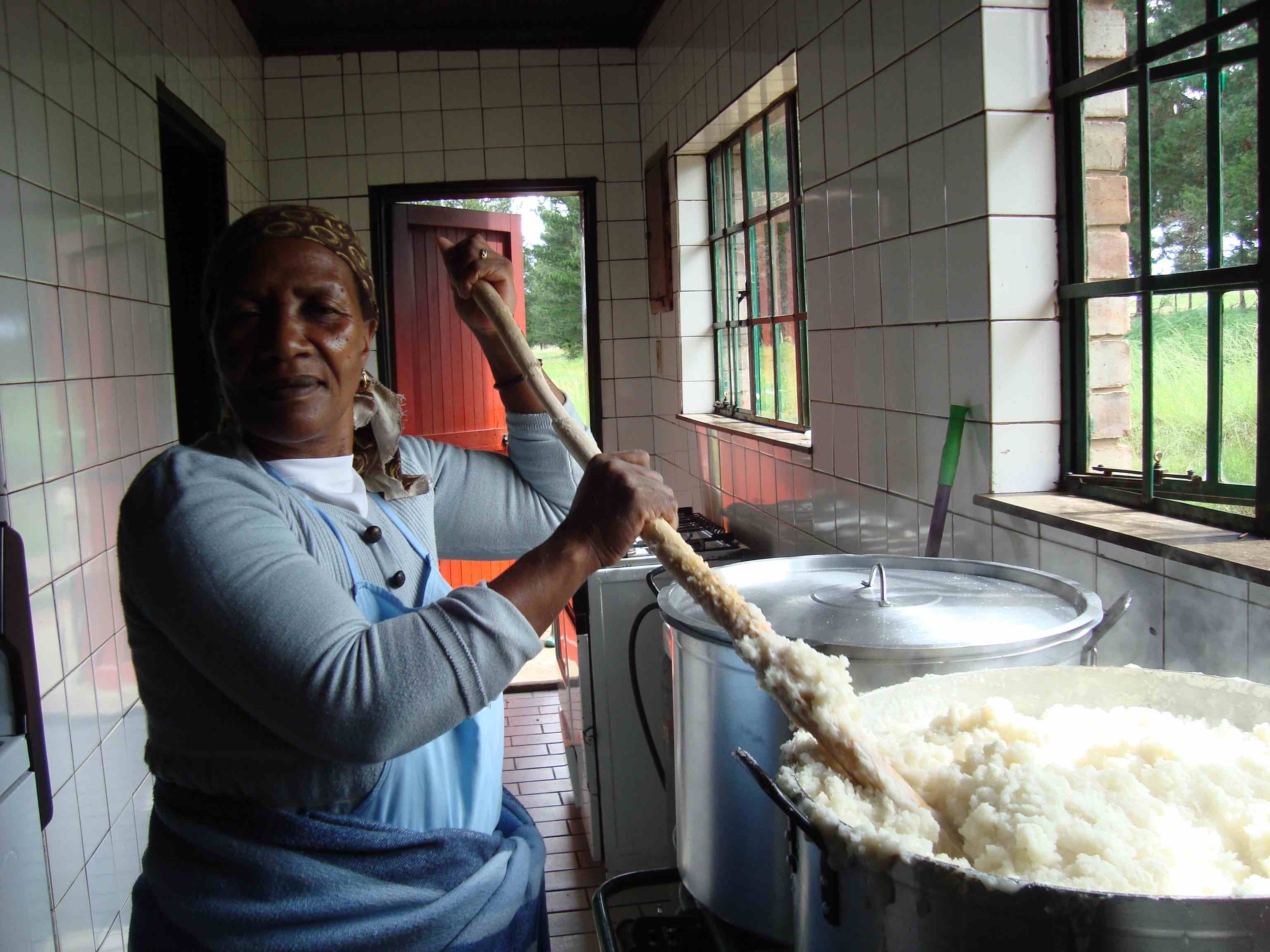
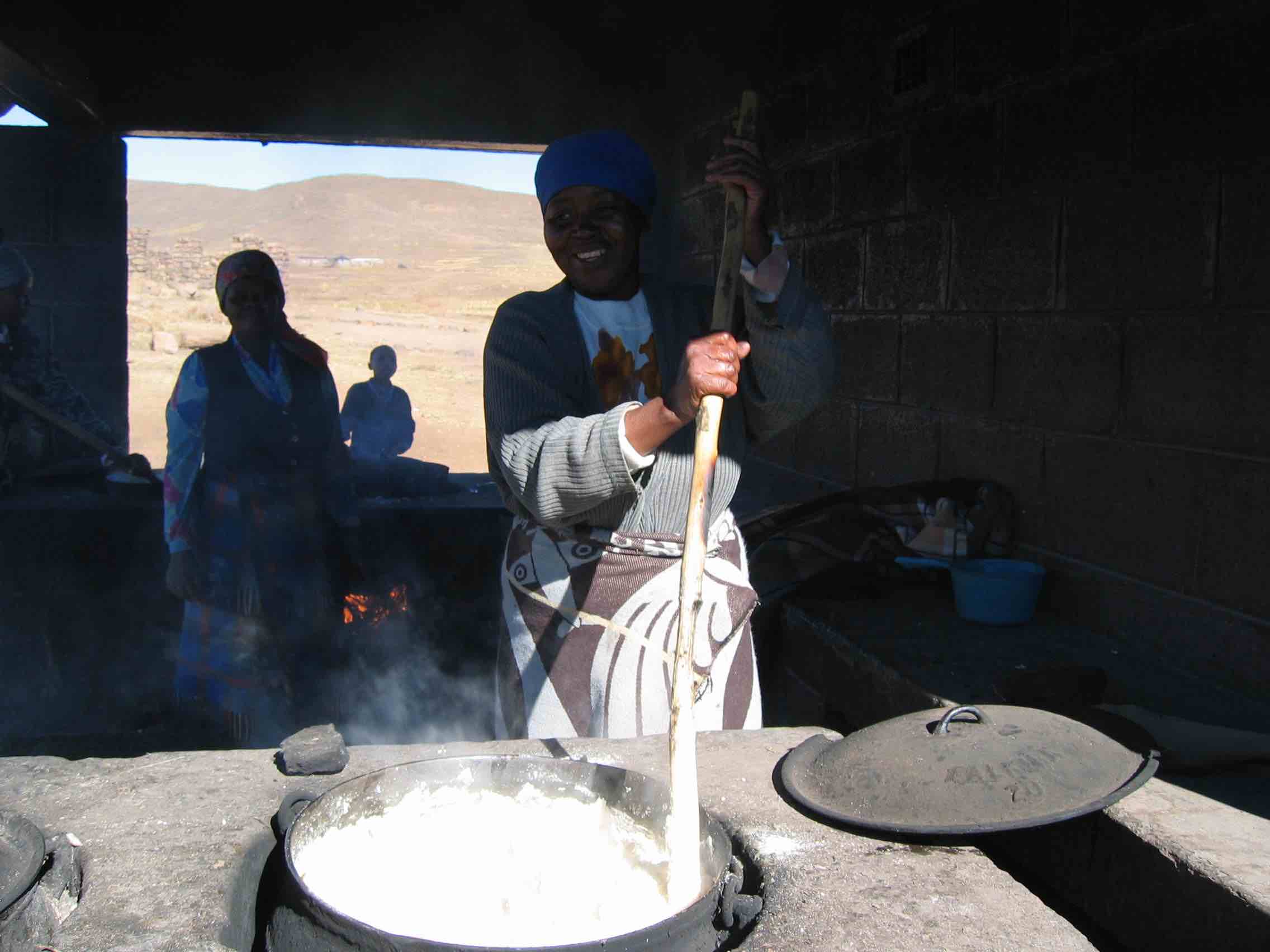
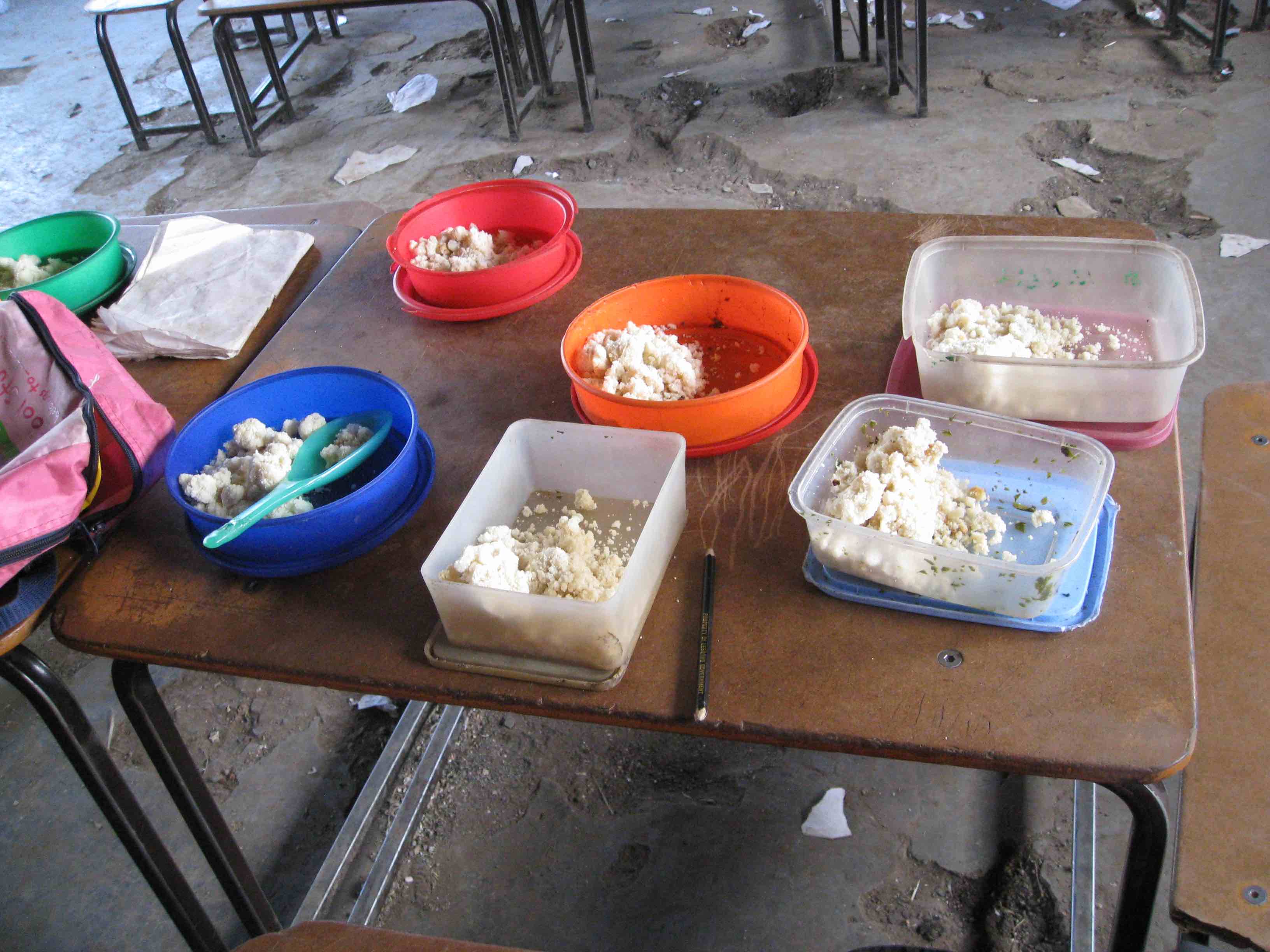
Have you ever had grits? Lesotho’s staple food, papa, is like a thicker version of the southern delicacy. The stiff, porridge-like dish is eaten all across the Mountain Kingdom at most meal-times, and is often the only food Basotho will eat all day.
Papa is made from corn or maize. It looks soft and mushy, but in fact, papa is rather solid once cooled.
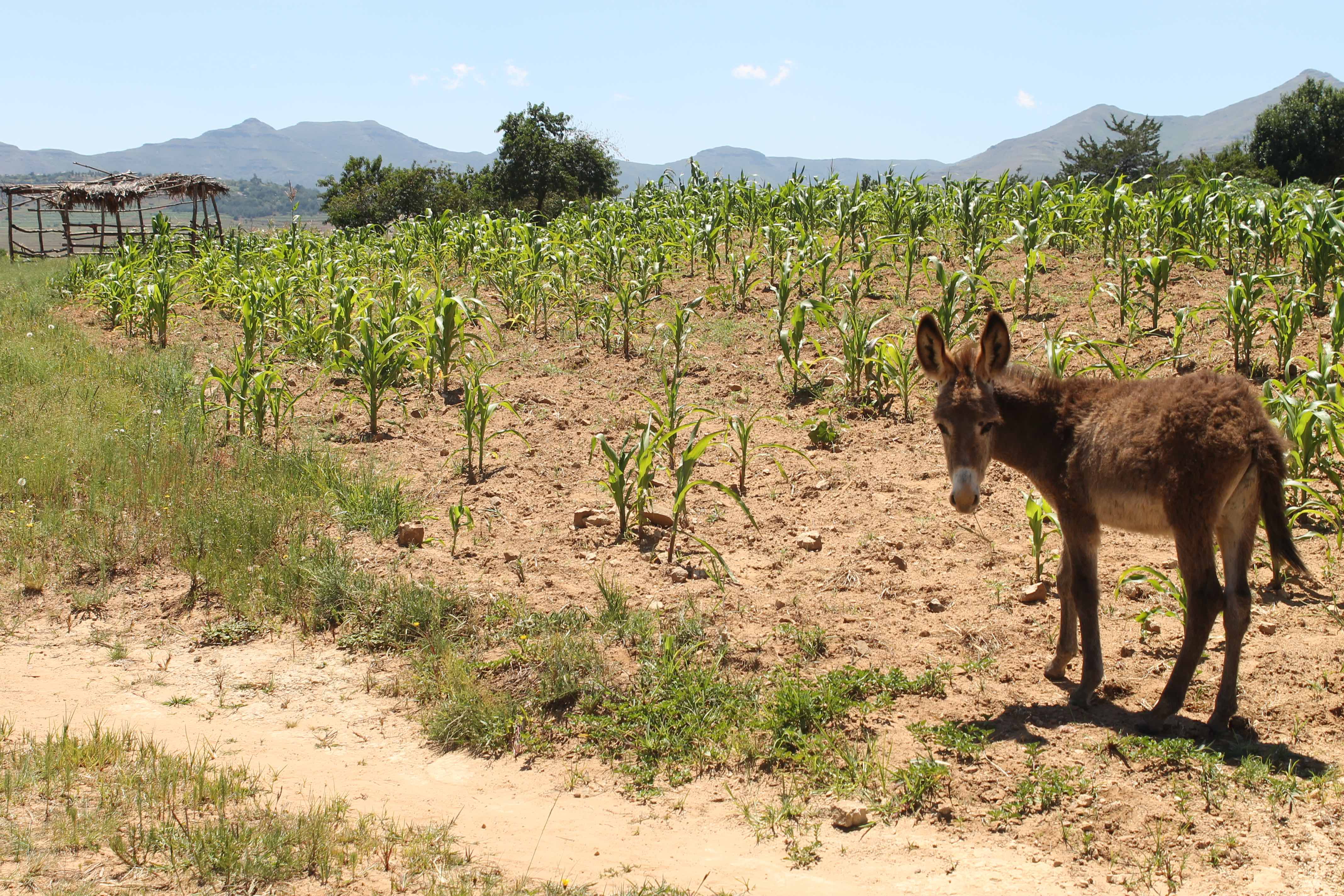
In Lesotho, corn is harvested each March. It is picked while the stalks are still green and the kernels are fat, yellow and sweet.
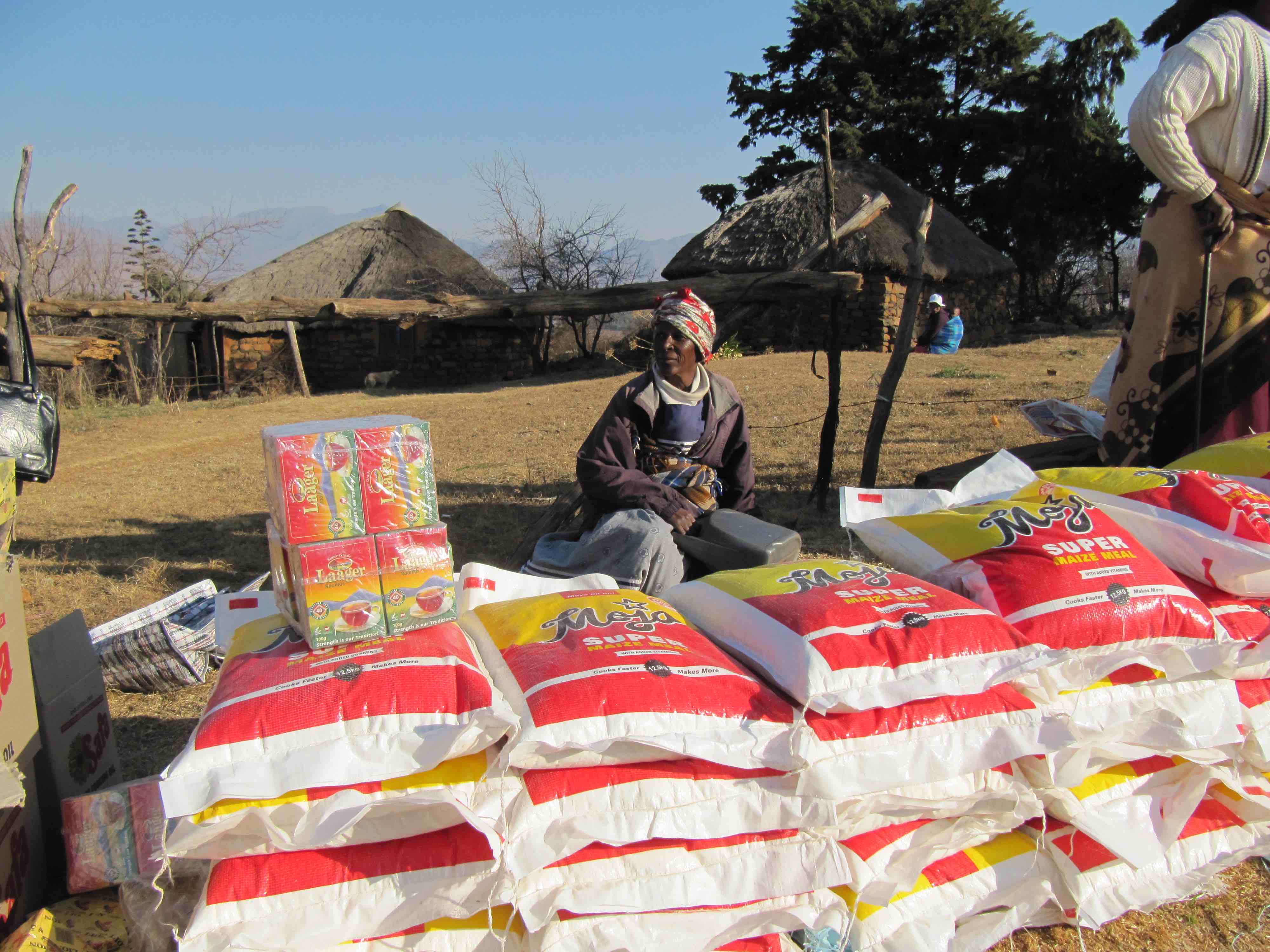
The stalks are then dried and cut by hand. The stalks are used for animal feed and the hardened maize kernels are separated from the cobs by hand-grinding.The kernels are then bagged up or loaded into buckets and taken to a local mill for grinding into a meal, called maize meal or mealie meal and stored in 50kg grain sacks ready for Basotho to purchase at their local shop and store in their homes for the winter.
When the maize meal is cooked with water in a pot, most often over a wood fire, is becomes papa.
Papa has almost zero nutritional value and fills you with empty carbohydrates. When money and seasonal availability allows, it is often served with moroho (greens, like cooked spinach or collard greens) and with a bit of water and salt. Occasionally a family will serve papa with beans for protein or on very special occasions, papa with greens and meat.
Even though they eat it every day, many Basotho say they love papa and consider it their favourite food.
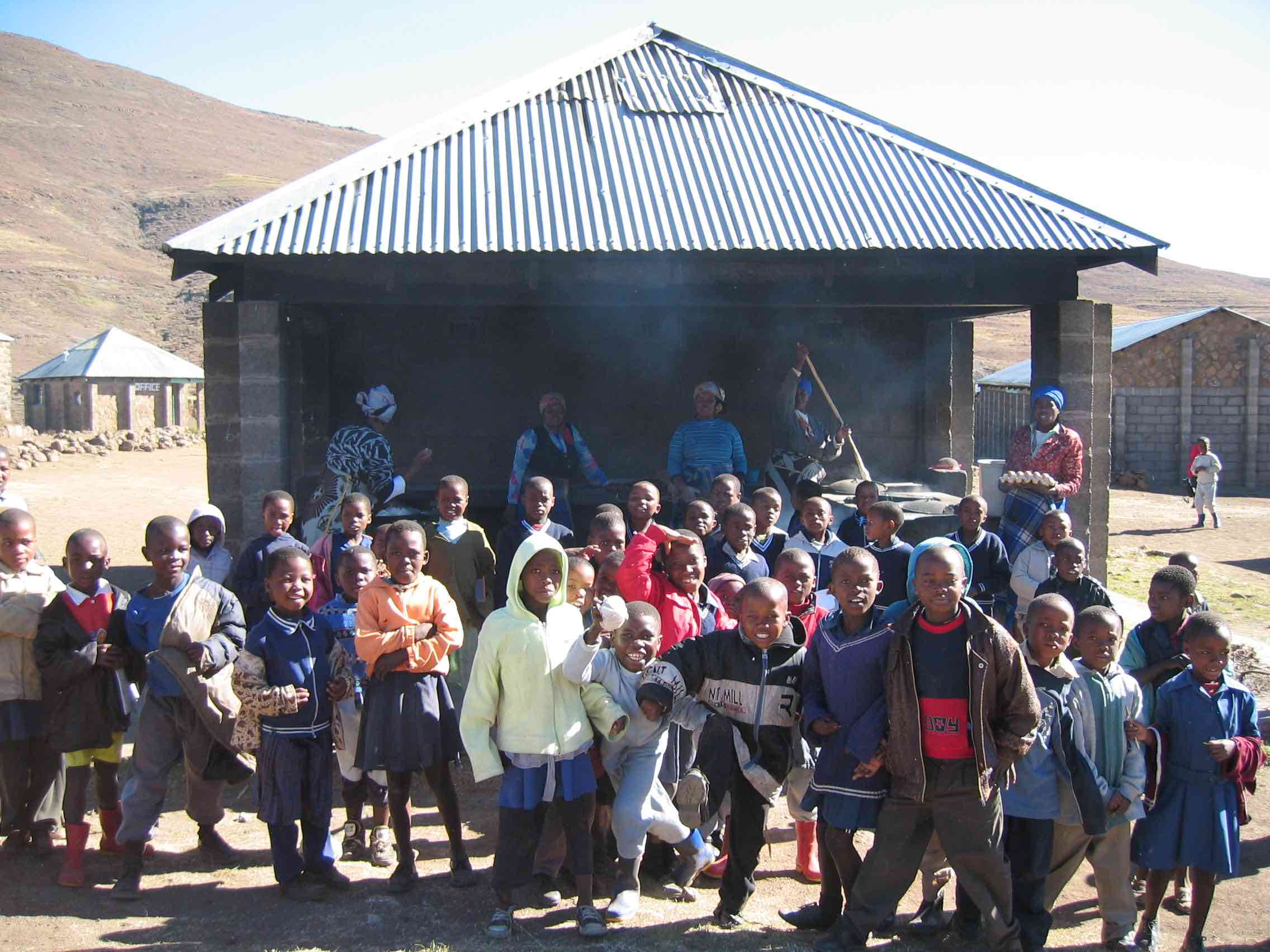
Basotho primary schools provide a free meal to students and often include papa with milk, beans or eggs in order to provide a serving of protein.
How to Make Papa
Serves 2-4
Ingredients:
1/2 cup mealie-meal
1 1/4-1 1/2 cups water
salt
Method:
Bring salted water to boil in a castiron pot over a wood fire (or stove). Pour in the maize, while stirring constantly. Cook until thickened. Portion onto plates and let cool for a moment. The papa will thicken to almost a solid and then can be eaten with the fingers.
There you have it! Papa, the vegetable turned grain that feeds the entire Mountain Kingdom.
For girls in developing countries, menstruation often means missing a week of school every month. When your family struggles to put food on the table, the purchase of disposable sanitary products is impossible.
Girls use old clothing, dirty rags, or even leaves to manage their periods, however these methods are both dangerous to their health and difficult to conceal, often leading to shame and girls being targeted with violence.
Here are 10 things girls can do when they have sanitary pads:
1)Go to school: 1 in 10 girls in Sub-Saharan Africa miss school due to menstruation. When a girl doesn’t have access to sanitary pads, she starts missing a few days of school every month, she falls behind, and she may eventually drop out. Sanitary pads allow girls to attend school without fear of leaks or accidents
2) Restore dignity: Menstruation is a natural and routine part of life for healthy girls and women, but in many parts of the world, it is accompanied by shame and fear. Cultural myths about menstruation are barriers to open discussion and societal support. Sanitary pads allows women to take care of themselves, stay clean and comfortable during their menses, which restores their confidence, independence and dignity.
3) Start a conversation to empower other girls: Knowledge is power. When women are educated about their sexual reproductive health they can share the information with their community.
4)Understand their bodies: Girls who receive Help Lesotho’s reusable sanitary kits participate in a comprehensive education session where they learn about menstruation – namely that it is a totally normal thing that all healthy girls and women experience! They learn how to stay healthy and hygienic as they enter womanhood. The girls are also given the opportunity to ask questions, because with many of these girls growing up orphaned and alone, they don’t have anyone to ask even the most basic questions of.
5) Be active: sanitary pads allow girl to continue participating in sports, community gatherings and social events instead of staying home in shame during their menses.
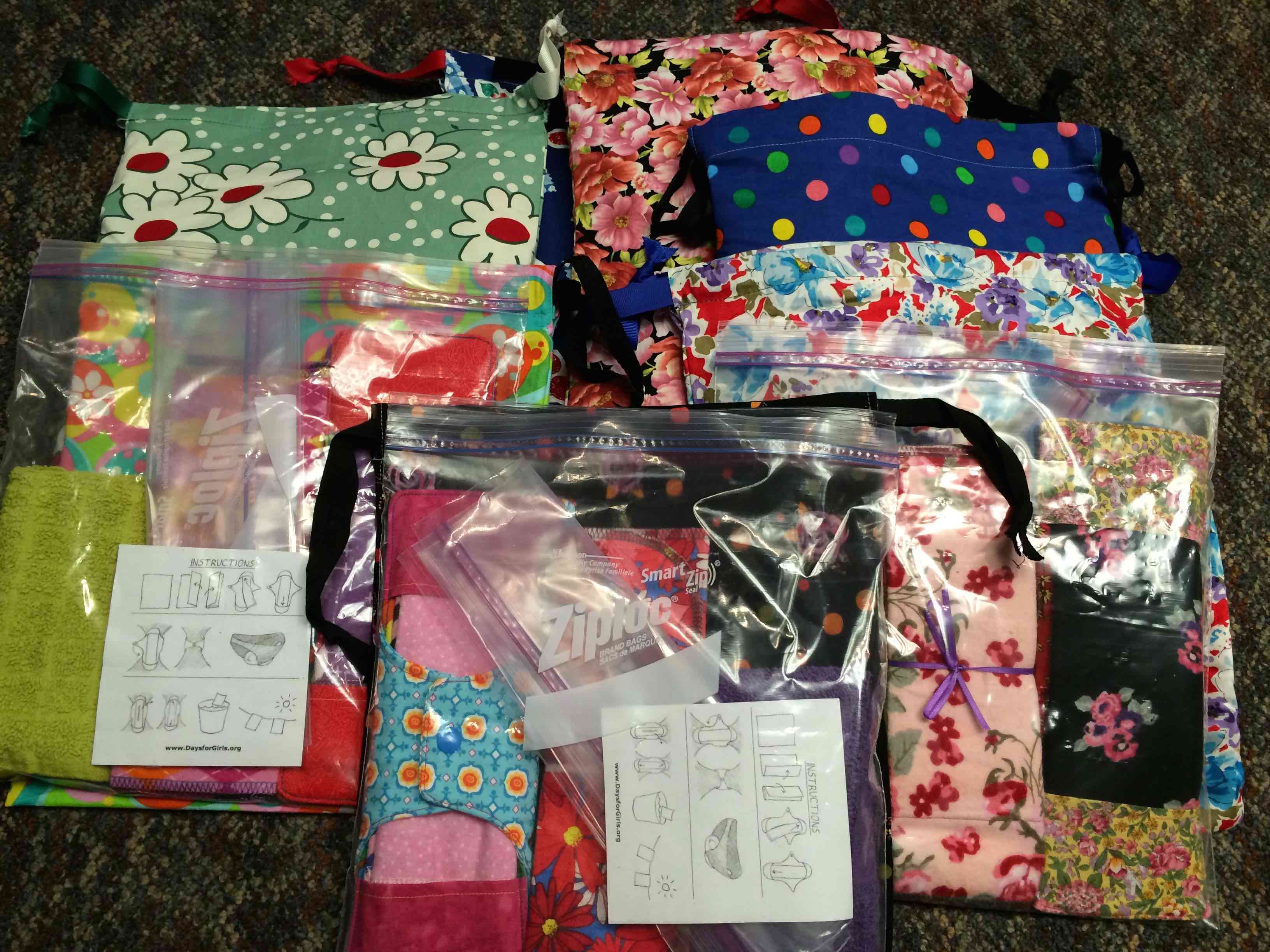
6) Save the environment: Reusable sanitary pads eliminate waste! Disposable feminine hygiene products are either incinerated, which releases harmful gasses and toxic waste, or sent to the landfill where they take hundreds of years to break down. Each kit Help Lesotho distributes lasts up to three years, or 150 days of coverage and eliminates three years of waste.
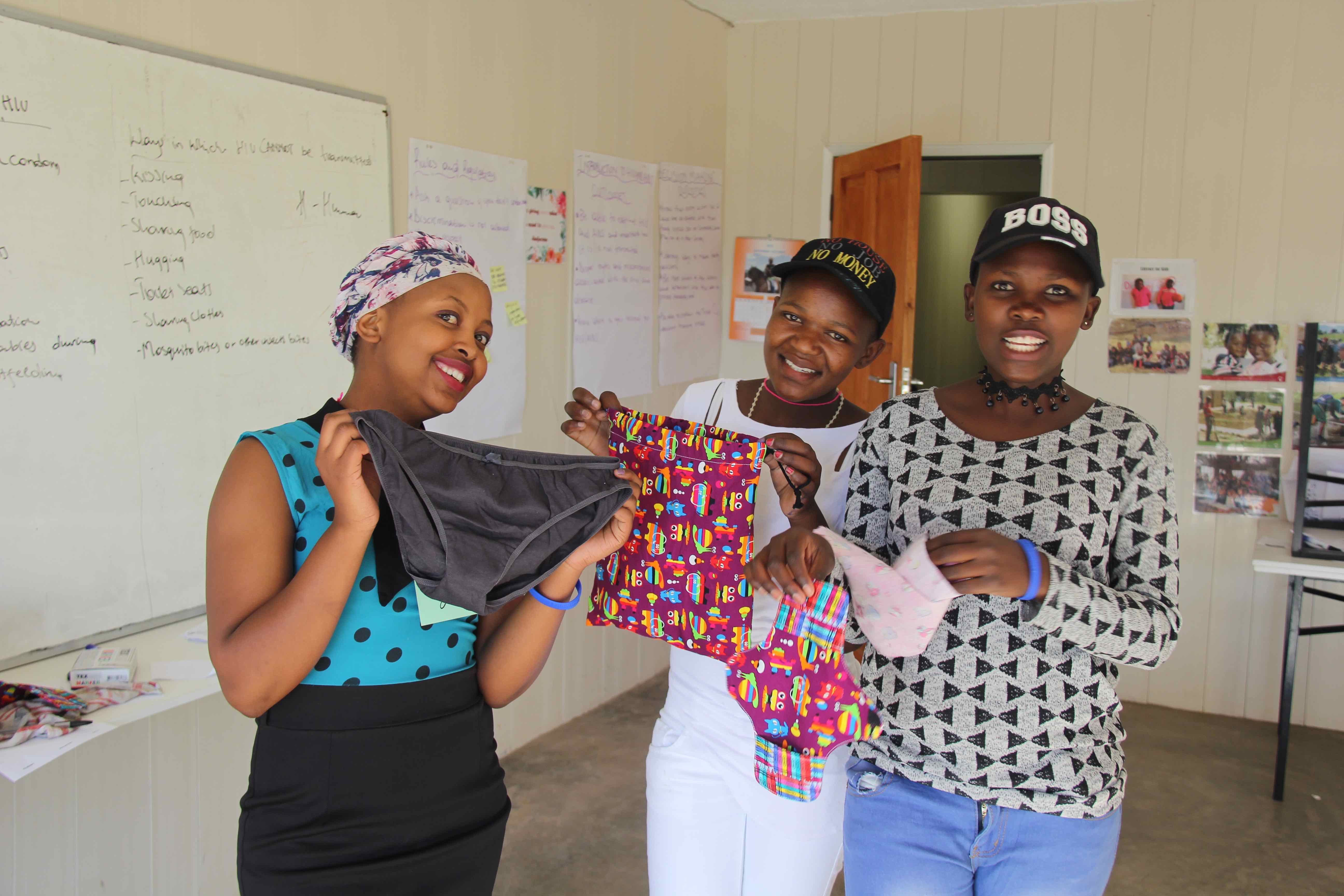
7) Stay healthy: when girls use unsanitary pieces of cloth or rags during their period, they expose themselves to numerous diseases caused by fungi or bacterias. Help Lesotho’s sanitary kits include 8 reusable pad liners, soap to wash them and ziploc bags to transport them to and from school hygienically and discreetly inside a beautiful drawstring bag – until they are able to wash at home and dry in the sunlight to kill germs.
8) Break gender stereotypes: In many low-income countries, there is a culture of silence which surrounds menstruation. This is compounded by the limited resources available to help women manage their periods, which limits women’s potential and perpetuates gender inequalities. Sanitary pads empower women to live up to their fullest potential.
9) Impact her community: Keeping girls in school is important to health and development—not only for the girls but for their communities and countries. When girls are empowered, they become contributing members of society and share their resources, ideas and knowledge with their communities to make it a better place. You educate a girl and you change the world.
10) Stop the spread of HIV: When girls stay in school, they are less likely to get HIV infection, their potential earnings go up, teenage pregnancy rates go down, and the children they have later in life are healthier
Re-useable sanitary pads give girls a brighter future – they are given back days of education, work, health, safety and dignity.
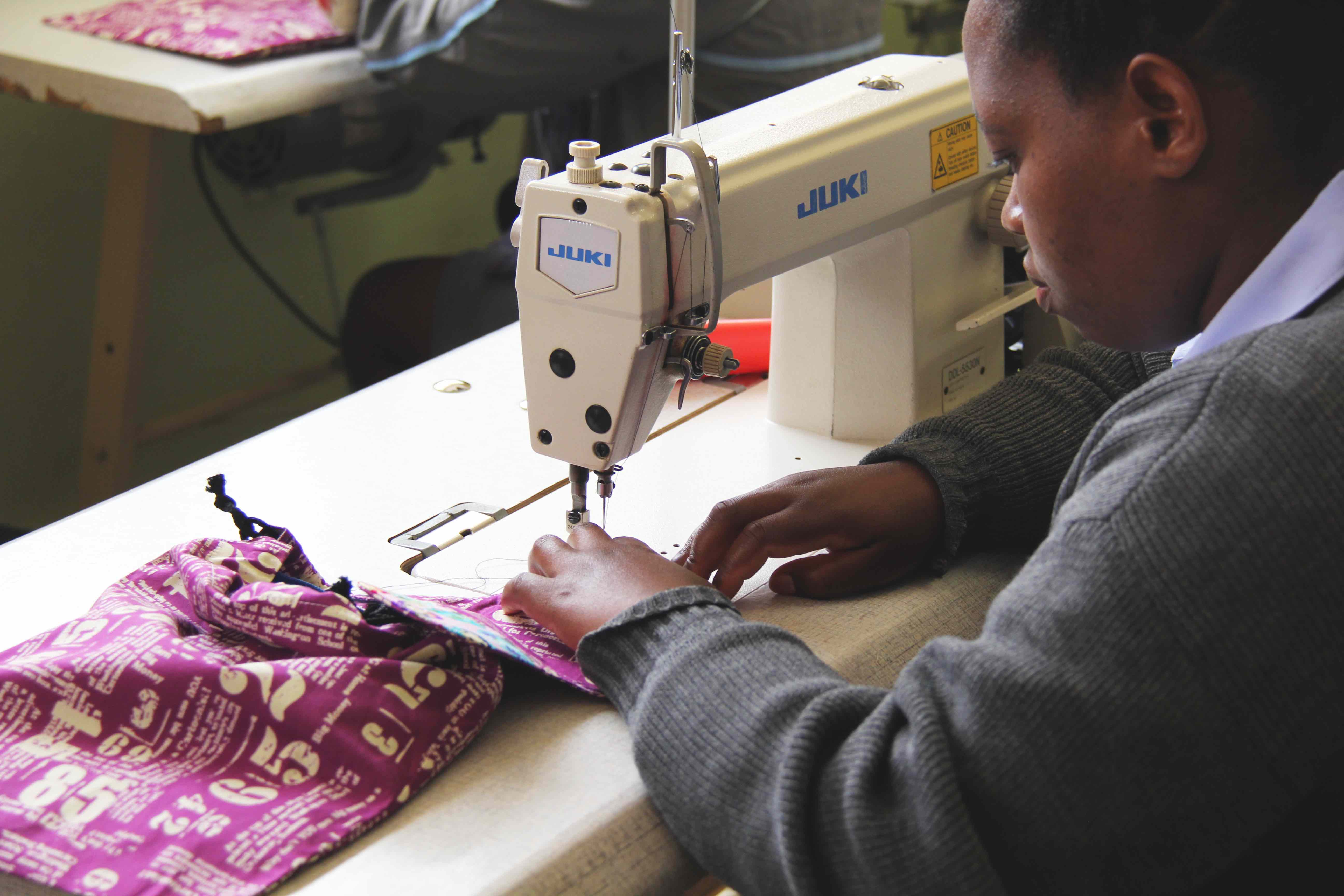
Help Lesotho is purchasing washable sanitary kits for girls in Lesotho (made by local women) so they can stay in school while menstruating. Each kit gives a girl 150 days—equivalent to 3 years—where she has the supplies to focus on her education rather than worrying about menstruation.
In early March 2016, 18-year-old Puleng became a victim of human trafficking.
Like many girls in poverty-stricken Lesotho, Puleng was struggling. She was 16 when she gave birth to her son, working hard to eke out a living for herself and her older brother. Puleng was earning less than USD $5 washing clothes – it simply was not enough. So when her neighbor, a woman whom she trusted, told her of the opportunity to earn more money as a domestic worker in South Africa, Puleng jumped at the chance.
Once in South Africa, Puleng’s good fortune turned into a nightmare. Her neighbour brought her to the home of an older man and told Puleng she was now married to him. Puleng in shock, replied, “I am not married. I came here for work not marriage.”
Human Trafficking in Lesotho
Trafficking into South Africa is particularly easy. Some of the borders are open for 24 hours or late into the night, and border control is very slack. Lesotho provides the quickest route into South Africa for traffickers because once one has crossed the border, the nearest South African town is no more than a few kilometers away.
Most trafficked people in Lesotho are male and female street children, sex workers and ordinary women and girls living a normal life in their homes, like Puleng.
In Lesotho, the unemployment rate for women is particularly high – up to 70%. The closure of textile factories has left a lot of female workers without any work. This economic reality makes them particularly vulnerable to traffickers.
As a result, for women needing to support their families, South Africa is the place to go to find a job. When vulnerable Basotho women hear false promises of a better future in South Africa, it exposes them to human trafficking situations.
Puleng’s Nightmare
Despite her protests, the 65-year-old man raped Puleng and held her hostage for three days. Puleng was far from home and didn’t know anyone, but she didn’t give up. When she saw an opportunity to escape her captors, she ran to find the local councillor.
The councillor demanded the traffickers pay for Puleng’s transportation back to Lesotho. They protested, but eventually agreed to return Puleng back home.
Once in Lesotho, Puleng went to the local police and charged the traffickers. The case is ongoing.
Lesotho’s Vulnerable Orphans
Puleng and her brother are double-orphans, she says, “If I had parents, I wouldn’t face these kinds of challenges.”
Over 300,000 children in Lesotho are orphaned and are doomed to face similar fates. Without strong family support systems, children are susceptible to traffickers.
Thankfully, Puleng tested negative for HIV and is now safely back home with her brother and child.
A Brighter Future Ahead
Help Lesotho’s Young Mother Program recruited Puleng for training. She says that the self-esteem training changed her life because it allows her to feel more confident and face her struggles head on. In addition, she is so grateful for the community of friends she has built through her young mother support group.
Puleng plans to give back to her community by sharing her story with other young men and women, advising them to know all the facts before taking a job abroad and avoid traffickers.
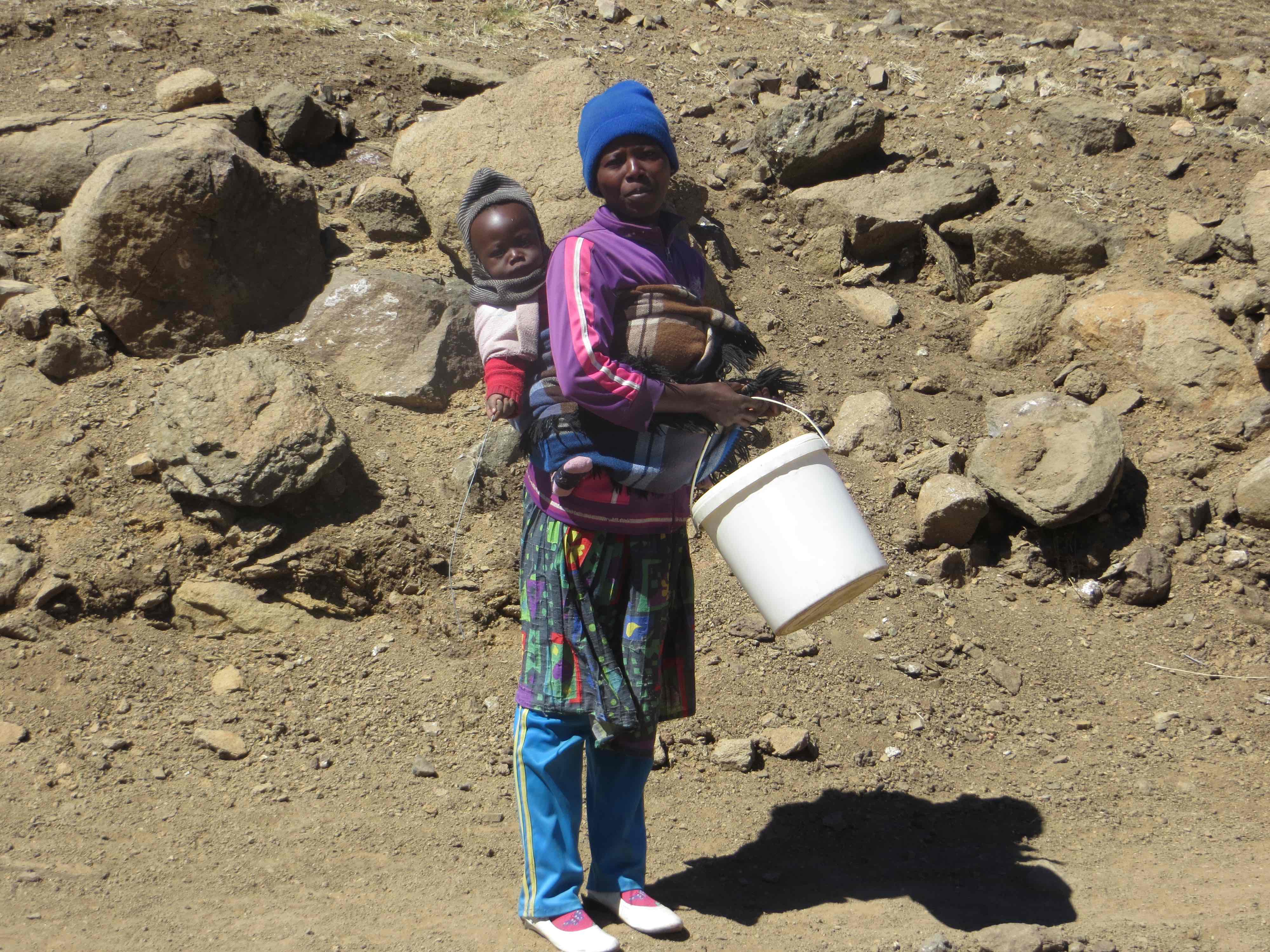
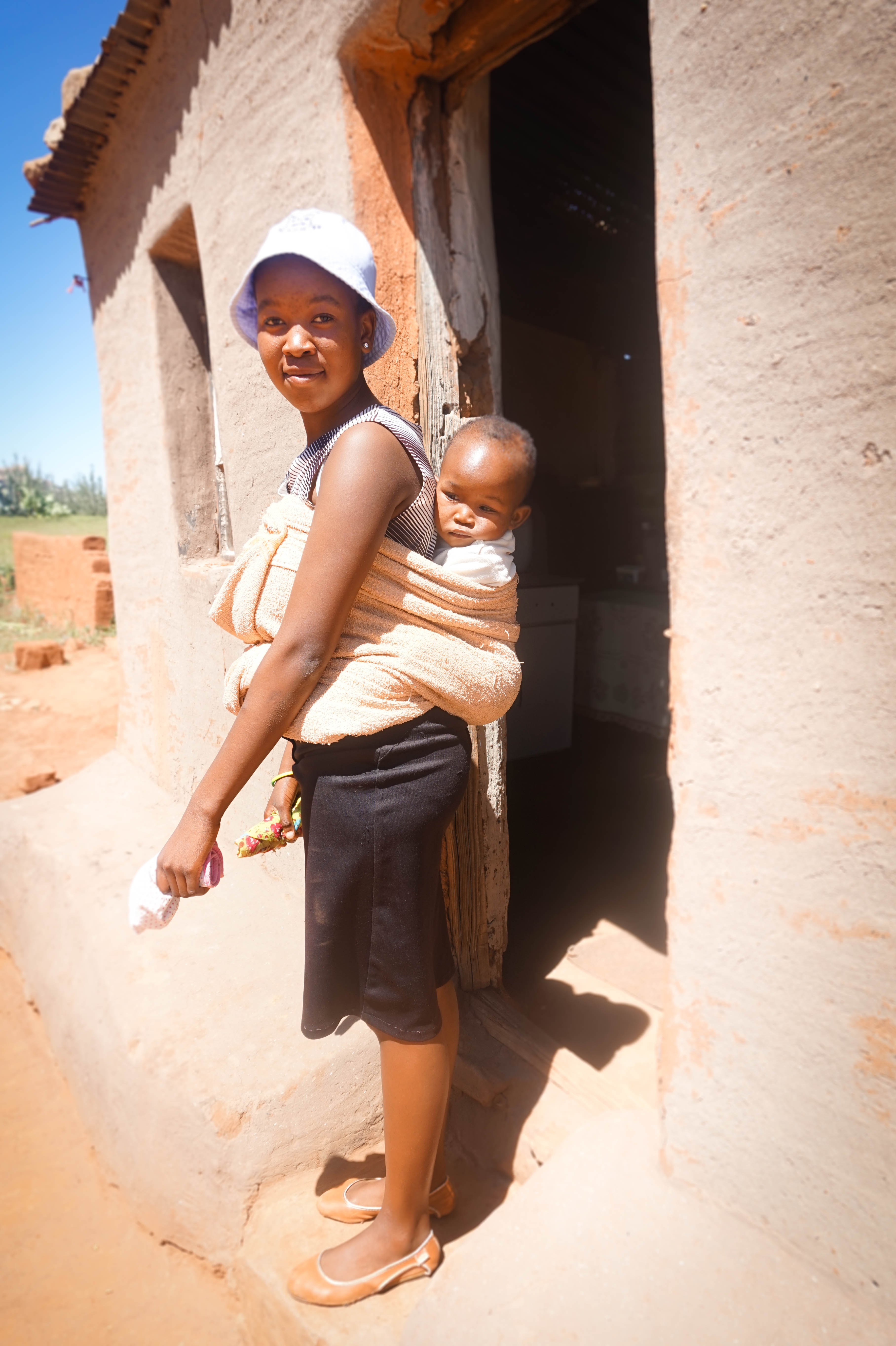
In Lesotho, mothers and grandmothers carry their babies (or grand-babies) on their backs wrapped in a traditional Basotho blanket or towel.
The Basotho baby wrap keeps babies clean, warm and protected from all the red dust that blows throughout the tiny mountain kingdom. In addition, it keeps mom’s hands free to do her daily chores.
Women in Lesotho work tirelessly from sunrise to sunset to feed their families, care for their children and keep their homes clean.
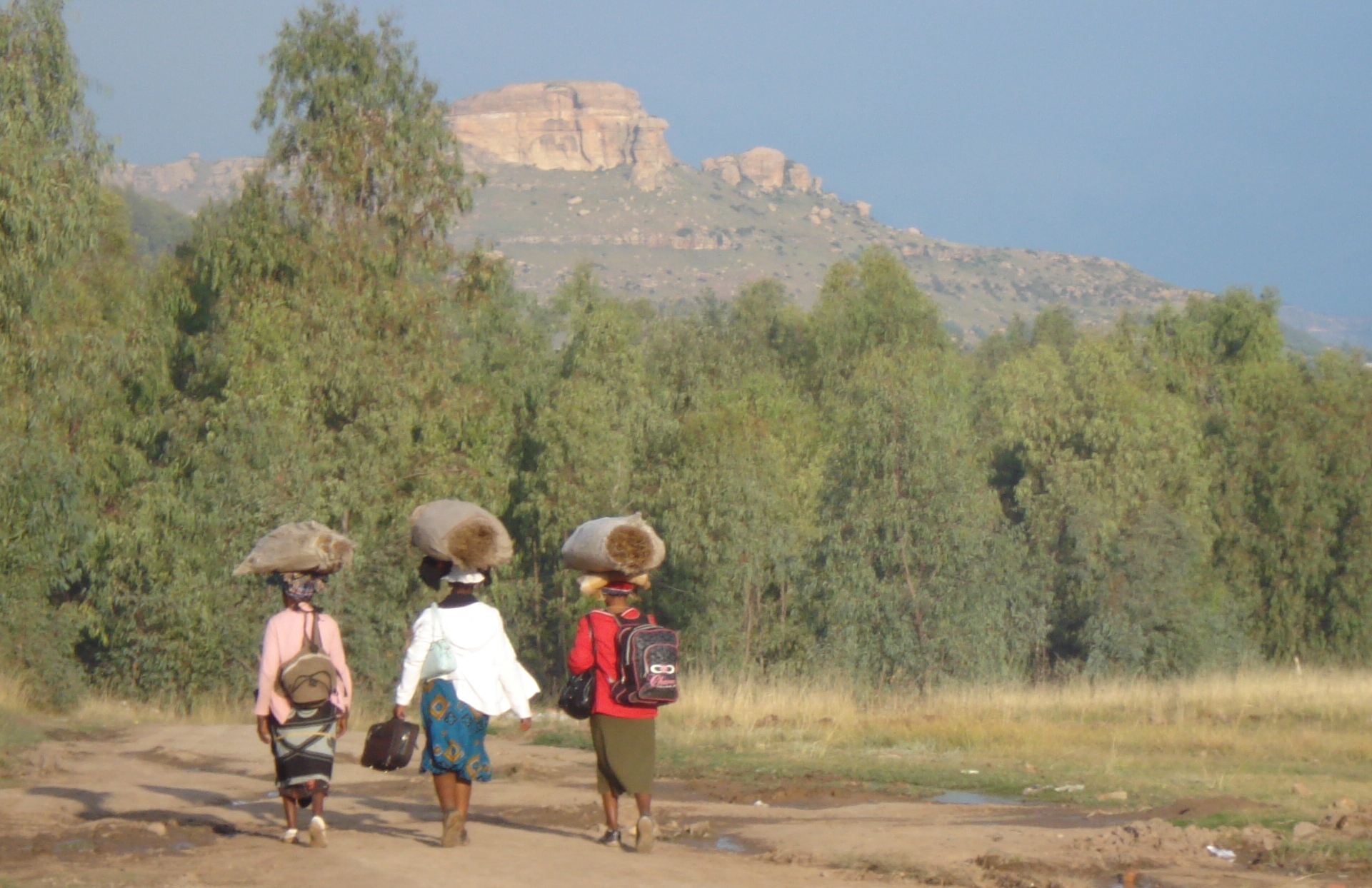
Traditionally women are in charge of doing the washing in a local stream, collecting water from a well to cook and wash dishes, tending their gardens, traveling on foot to the nearest town to do the shopping – as well as keeping their homes and yard swept clean – all while keeping their baby on their back!
How to Tie a Basotho Baby Wrap:
Step 1: First of all, fold the Basotho blanket in half lengthwise.
Step 2: Next, Bend at the waist and hoist baby onto your back, so that their head can rest comfortably on your upper back while they take a nap. Wrap their legs around the sides of your torso.
Step 3: Drape blanket over the baby’s body, until it covers the neck with the face and head peeking out the top; be sure to tuck the baby’s hands inside the blanket.
Step 4: Tie or pin the blanket on your front, across your chest and around your stomach to secure the baby in place.
Step 5: Make sure the babies feet are tucked up inside the blanket. Now you’re ready to bring your baby along for all your daily chores.
This Mother’s Day YOU can Help!
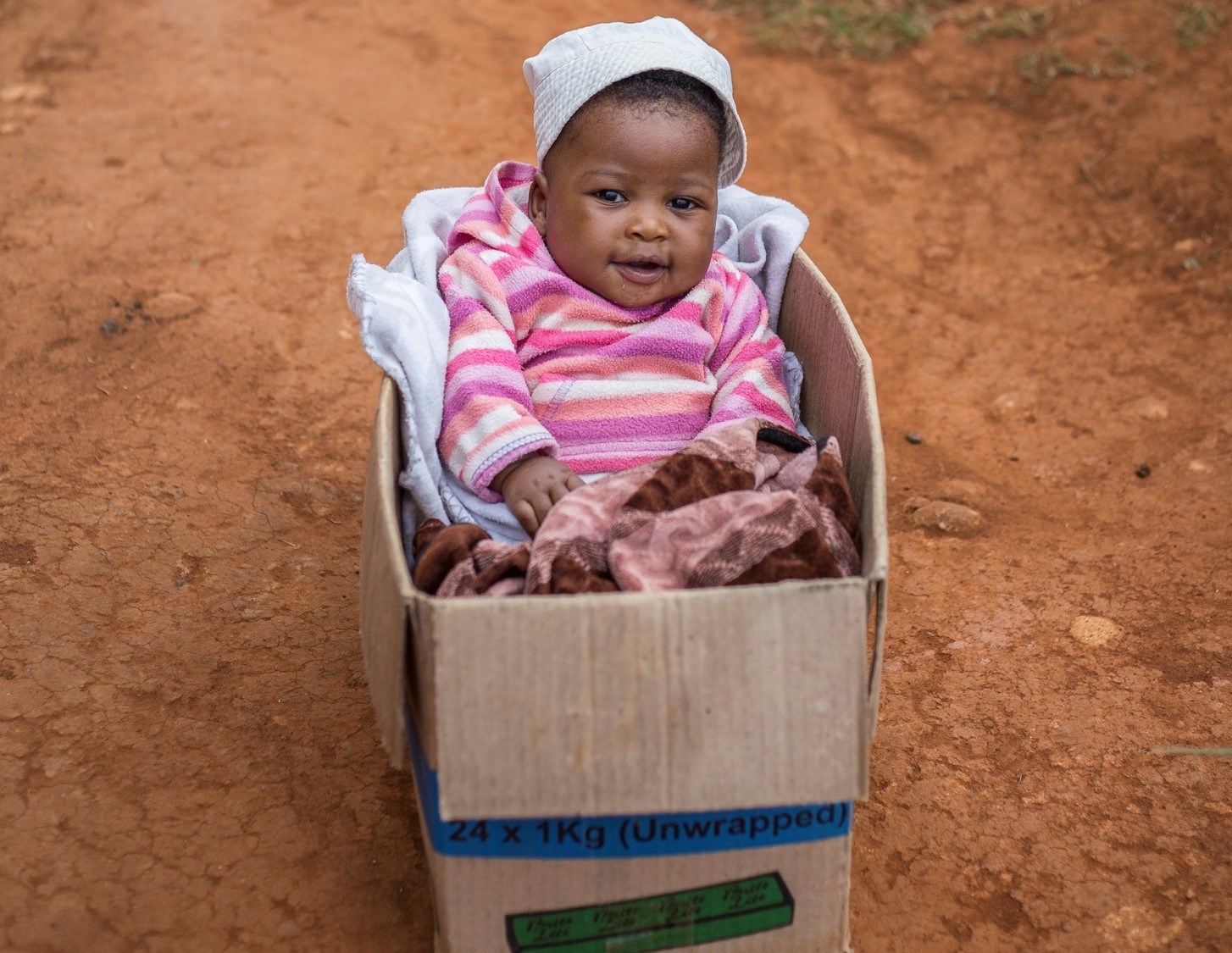
Grandmothers and young mothers in Lesotho are raising babies without the necessary supplies. High infant mortality rates are often the result of caregivers not having safe, clean items for their babies. To help ease the burden of grandmothers and young mothers raising babies, Help Lesotho will package and deliver boxes of ‘B-’ items that will go a long way to giving babies a healthy, happy start at life.
This Mother’s Day, give a Baby Box in honour of a special mother in your life!
Grandmothers are the key support structure for children in Lesotho and are essential to their survival. Many of them have lost their own children and family members to HIV/AIDS, leaving them confused, lonely and grief-stricken.
Despite their own poverty, illnesses and hopelessness, grandmothers have opened their homes and hearts to Lesotho’s orphaned children, filling the role of parents and guardians. They have the burden and the unique opportunity to support their grandchildren to become educated young leaders.
One such grandmother (‘nkhono’), Nkhono ‘Mafese’s life has been a series of tragedies. She became a widower after 20 years of marriage when her husband contracted Tuberculosis from working in South African mines and died suddenly. She was left to raise 6 children on her own.
Nkhono ‘Mafese had to face a parent’s worst nightmare many times over when four of her six children passed away. She is now left with two daughters, one who lives with her due to illness. The 71-year-old grandmother also has seven grandchildren, two of whom live with her: 11-year-old Itumeleng, and 7-year-old Pulane. Pulane has several disabilities, but ‘Mafese does not have enough money to bring her to the doctor.
Unfortunately, Nkhono ‘Mafese is HIV-positive. She is taking antiretroviral (ARV) treatment, but she experiences negative side effects from the medication which makes her very ill (dizzy spells, back pain, and foot pain). These effects stem from her poor nutrition: she struggles to afford the necessary amount of nutritious food needed to properly digest ARVs.
Nkhono ‘Mafese’s days are typical of a grandmother in Lesotho. She wakes up at 5:00am to get her two grandchildren ready for school. She normally has her breakfast at 10:00am which generally consists of Pap (maize and water paste) and Moroho (green vegetables). That is the only meal she will have that day. After breakfast, ‘Mafese goes to collect firewood or works in her garden. She collects water from the well which is a one hour walk from her hut. Her day ends at 7:00 pm when she climbs into her old bed with her youngest grandchild.
Nkhono ‘Mafese has many worries. She gets depressed thinking about herself and one of her daughters living with HIV. Without adequate food, the ARVs are just making them sicker. She is also very worried about her granddaughter’s disabilities and wonders what will happen to the child when she grows up.
Despite all her challenges, ‘Mafese still finds joy in her life. It makes her happy to see her grandchildren growing up, and she feels very blessed to have been selected to be part of Help Lesotho’s Grandmother Support Program.
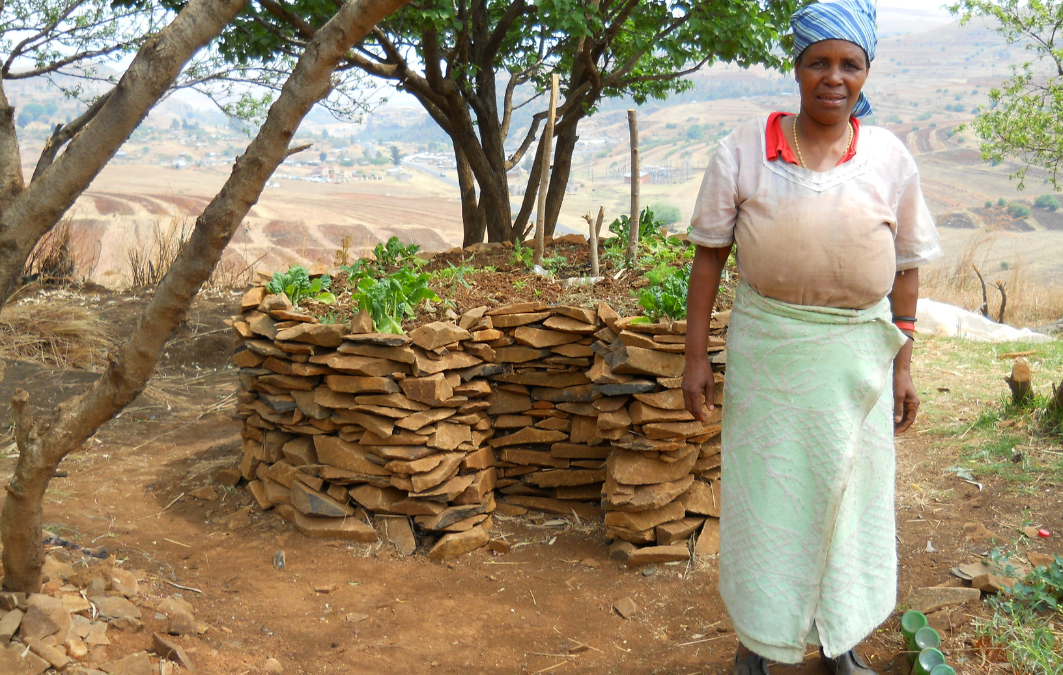
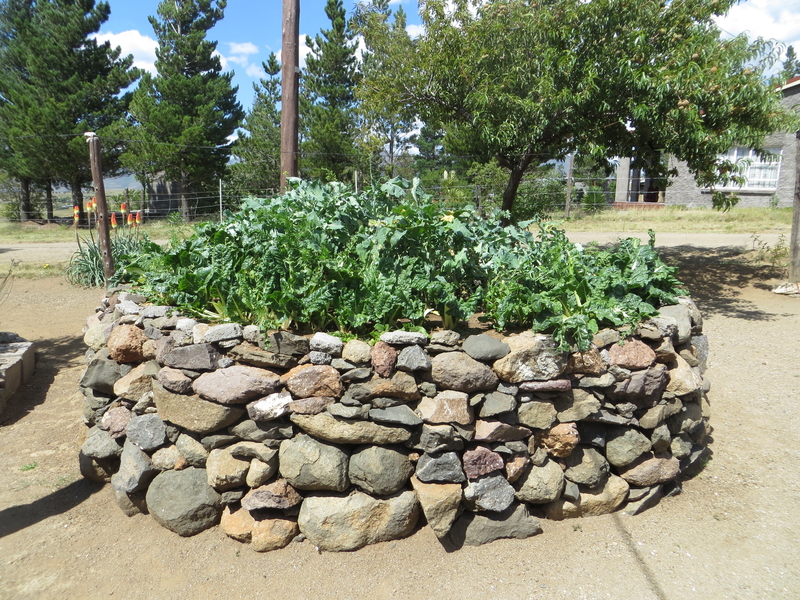
Since becoming part of the program, Nkhono ‘Mafese is now able to provide food for her family with the keyhole garden she planted.
In Lesotho, where almost 25% of people have HIV/AIDS, it is especially important that grandmothers are able to grow vegetables to keep themselves and their orphaned grandchildren healthy (especially if they are HIV+ and require nutritious food to help digest their ARV medication). Because seeds and garden tools are very expensive, keyhole gardens are a sustainable, inexpensive solution to feeding these rural families.
Keyhole gardens allow frail and/or disabled grandmothers to easily access their crops. The garden is sustainable and self-fertilizing – it uses garden waste as fuel to grow vegetables.
Help Lesotho has helped thousands of grannies build keyhole gardens and plant vegetables such as squash, pumpkin, moroho (spinach), beets, carrots and swiss chard to feed their families nutritious meals, not just maize and water. Grannies often have a surplus produce which the can sell to their neighbours to generate income for their families.
If you’d like to read more about how to construct a keyhole garden click here.
This World Health Day, consider sponsoring a grandmother in Lesotho, so she can get the nutrition she needs for her and her family, and so much more!
Grandmothers in Help Lesotho’s Grandmother Support Program attend monthly trainings on topics including: children’s rights, communication, conflict resolution, sexual violence against children, drugs and alcohol abuse, elderly rights, Prevention of Mother to Child Transmission (PMTCT), grief and loss, and anger management. Each grandmother belongs to a support group in their respective village, where they meet once a week to discuss their struggles, challenges, successes and plan income generating projects.
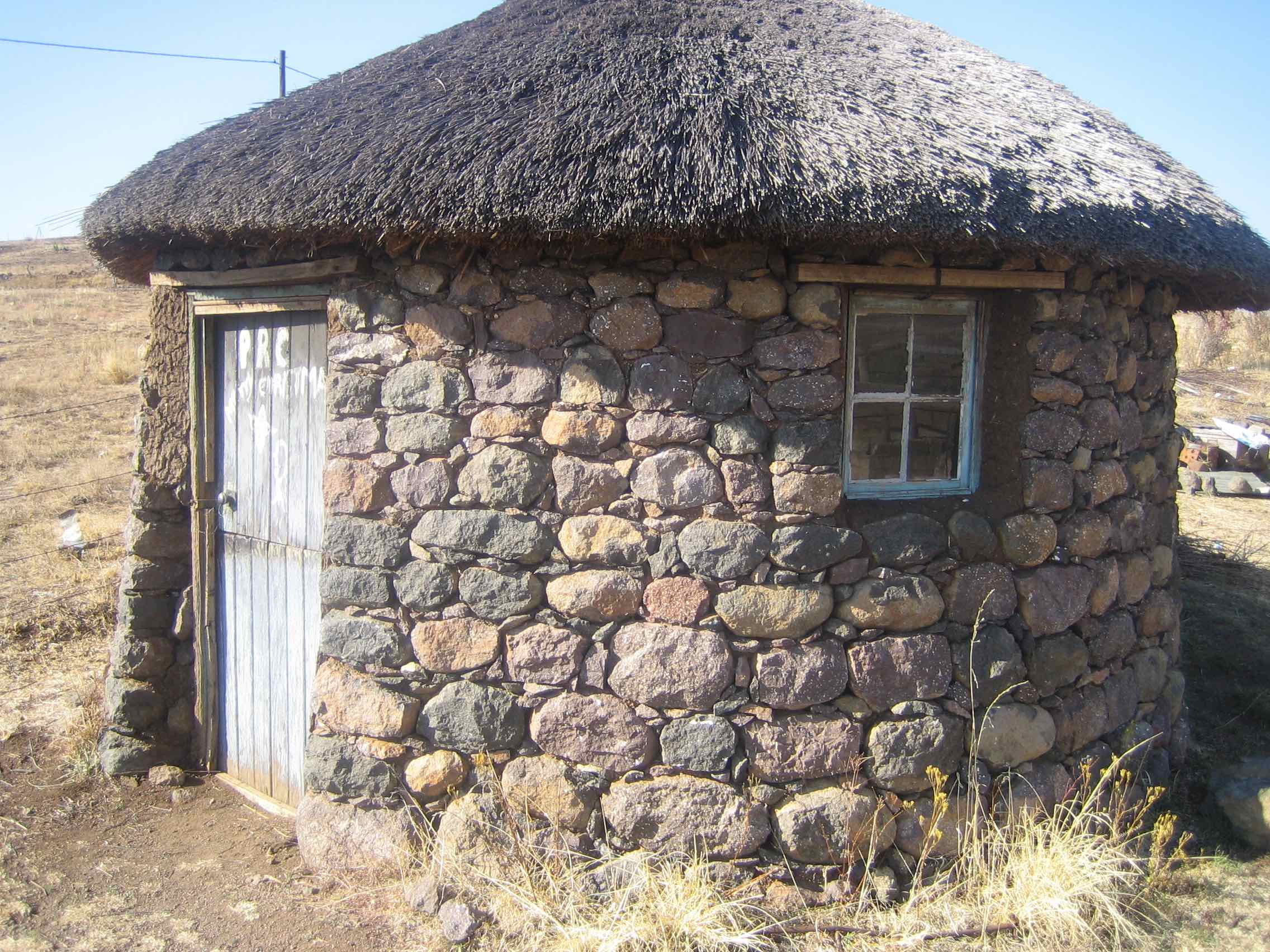
The grandmothers also receive repairs for damaged huts; food parcels with essential cooking supplies; support to build a key-hole garden and plant seeds; blankets and shoes and assistance with income generating project.
In Lesotho, approximately 1 in 5 girls are married before their 18th birthday.
Pontso* is one of those statistics.
At 17-years-old, the double-orphan had never attended high school because her grandparents couldn’t afford to pay her school fees. After her grandmother passed away, Pontso’s grandfather neglected to care for even her most basic needs, so she took a job as a nanny to make ends meet.
Caring for children on an isolated mountainside in the rural region of Thaba Tseka with no family left to protect her, Pontso was completely alone in the world.
One day, the neighbour’s son took advantage of Pontso’s vulnerability and raped her. He assumed he was immune to punishment, being a relative of the village chief, and a man in Lesotho.
When Pontso discovered she was pregnant as a result of the rape, she reported it to the village chief, adding that she planned to go to the police. The community quickly made plans to protect the man from incarceration by forcing Pontso to marry him, so the rape would be considered legal.
According to the Marriage Act of 1974, in Lesotho the minimum age of marriage is 21 years old. However, the law allows for girls to marry at 16 and for boys to marry at 18 with the written permission from a minister.
With no support system or societal influence, Pontso was disempowered and unable to stand up against the entire community on her own and was ultimately deprived of her freedom and fundamental human rights to health, education and safety.
It is not only women who are affected when girls become brides, but entire societies. Communities that diminish the value and participation of girls and women limit their own possibilities for growth, stability and change.
After her marriage, the physical abuse did not end. Pontso’s husband began to beat her. She had given up all hope and was deeply depressed. Her husband eventually left, unable to deal with their unhappy marriage and abandoned his wife and young child. Now, Pontso struggles to put food on the table and works odd jobs to survive, but is happy to be free from her forced marriage.
Pontso felt deep loneliness until she was recruited for Help Lesotho’s Young Mother Program, where she learned to share her problems with her peers at her weekly support groups and received healing through the emotional and psychosocial support.
Today, Pontso advocates for other young mothers to take care of themselves and attend clinic visits. This young mother’s resilience inspires others in her group to keep smiling, take care of their children and have hope for a better future.
Pontso’s story highlights the importance of educating boys to create a critical mass of young men who are committed to gender equity and protecting girls and women from violence.