Water-rich Lesotho has long lubricated South Africa’s burgeoning population, but when drought struck in 2016, it was the residents of Katse village who suffered.
Read more about the effects of the South African drought on Lesotho.
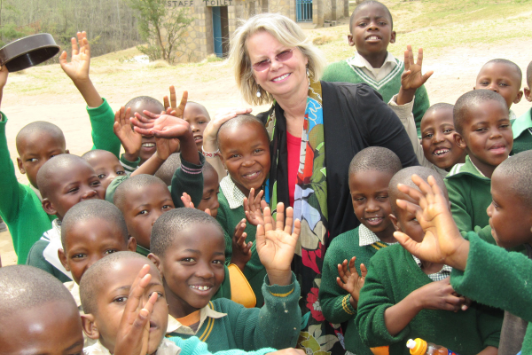
As I write, I am looking out the window as a group of children are, yet again, surreptitiously sneaking through the vertical bars in the gate beside the playground at our Seotlong Centre.
They are deaf children who live at a residential school across the field. Over the last couple years we have developed several programs for them and their teachers. Some of our staff are learning sign language to be able to talk with the children. You would be surprised at how little they are for their ages, developmentally delayed from malnutrition and illness. They are so thin that they can indeed successfully squeak through the 8” space between the bars in our gate. The Centre is closed for the day, yet they cannot stay away. This place is the one space in their lives where they are treated as equals, as valuable, as welcomed visitors.
It beacons them!
(I could not let them see me watching, but here are a few of them the next day when the Centre opened.)
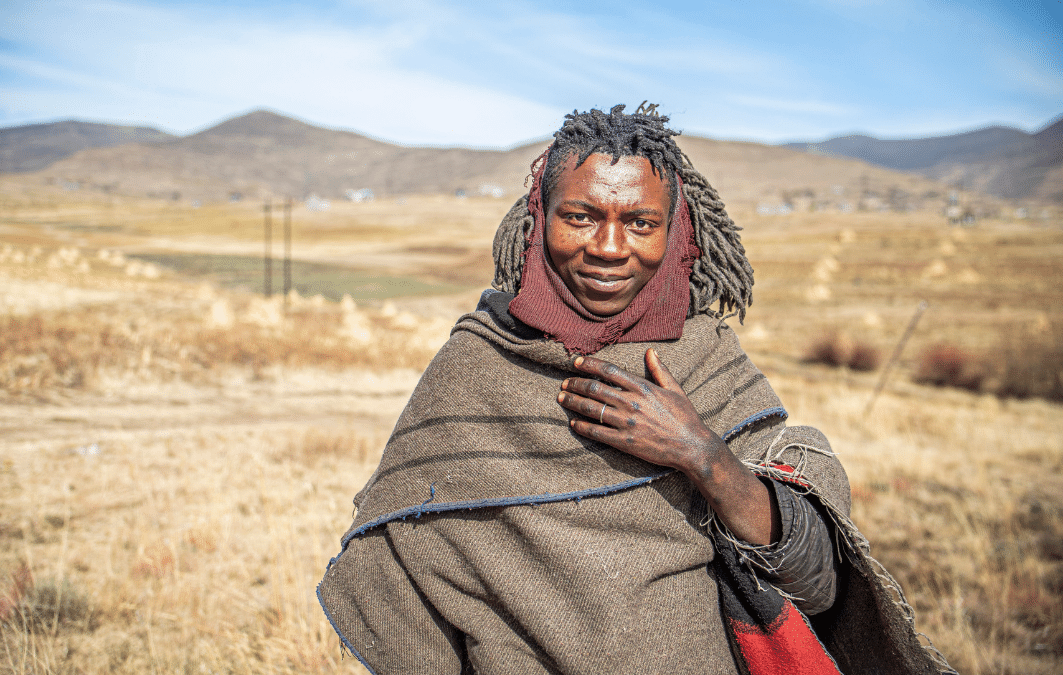
I want to tell you about a young man named Tsita.
Tsita was 29 in 2015. School ended for him in 1999 after completing grade seven at the age of 14. There were no funds in the family for school fees to continue his education. Like so many young boys in Lesotho, Tsita became a herd boy, looking after cattle and sheep up in the mountains of the northern corner of Lesotho in Butha Buthe.
For 14 years, he lived an isolated life, wandering the mountains, without education or socialization. When his village chief called a gathering to declare that herd boys were being recruited for Help Lesotho’s Herd Boy Program, he saw his chance. This was the first opportunity he had ever had to better himself. He attended the Saturday classes faithfully for the full six months of the program, soaking up every word and idea, never minding that many of the participants were still children and he was not. He participated in a herd boy initiative to march in the streets of Butha Buthe to raise awareness of the need to end sexual violence against women. Tsita graduated from the program, proud and changed.
For 14 years, he lived an isolated life, wandering the mountains, without education or socialization.
(Tsita at Herd Boy training. He is the one wearing a black woolen hat with one red and three grey stripes sitting just behind the speaker.)
[/fusion_text][fusion_text]
In early 2015, our program officer selected Tsita to represent Help Lesotho’s Herd boy program at our 10th Anniversary Celebrations in March of that year. With lots of encouragement and support, he wrote and delivered the first speech of his life in front of the King and Queen of Lesotho, honoured international guests, his peers and national TV and radio. Despite almost paralyzing nervousness, he spoke bravely and passionately.
Below is his speech, followed by the story of a meeting I had with him exactly two years later.
My name is Tsita I live in a little village in Butha Buthe. I have been one of the participants in the herd boys training this year by Help Lesotho. The training has been indeed a life-changing experience. As herd boys we spend most of our lives looking after animals with no information about issues concerning us. Before I attended the Help Lesotho training, I used to be one of the perpetuators of violence against women. This was because it seemed normal to us as herd boys to beat and sexually violate women’s rights because no one took any action about it. The issue of gender equity to me and my fellow colleagues was understood as a way of depriving us of our privileges and punishing us.
The training changed my whole thinking. Now we as herd boys we understand that women are human beings like us and they have similar rights and worth just like us. We are both equal creations of God and therefore we as men should stop abusing women and girls. Ladies and gentlemen, gender equity doesn’t imply that men should be inferior. It only means that both men and women should have equal opportunities and power in making decision about their lives because they both have the same capability.
To all young men in Lesotho, please let’s join hands and empower our beloved women and girls. Where are we expecting them to live when we mistreat them? They are our mothers and wife. Let us respect and honour them for the greatness they bring to our lives.
Now in my village we have a committee of herd boys who are fighting hard reporting cases of women and girls abuse. This, I am making a plea to every man in Lesotho to make it their assignment in their communities. Enough with women and girls abuse in any form.
We young men should work together to end violence against women.
I would humbly like to thank Help Lesotho for changing my life. Thank you.
Everywhere I went after the celebrations, no matter how remote the village, people were talking about this speech. Never had a herd boy taken such leadership or admitted publicly to being an abuser. People listened. Tsita became famous in his village. Peers who attended university weren’t even as renowned.
I too was deeply moved and read his speech to many people in Canada. He had captured not only the plight of the herd boy but their potential to be reintegrated into society as effective leaders.
[/fusion_text][fusion_text]
Two years later, in February 2017, I asked one of our staff to find him to meet with me. I saw this as a test of the real impact of this program.
Could a young man hold onto that change over time?
Tsita arrived exactly on time, sparklingly clean and beaming. I did not ask where he got the money for the 75-minute fare to come on public transport. He was now 31, still living with his mother, his brother’s wife and two children, and his deceased sister’s two orphans.
He could not contain his delight. He was so proud to receive the call that he told the entire village, “Help Lesotho still remembers me!”.
Tsita remains a herd boy, looking after cattle for hire for approximately CAD $20 (M200) a month. He said the program had changed him forever. He had been a harsh man, thoughtlessly abusing women sexually. He told me that once he started the program he stopped completely and never did it again. To this day, whenever he sees a woman or girl being abused he either tries to stop it or he reports it.
He said that he learned how important it was to know his HIV status, to get tested regularly and to get treatment if required (while he spoke, he proudly pulled out his testing card to show me that it was indeed up to date and indicated that he carries it with him always).
Tsita said that he tells people around his village that women must be respected and should never be abused because they have rights. He reported that before he had been so shy that he never spoke to others and could not express what was inside but after he went through the program, he became confident and can now express himself. His face shone as he described how proud he was of himself now. He said if it had not been for this program, he probably would have been in prison but now he will never go there because he knows how to do better.
When I asked what he would say to the donors if he could, he quickly responded that they must be very happy that they had given this program and that his life will be better, that he is a different man and he will make them proud.
As he talked openly and with great enthusiasm through an interpreter, Tsita kept repeating how proud he was of Help Lesotho, over and over again.
Needless to say, I was very moved.
I took him into the kitchen where we were feeding lunch to the 65 Leaders-in-Training participants and asked our cook, ‘M’e Muntja, to plate a REALLY big lunch for Tsita while the staff got the funds to pay for his transport both ways.
Indeed, as Tsita says, you would have been proud too!
Sala hantle,
Peg
PS. Shortly after the anniversary, we lost the funding for the Herd Boy Program. During a talk I gave upon my return from Lesotho in 2016, a long time child sponsor stepped forward to help. She and her family nearly fully-funded this program for two years (300 herd boys))! Without this incredible support, it is unlikely that we could have run the program at all. Here is the proof – one person certainly can make a difference!
PPS. We are also so grateful to the people who donated towards the Herd Boy Program and who supported our online ‘Giving Challenge’ in June 2016 to raise the remaining funds required. Together, you made it possible for herd boys to get the same support Tsita received, including new blankets and gum boots for all!
As Help Lesotho’s Founder and Executive Director, Dr. Peg Herbert spends at least two months a year living and working in Lesotho. As a Canadian exemplifying what good international development looks like, Peg shares her experiences through ‘Letters from Lesotho’ so we can all get a glimpse of what makes Lesotho such a special place.
If you would like to connect with Peg about her letters:
I have been in Lesotho for over a week. It is wonderful to be back and to see all the progress which has been made and lives which continue to be changed thanks to all of you. All is well with me, although one of my suitcases took six days longer to arrive than I did!
The good news to report is there have been regular rain showers, for which we are grateful. In a country like Lesotho rain is synonymous with life.
We are also grateful for our outstanding Country Director, Shadrack Mutembei. It was six years ago now when I first interviewed him for the position with Help Lesotho. Shadrack leads a large staff here in Lesotho, all of whom work tirelessly towards accomplishing the mission of our organization. He has been such a blessing to the organization, and to the staff in Lesotho.
Last week we held three days of interactive staff meetings, two of which were quarterly meetings when all the staff come together from various locations to be inspired, informed and re-focused. The heads of each department heard about our impact, our actual results against targets and lessons learned of the previous quarter. We are always learning to be able to move forward with excellence.
We are thrilled to report that because of our amazing staff and your support, Help Lesotho’s 20 programs reached over 10,000 beneficiaries between July 1 and December 31, 2016!
I am often asked how we do so much with what we have.
Truly, it is because of our passionate, effective and compassionate staff in both Lesotho and Canada.
At these meetings last week was an inclusive group of 38, including our cook, full-time and part-time staff, farmer Peter the security guard at the Pitseng Centre, our drivers, our interns from Canada this year, Maddison Van Balkom and Emily Major-Girard, and three granny leads who do the village work. Everyone from the cleaners to department heads had a proper hard covered planner to take down their notes.
It takes many hands and hearts to support and train this many fragile people through our long term, comprehensive programs. Our staff in both centres are so talented and dedicated.
We have thousands in and out of our centres annually, and many of our programs are offered way up in the mountains, and it takes our entire team to make the success of our programs possible.
As you can see in the picture each one was dressed smartly and professionally in their Sunday best, beaming with pride. They are dear people to me. All of them are local, and they are filled with confidence, self-respect, purpose and camaraderie. Our staff are also products of their culture and challenge that come growing up in Lesotho.
You may not know this, but all program officers must have completed our intensive leadership training course to be eligible for employment with Help Lesotho. Many are youth, men and women we have trained, some of them have been with us from the beginning. Two were sponsored children since grade 8 and for whom Help Lesotho has been the only family they know. One started in our Young Mothers program, others graduated from our Computer and Life-skills Course or our Leadership programs.
Their training enables them to personally and professionally deal effectively with the specific vulnerabilities and trauma facing our beneficiaries. It was a special time for me to share with the staff. It is important to celebrate that Help Lesotho not only assists our beneficiaries but provides jobs to local people.
All of them are local, and they are filled with confidence, self-respect, purpose and camaraderie.
This particular meeting opened with two songs especially written for this occasion and they sung them like a choir of angels. A poem was read , gifts were given and a beautiful handmade card was created to welcome me. Their expressions of love brought me to tears, and rendered me speechless, which as those who know me is nigh on impossible!!!
When I recovered my ability to speak, I read notes and letters from several of you and reminded them that they are known, cared for, and appreciated for their hard work and dedication in such difficult issues and circumstances. They were visibly moved to know that people so far away truly care about them, who pray for them, sharing what extra they have to support their work.
Several staff members were so touched, that it changed and inspired them to do more.
They were incredulous that grandmothers made things to sell to send funds over; that pensioners sacrificed to help; that little children would share.
The recent Facebook post of my six-year-old grandson, Grayson, donating $20 to buy a pair of shoes for a child in Lesotho seemed to strike a particular cord.
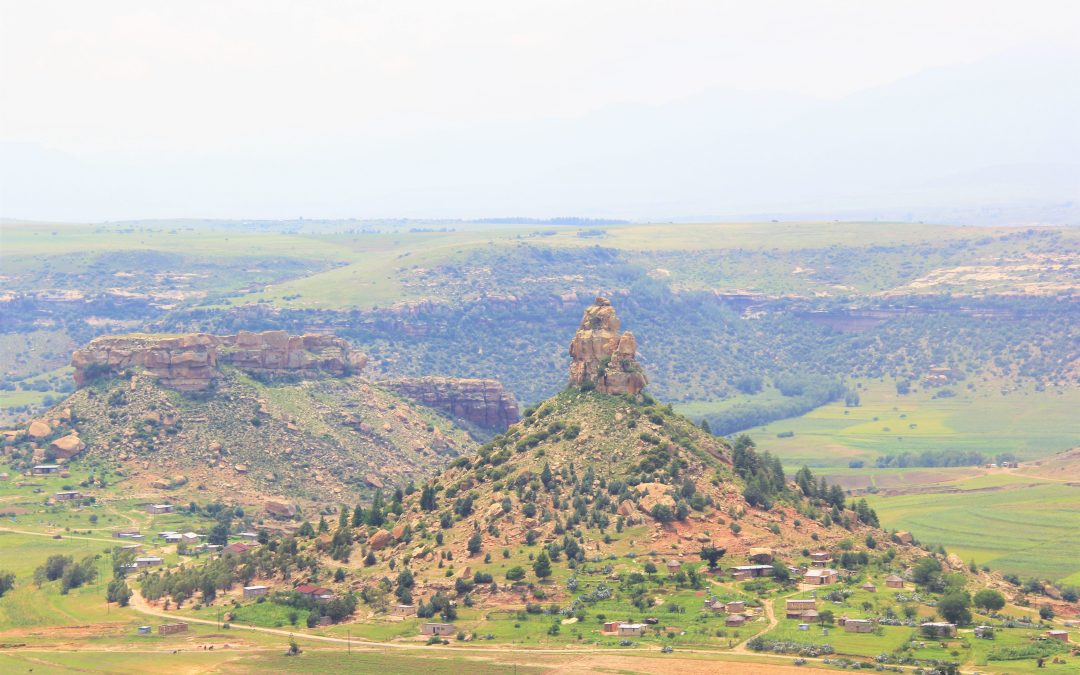
The third day of staff meetings was a bi-annual team building retreat. We made the challenging climb in the heat to the top of Thaba Bosiu, the sacred place of the founding of the Basotho nation and the table-top vantage to view the mountain of the Mokorotlo, the famous Basotho Hat, one finds in fields and on the national flag. For many of the staff, this was their first time to have this opportunity. It was a fun day and so vital to allow our staff time to be together and to fill up when often their work can be so emotionally draining.
On another note, I want to mention how touched we are by your enthusiastic response to our legacy initiatives and the number of people who took advantage of the free estate planning service offered through our partnership with Advisors with Purpose (AWP). While we will always gratefully accept legacy gifts from donors, our partnership with AWP ends March 31, 2017. If you still want to benefit from their service, please contact 1-866-336-3315 or visit https://www.arc.helplesotho.org/ways-to-give/future-gift/ for more information.
Spread the word through social media: So many people tell me how much they love reading these letters because they get to truly see what is going on in Lesotho in real time. Please share these letters and our posts on Help Lesotho’s Facebook and Twitter channels to engage your families, colleagues and friends
In 2015, Help Lesotho launched a new initiative to distribute reusable sanitary kits to school-age girls in Lesotho.
As in many countries around the world, menstruation is a barrier to education; many girls stay home from school because they cannot afford the necessary supplies to manage their periods. Some girls turn to dirty rags or towels, leaving them uncomfortable, embarrassed, and at risk for infection.
The first few dozen reusable kits for this project were purchased from the Ottawa, Canada chapter of ‘Days for Girls’, an impressive program that has sewn thousands of kits for girls around the world. These kits were distributed to 50 girls in the pilot phase of the project. After using the washable pads for six months, the project was yielding impressive results – 100% of the girls who received kits were using the kits – and loving them! Instead of staying home the girls were bringing their kits to school on the days they were menstruating. They were having no trouble cleaning the pads, and they were finally feeling proud of the young women they are.
After the success of the pilot, Help Lesotho looked to expand the impact of the program.
Taking Sanitary Kits Local
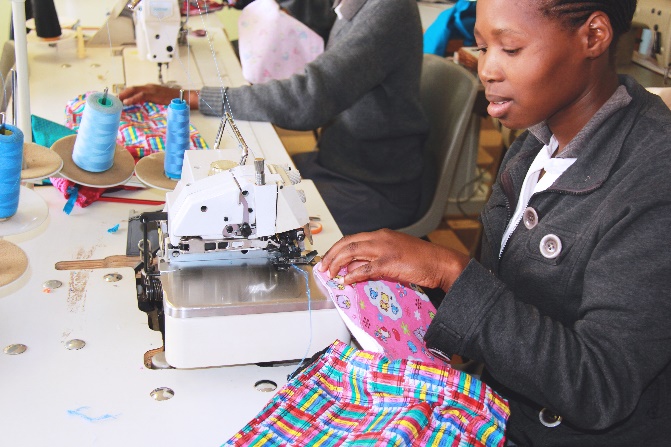
That opportunity came with the establishment of a partnership between Help Lesotho and the Mazzarello Vocational School in Maputsoe (about 40 minutes away from Help Lesotho’s main Leadership Centre in Lesotho).
A group of young women are learning to sew at the Mazzarello Vocational School, and they are now the main producer of the reusable sanitary kits distributed by Help Lesotho. Help Lesotho pays for each kit made by the girls at the school, and the profits are helping to cover the school fees and expenses of the seamstresses. In combination with their project to sew school uniforms, the school is working towards being 100% self-sufficient.
Quotes from the girls sewing the kits:
“They are going to help a lot of people, especially a lot of the people living up in the mountains. It’s not easy for them to get the pads, but if they have those pads it’s going to be easy for them to use and wash.”
“We’re so glad to hear that you are very happy with our work.”
“So excited because we didn’t realize that once we were able to make those things, before that we thought they all had to be imported, so we are very happy to make these for our own. We are happy that we are improving our work.”
“We are always happy when we are doing our work, because if you do it with long faces, it won’t be perfect, so we are putting in all of our effort.”
The girls at the Mazzarello Vocational School were thrilled to take on a project that would both provide them with a small income and give them the chance to help girls in their community through their sewing. Help Lesotho is pleased to be supporting the local economy and skill development of girls who are working hard to build careers on which they can support their families.
Knowledge is Power
Girls who receive the kits participate in a comprehensive education session where they learn about menstruation – namely that it is a totally normal thing! – and learn how to stay healthy and hygienic as they enter womanhood. The girls are given the opportunity to ask questions; with many of these girls growing up orphaned and alone, they have never had anyone to ask even the most basic questions of.
The girls love receiving the beautiful kits, which include:
two shields (which have a water-proof barrier);
eight pad inserts;
a pair of underwear;
soap;
zip-lock bags;
and a colourful drawstring bag to carry everything in.
Each kit lasts up to three years, or 150 days of coverage.
Since 2016, the Mazzarello Vocational School has made over 200 kits for Help Lesotho to distribute to adolescent girls enrolled in high school. Funds raised through the Pearls4Girls program and Help Lesotho’s ‘Gifts That Give Hope’ program guarantee that many more kits will be delivered in the coming years – giving back thousands of school days to girls who might otherwise be forced to stay home.
The impact of the reusable sanitary kits is remarkable. They are one of the simplest and most cost-effective strategies for empowering girls to stay in school. Best of all, by having the kits made by girls in Lesotho, this project has DOUBLE the impact for Lesotho’s vulnerable girls!
Events in Lesotho typically begin with a hymn or a song, followed by a prayer. At a recent sexual education workshop for deaf students hosted by Help Lesotho, the first morning’s hymn started with grins from ear to ear and one small difference: the hymn was silent.
Correct information empowers people to make the best possible choices in all aspects of life. Conversely, incorrect or poorly communicated information can cause a degree of harm that can be worse than knowing nothing in the first place. It is time to stop focusing solely on access to education, and start working on improving the quality of education.
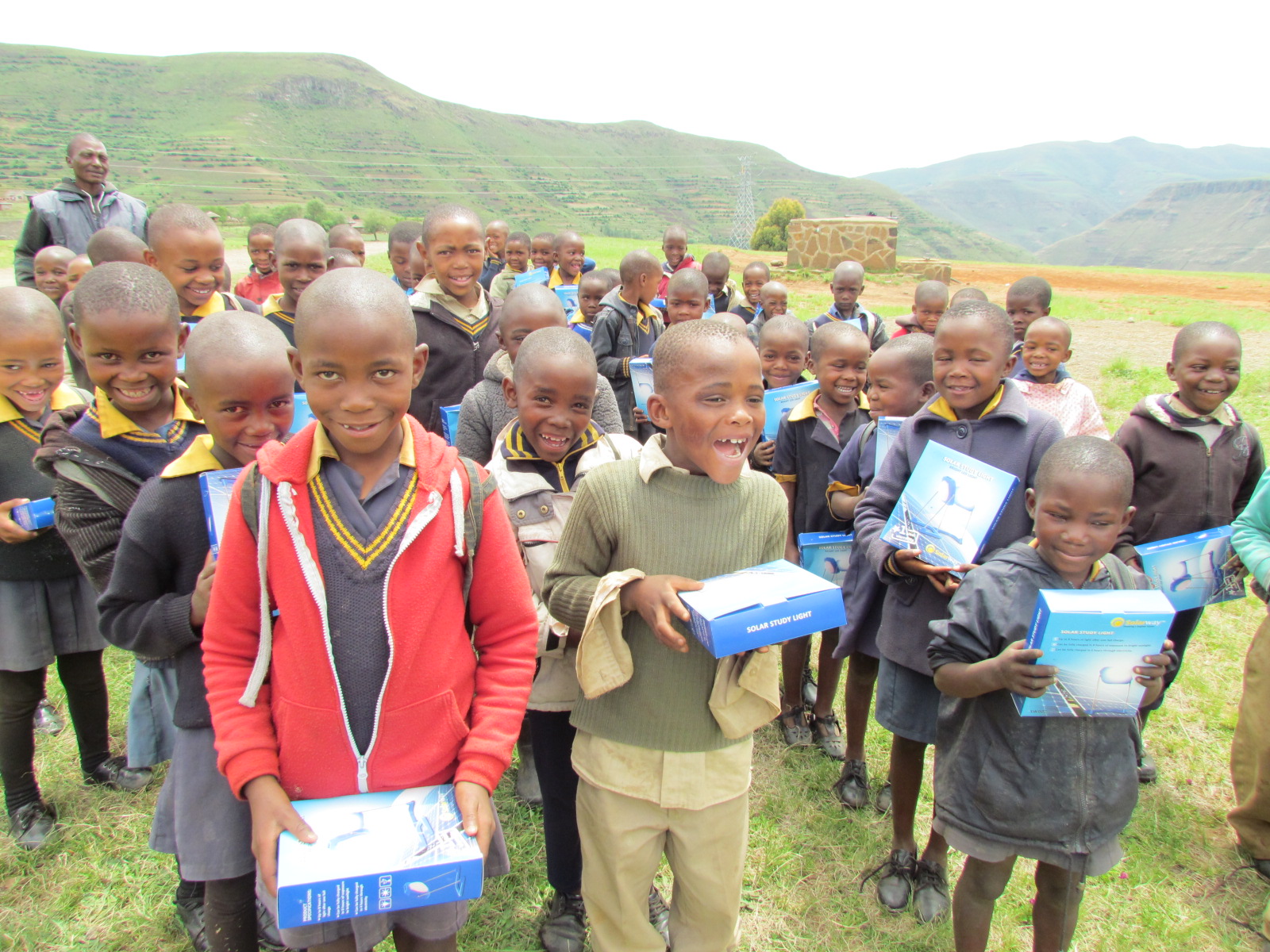
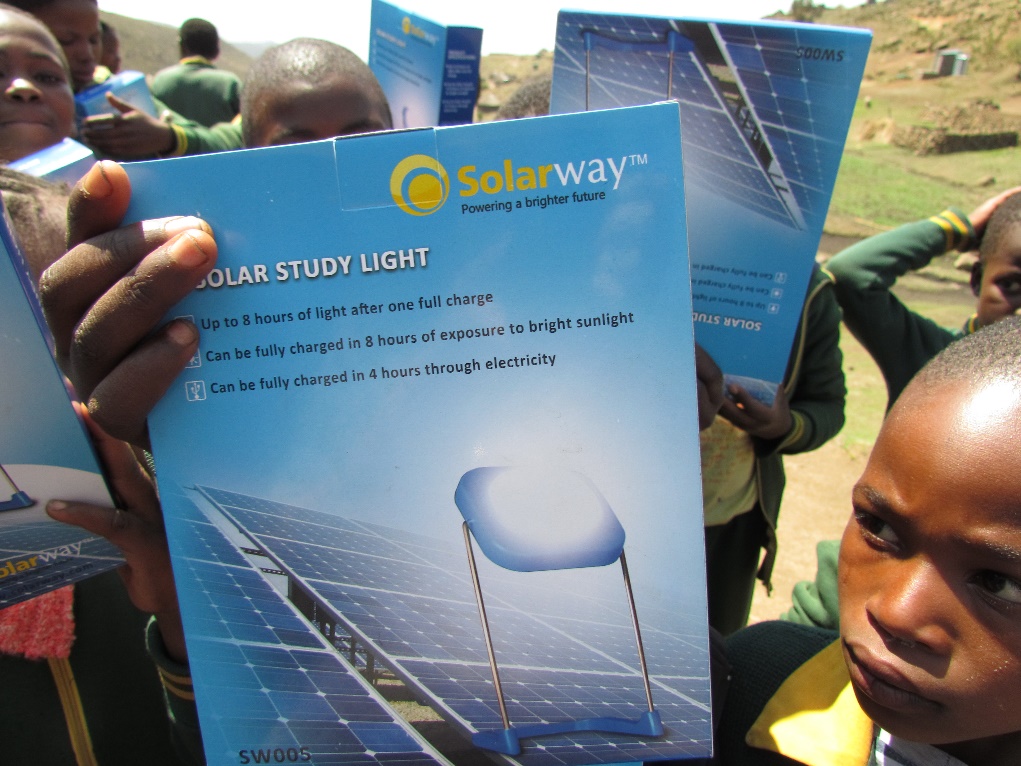
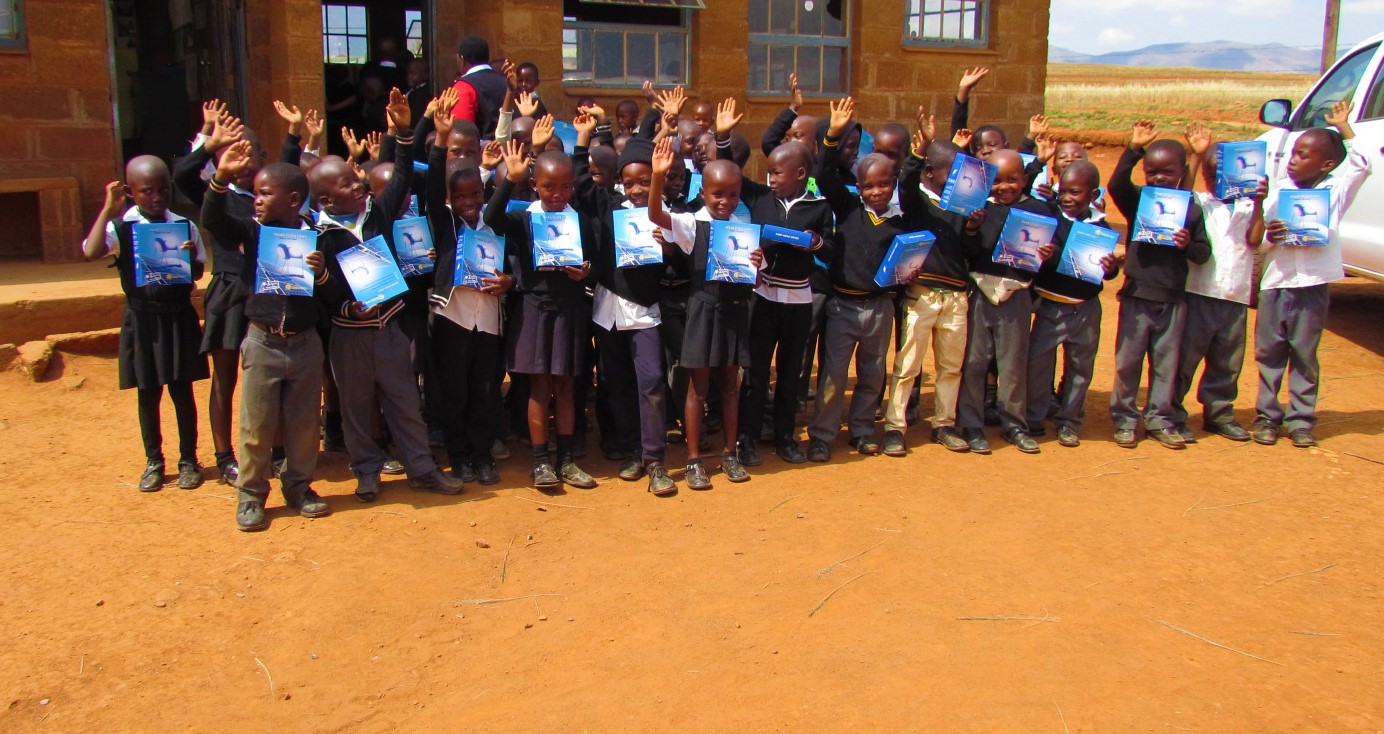
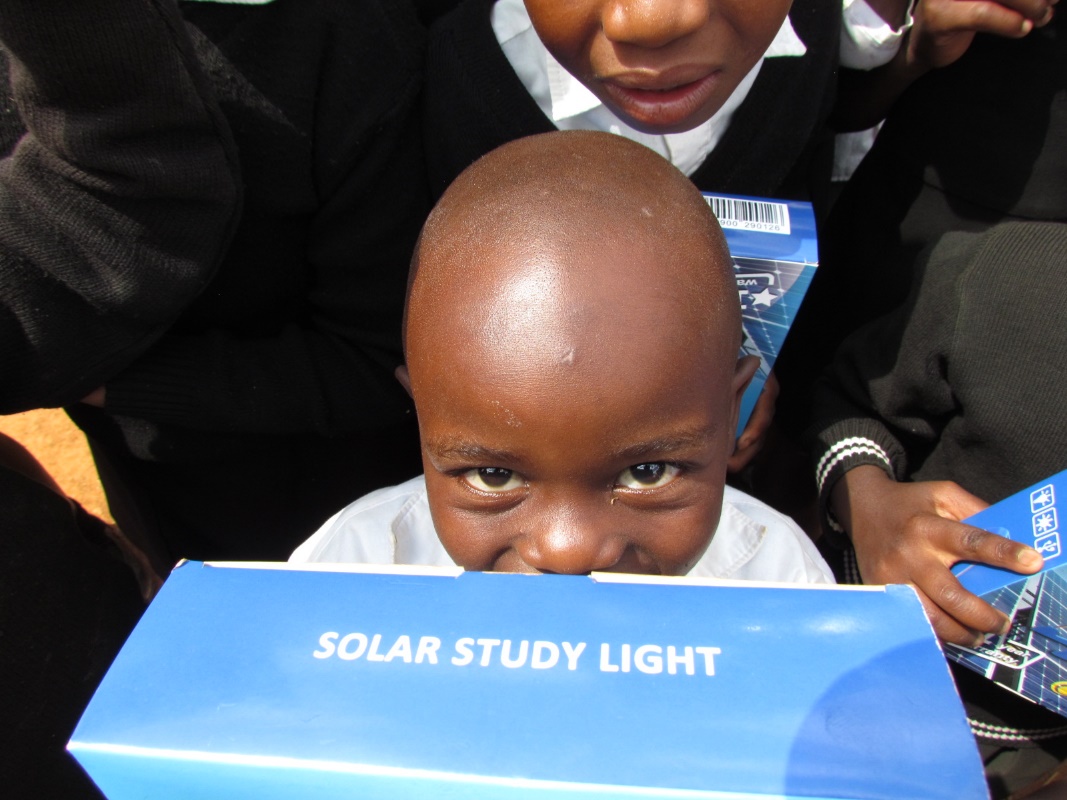
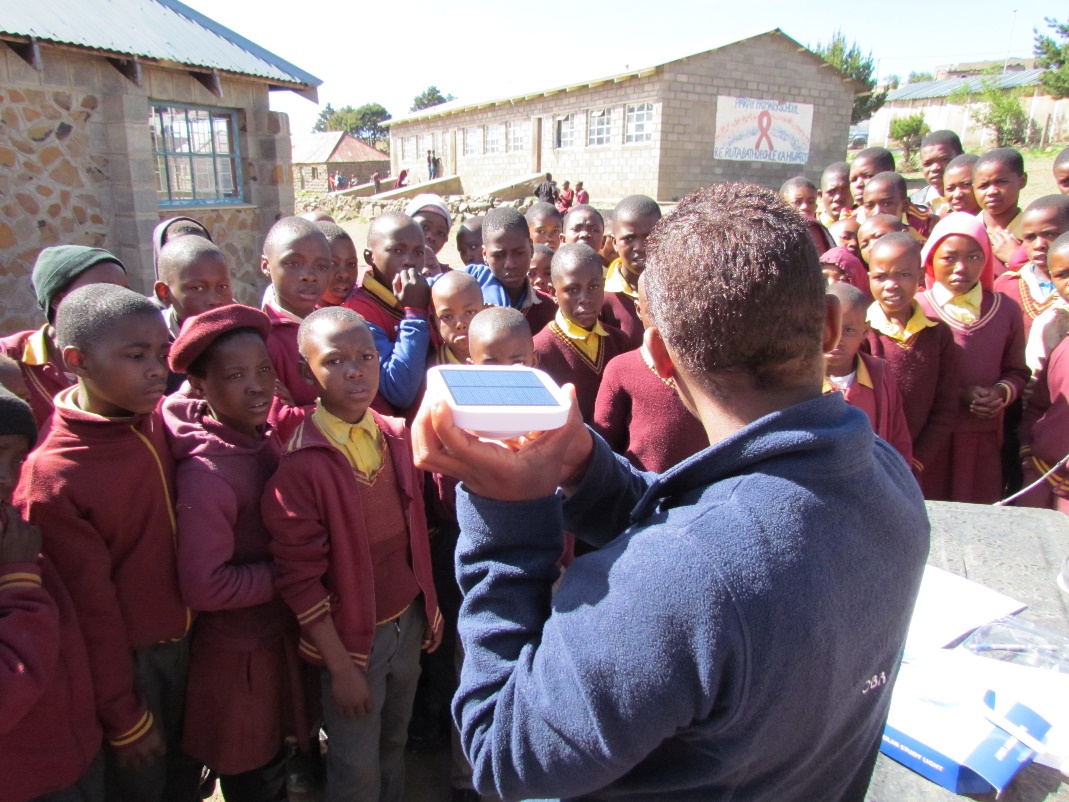
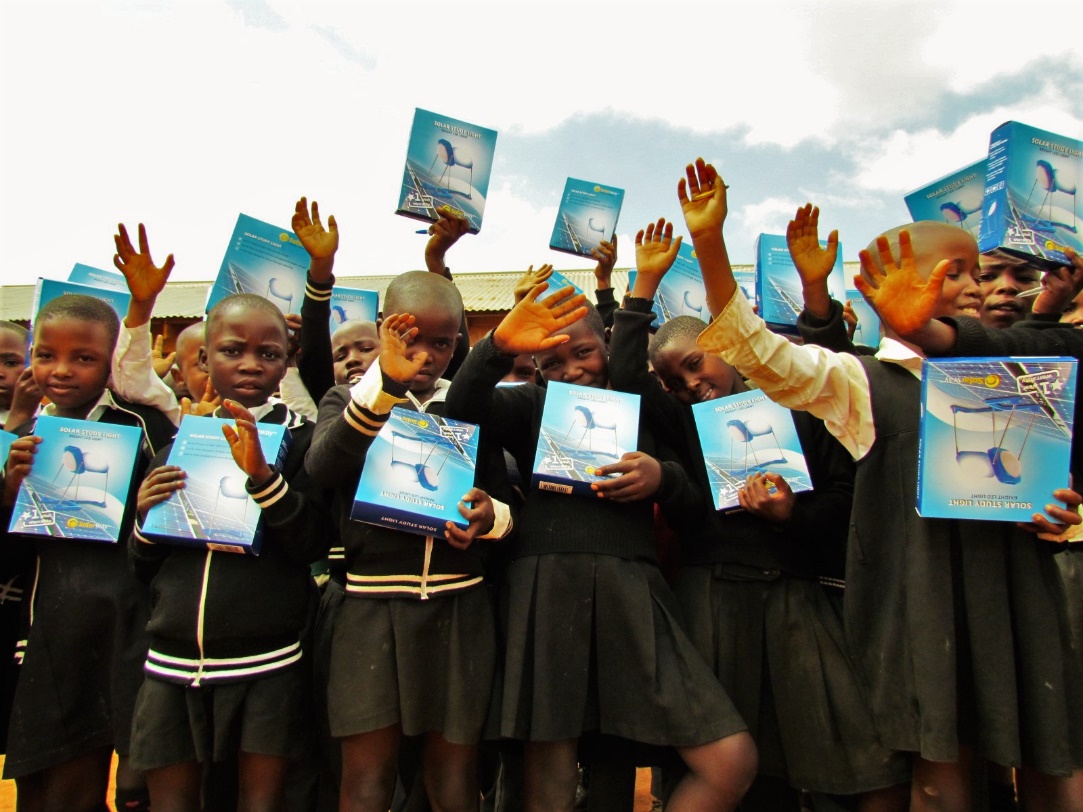
Unlike candles and matches, paraffin, or kerosene which are costly, solar power doesn’t cost students a thing!
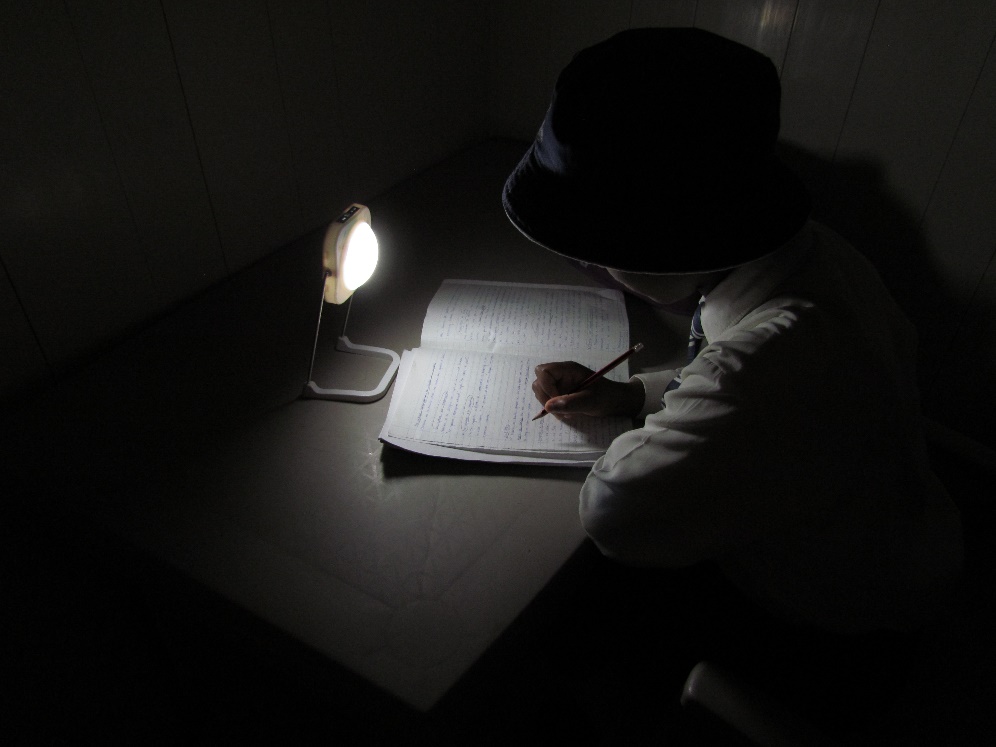
The light is brighter than the other available sources.
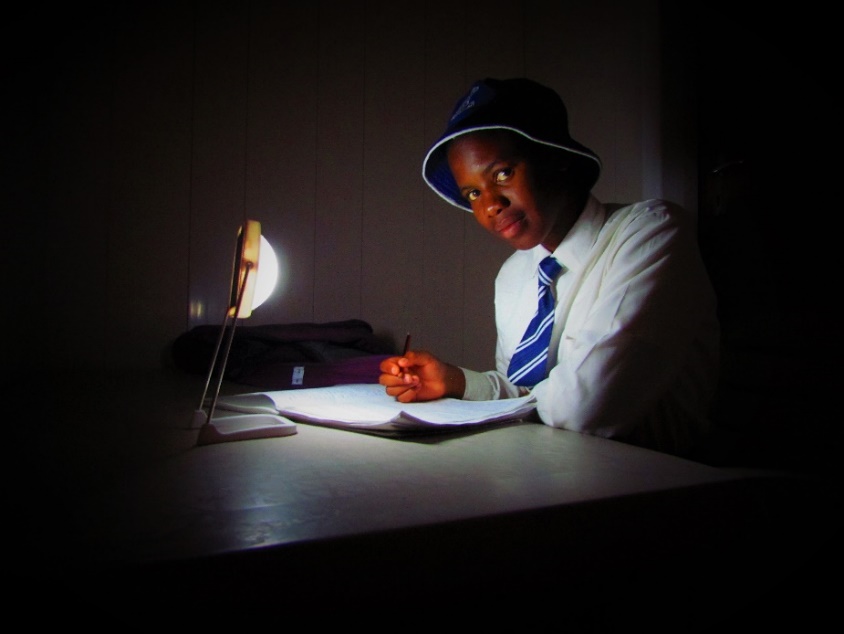
Students interviewed about the lights report that it is brighter than a candle or paraffin lamp, making it easier for them to read and study without straining their eyes.
The solar study light is predictable.
Thunderstorms are common in Lesotho and power outages happen frequently and randomly. Luckily for these students, the light they received does not rely on electricity. Also, a candle can easily blow out in the wind in these storms, but the solar light is constant.
The solar study light provides 8 hours of light!
When fully charged, the solar study light will provide students with 8 hours of light.
The solar study light is safer than its alternatives.
Accidents involving flames from kerosene lamps commonly result in burns to children. The paraffin and kerosene lamps also release toxic particles that are dangerous to breathe in and cause respiratory diseases. Now children who received a light can study and perform other tasks without risking their health!
The lamp only takes 8 hours to charge.
For a full charge, the lamp takes 8 hours to charge by solar light, and 4 hours by USB cable if electricity is available. Students can leave the lamp in their window when they leave for school and it will be fully charged by the time they arrive home!
Each solar lamp is simple and easy to use.
Just face the solar panel towards a window and voila! Let there be light!
Entire families can benefit from the light!
The family members of students who received light now have light for cooking, caring for babies, taking care of people who are ill, and younger and older siblings can share the light to study with.
The solar study light helps students complete their assignments.
Students are using the lights to complete their homework assignments so they can practice the skills they learn at school.
Most importantly, the lights allow students to study when they would not otherwise be able to!
Only 20.6% of Lesotho’s population has access to electricity, making it difficult for students to study after dark. Even for the few with electricity, the light is beneficial due to frequent power outages. Older students found the timing of the light distributions was also helpful, as they were preparing to write their final exams.
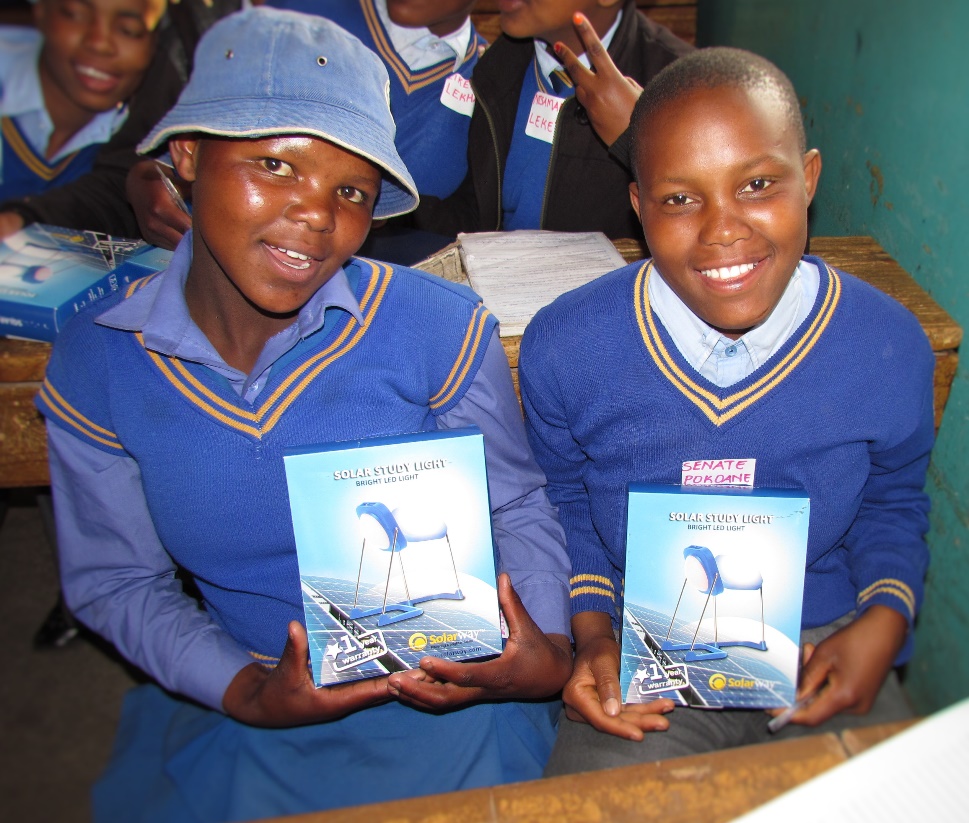
One student describes her experience using her solar light:
The following is a copy of a speech delivered by Boithatelo Khobotlo for International Youth Day 2016. Boithatelo is a member of Help Lesotho’s GIRL4ce Movement, where she participates in gender equity advocacy initiatives in her community.
“I am standing here today as a youth representative from the GIRL4ce movement under the organisation of Help Lesotho. This movement is fighting against girls and women abuse in areas of Child Early and Forced Marriage and Sexual and Gender Based Violence. Both girls and boys are part of this Movement and we are doing our best to raise awareness in our communities so girls will be protected and given support.
Our Ministers, teachers, parents and youth, we are gathered today to commemorate the International Youth Day and the theme for this year reads, “The Road to 2030: Eradicating poverty and achieving sustainable consumption and production”. As far as I am concerned there is no way we can eradicate poverty while there is still a lot of girls that are getting married at early ages, some are forced into marriages and so many are sexually abused. We have to keep our heads up and fight for a free Lesotho. We cannot do this alone. Boys! Boys! We need your help to fight all these forms of abuse. Most of the perpetrators are you. We see lots of girls who drop out from school because of pregnancy; we see lots of maternal mortality from girls not having access to help; we see lots of new HIV and STI’s infections; and we see lots of girls suffering from physical and emotional abuse.
You will agree with me that we cannot accept that out of 81% of girls and women who are abused only 3% of them are reporting the abuse. Why? Why should we be ashamed or scared to report abuse? There are laws there to protect us from abuse, so let us make sure that we enforce the laws for our protection.
How can we fight poverty with the abuse taking place? We are the leaders for today, we need to stand up and fight for our rights as girls and boys.
LET US BREAK THE SILENCE AND SAY NO TO ALL FORMS OF ABUSE TO WOMEN AND GIRLS!!!”
Help Lesotho ran a poetry competition where girls were encouraged to write about the theme of the 2016 International Day of the Girl Child – The Power of the Adolescent Girl.
The winning poem was written by a 15-year old girl named Litumelo. Litumelo lives in a tiny community in rural Lesotho where girls are constantly struggling to meet their basic needs and have their human rights respected. Gender-based violence is rampant, girls as young as 13 are forced into marriages, and 40% of girls have babies before they are 19 years old.
Litumelo’s poem reminds us why we need to celebrate the International Day of the Girl – because when girls are empowered, everyone benefits.
The Power of the Adolescent Girl by Litumelo
An adolescent girl.
She is gorgeous,
her beauty emanates from her heart.
She is a dynamite,
she is tiny but stronger than an elephant.
The power of the adolescent girl resides in her dreams.
The adolescent girl has power.
She is the barriers breaker and
the world changer.
Her eyes are sharper than any two-edged sword
she can see the light at the end of the tunnel.
She is a woman of substance
with the deepest sense of purpose.
She is ready to release her potential.
On the first day of LIT, I encountered a group of three young men and asked them, like I had asked everyone else, if I could take a picture of them. They silently stared at me for a few moments and then one of them said, “Wait, I’m drinking water.” As I waited, I began to see that he was purposely drinking slowly, relishing whatever power he thought he held over me by making me wait.




 That opportunity came with the establishment of a partnership between Help Lesotho and the Mazzarello Vocational School in Maputsoe (about 40 minutes away from Help Lesotho’s main Leadership Centre in Lesotho).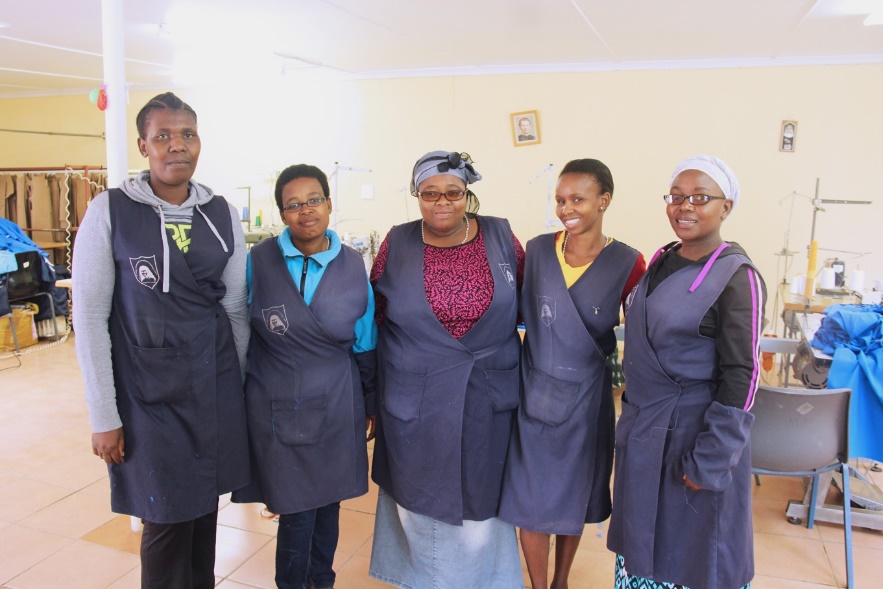
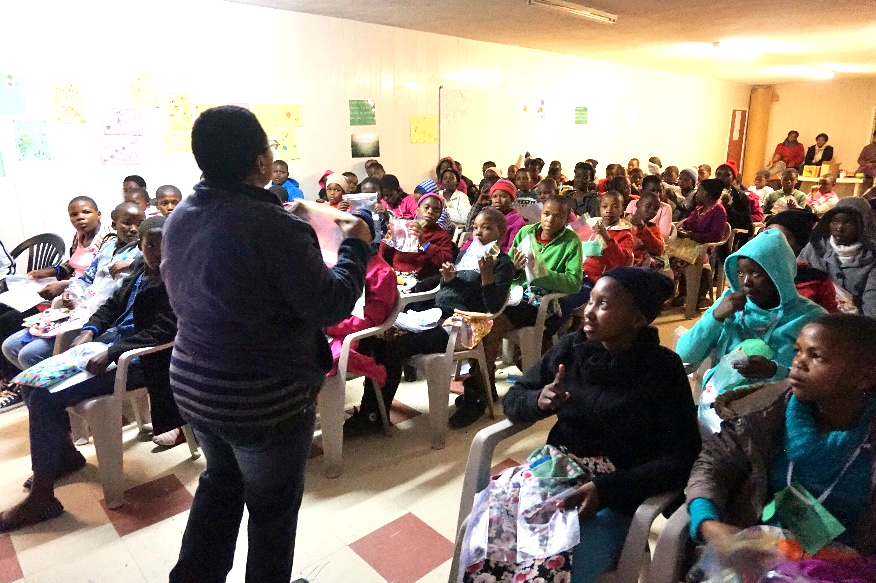 Girls who receive the kits participate in a comprehensive education session where they learn about menstruation – namely that it is a totally normal thing! – and learn how to stay healthy and hygienic as they enter womanhood. The girls are given the opportunity to ask questions; with many of these girls growing up orphaned and alone, they have never had anyone to ask even the most basic questions of.